Coffy Lessig.
Full nameCoffy Lavender
Neuefeind Lessig
Folio2026 · 13 Projects
BasedBrookline, MA

Coffy
Lessig.

A designer, fabricator, and filmmaker — making things that argue, ride, glow, and occasionally get taken apart thirty times.

Nineteen years old, on a gap year after graduating from NuVu Cambridge. The work in this folio spans hardware, garments, urban planning, exhibit design, photography, and film — held together by a habit of building, observing, and iterating in public.

Index 13 / 13
01Rail PhotographyPhotography · Documentation↗ 02PEVs, EUCs, and MeDocumentary Film↗ 03ADA Compliant Dress 2Wearable · Social Practice↗ 04VR GloveElectronics · Wearables↗ 05Bio-Plastic PCBSustainable Materials↗ 06JoyloggerPhysical Computing↗ 07Begode Master Modifications3D Printing · Hardware↗ 08Leaperkim LynxMechanical Repair↗ 09The Creator FactoryPainting · Illustration↗ 10Polar PlayExhibit Design↗ 11Adaptable TablesMechanical Design↗ 12NüSVuCivic Tech · UX↗ 13South Hampton StUrban Design↗
Project01

Rail Photography

Documenting the BU Bridge Railroad

A long-form photographic study of the railroad bridge beneath the BU Bridge and the tracks that extend from it. I've been drawn to this site for years and photographed it informally many times. Open Innovation gave me the chance to study it seriously — returning across multiple visits to look closely at structural details, materials, and signs of change over time.

The project treats a familiar piece of local infrastructure as a subject worth sustained attention rather than background.
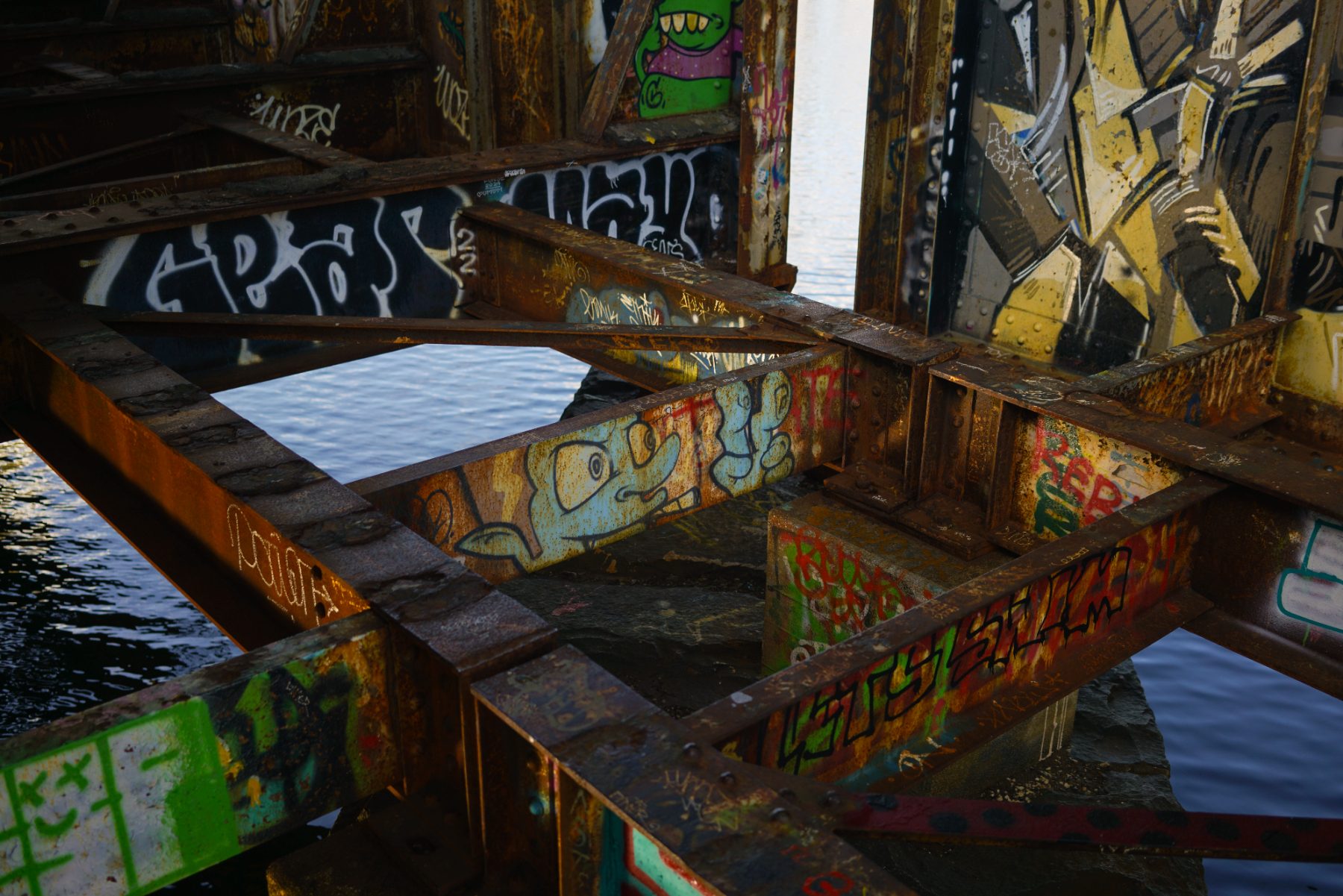
Rusted graffiti-covered bridge truss seen from below over water01 — Cosmos · ladder
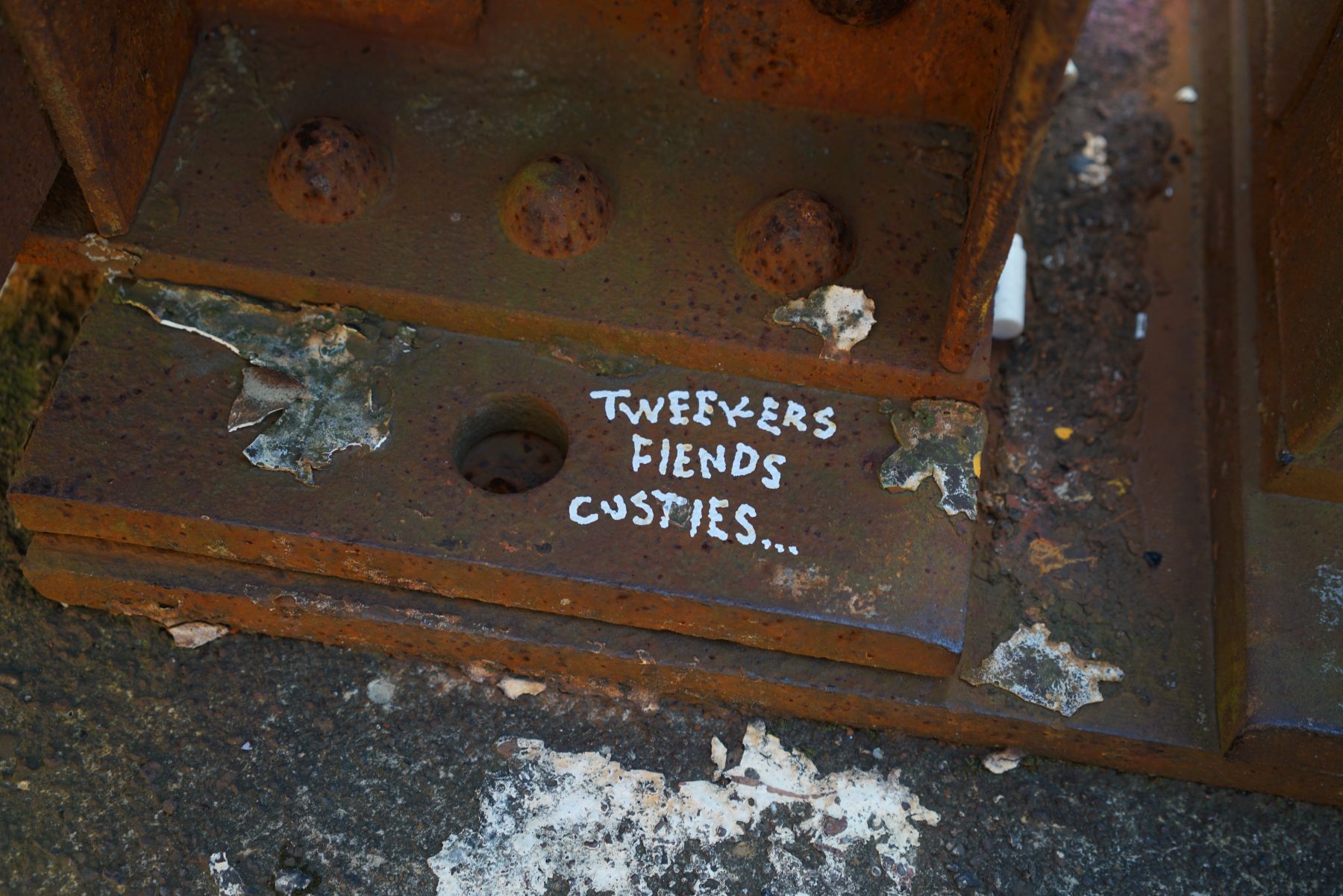
Rusted rail tie plate with bolt heads and white spray-paint reading 'TWEEKERS FIENDS CUSTIES…'01 — Tweekers · fiends · custies
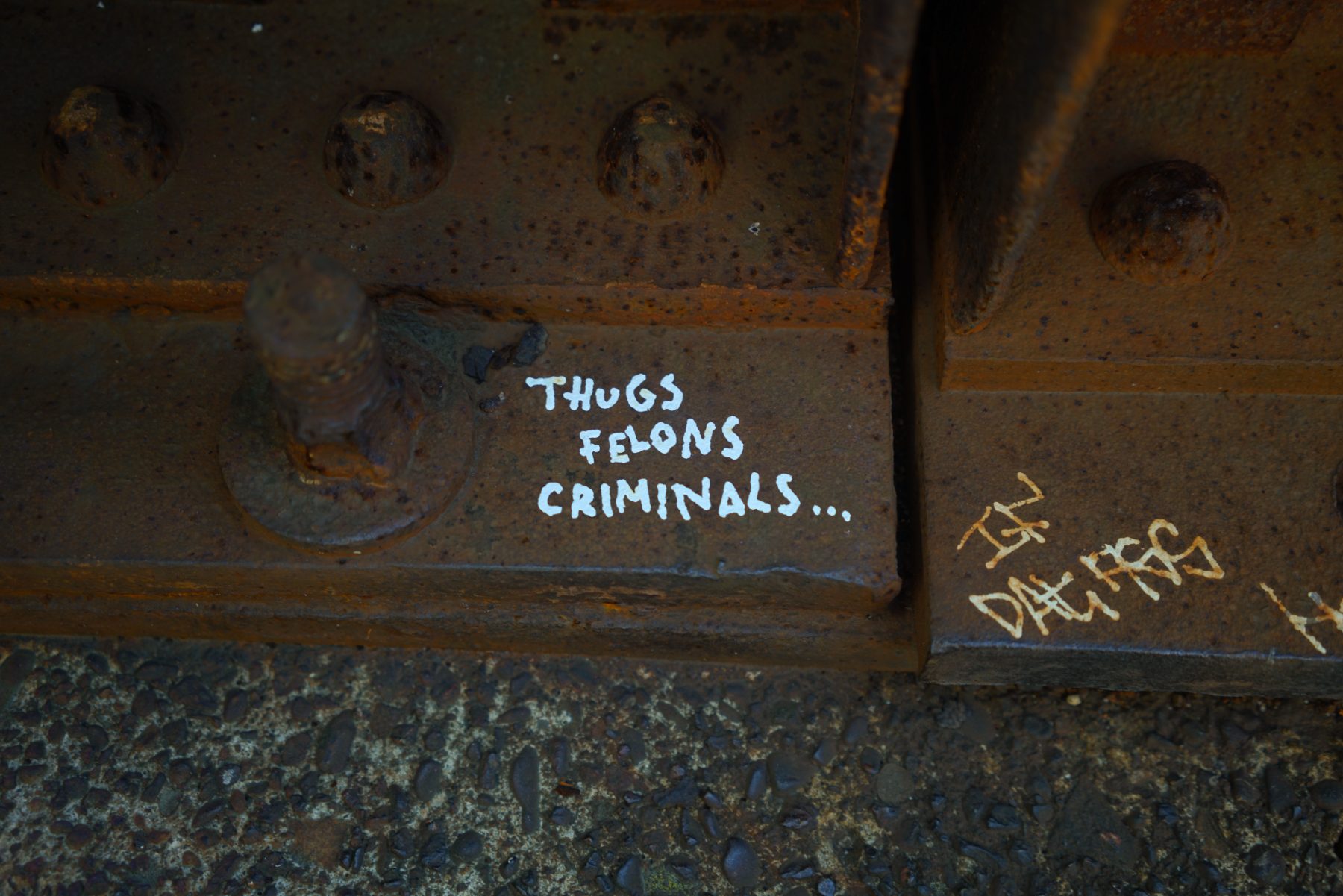
Close-up of rusted rail bolt and base plate with white spray-paint reading 'THUGS FELONS CRIMINALS…'01 — Thugs · felons · criminals
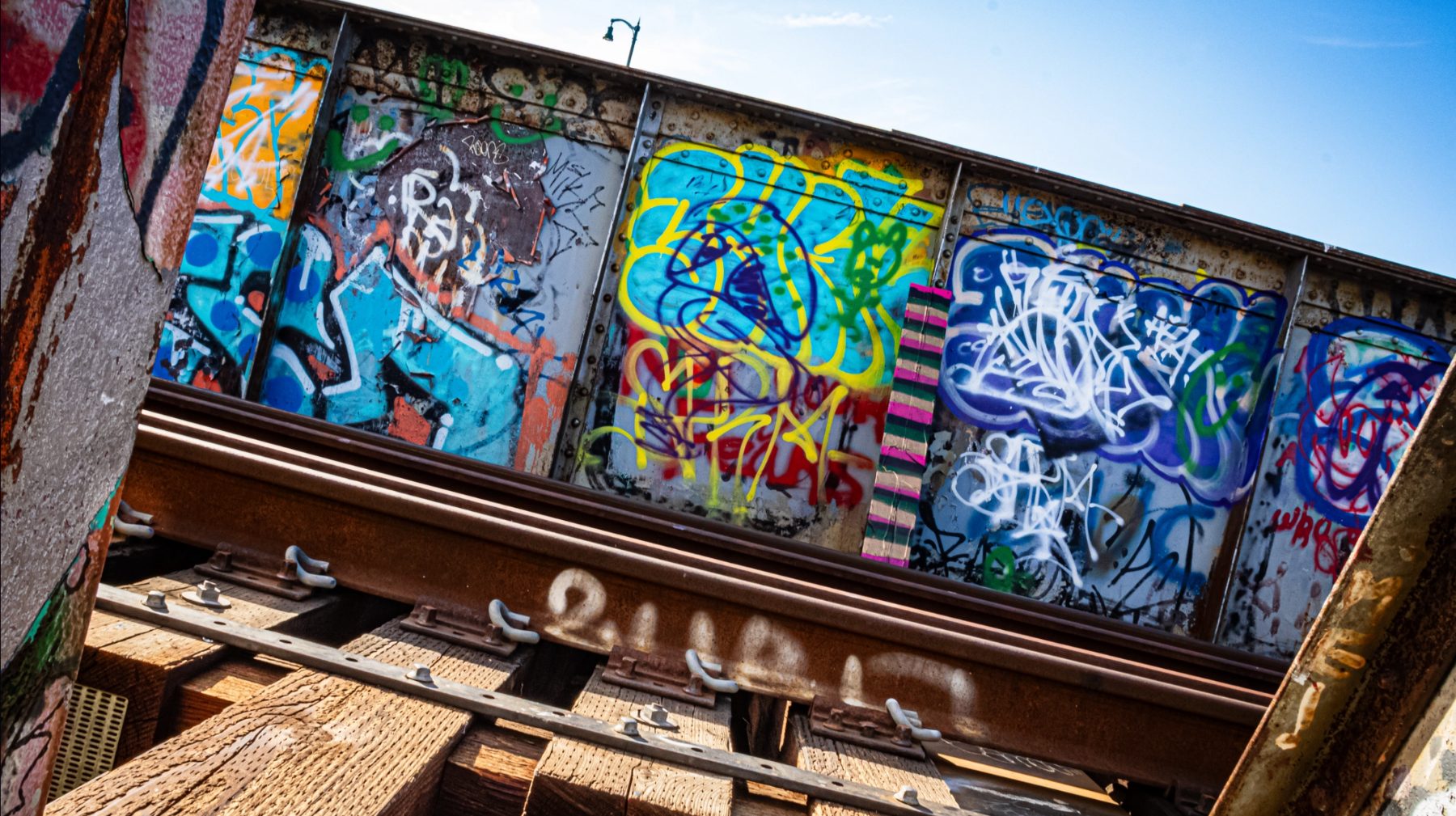
Looking up at painted graffiti panels with track rails and sleepers in foreground01 — Track and color
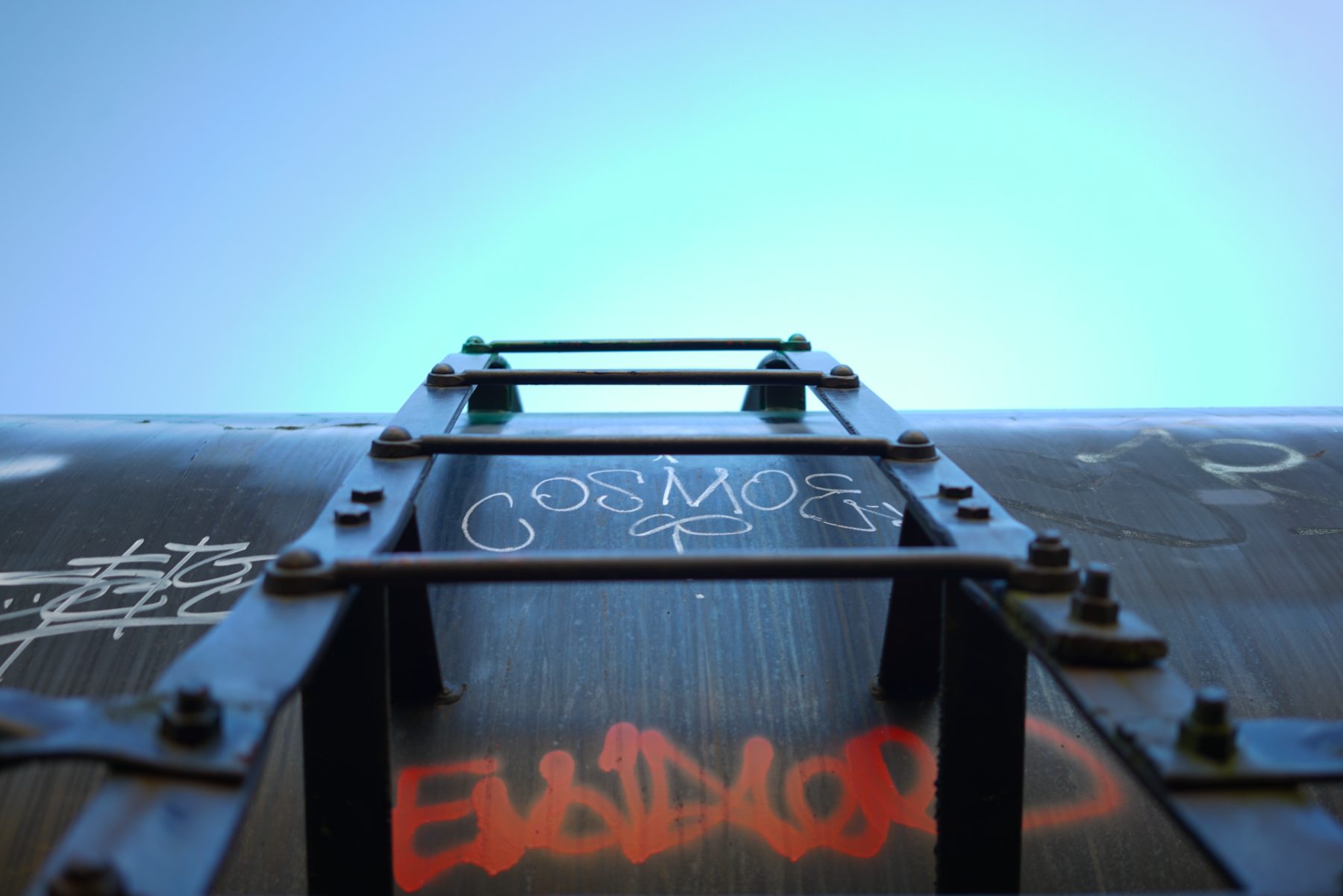
Looking up the ladder of a graffiti-covered tank car against teal sky01 — Vanishing line
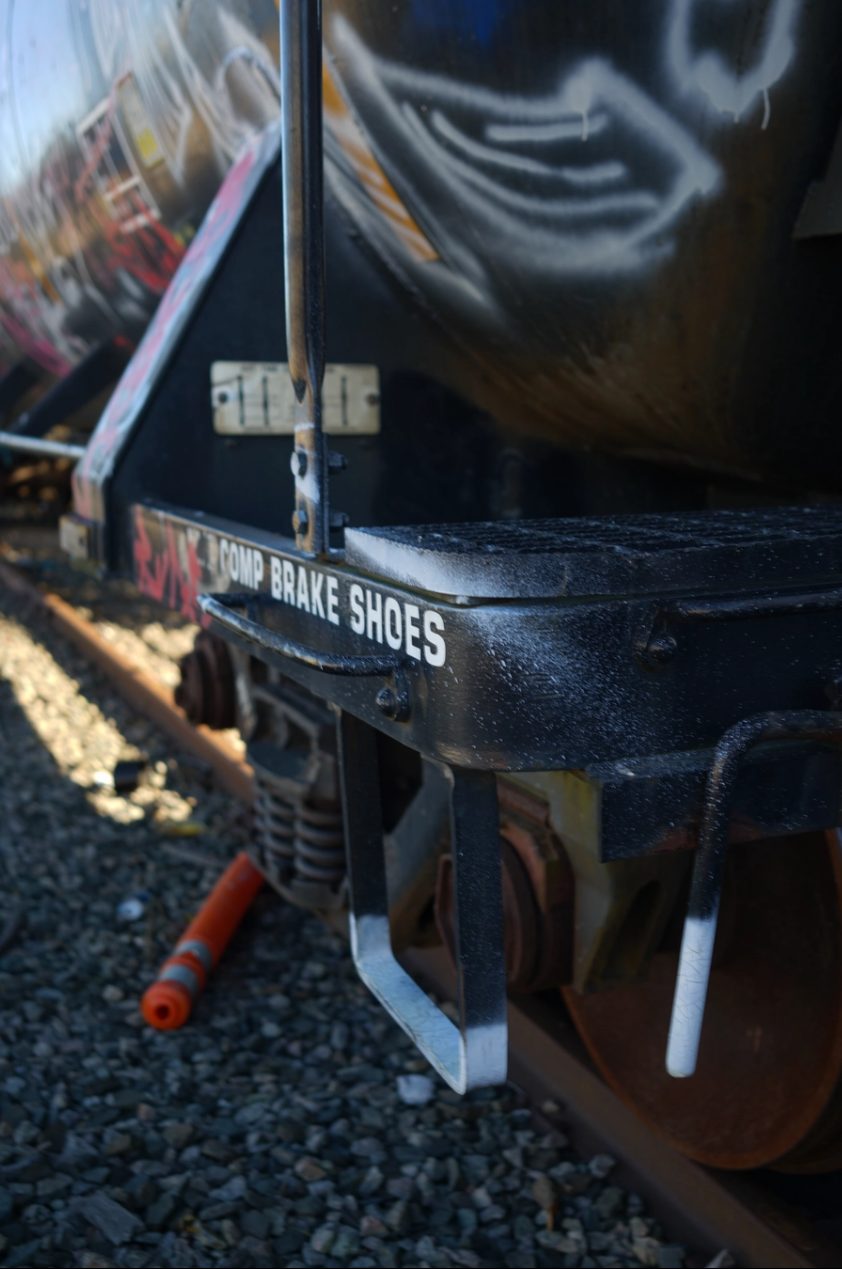
Detail of black freight car with COMP BRAKE SHOES marking, brake hardware, gravel ballast01 — Comp brake shoes
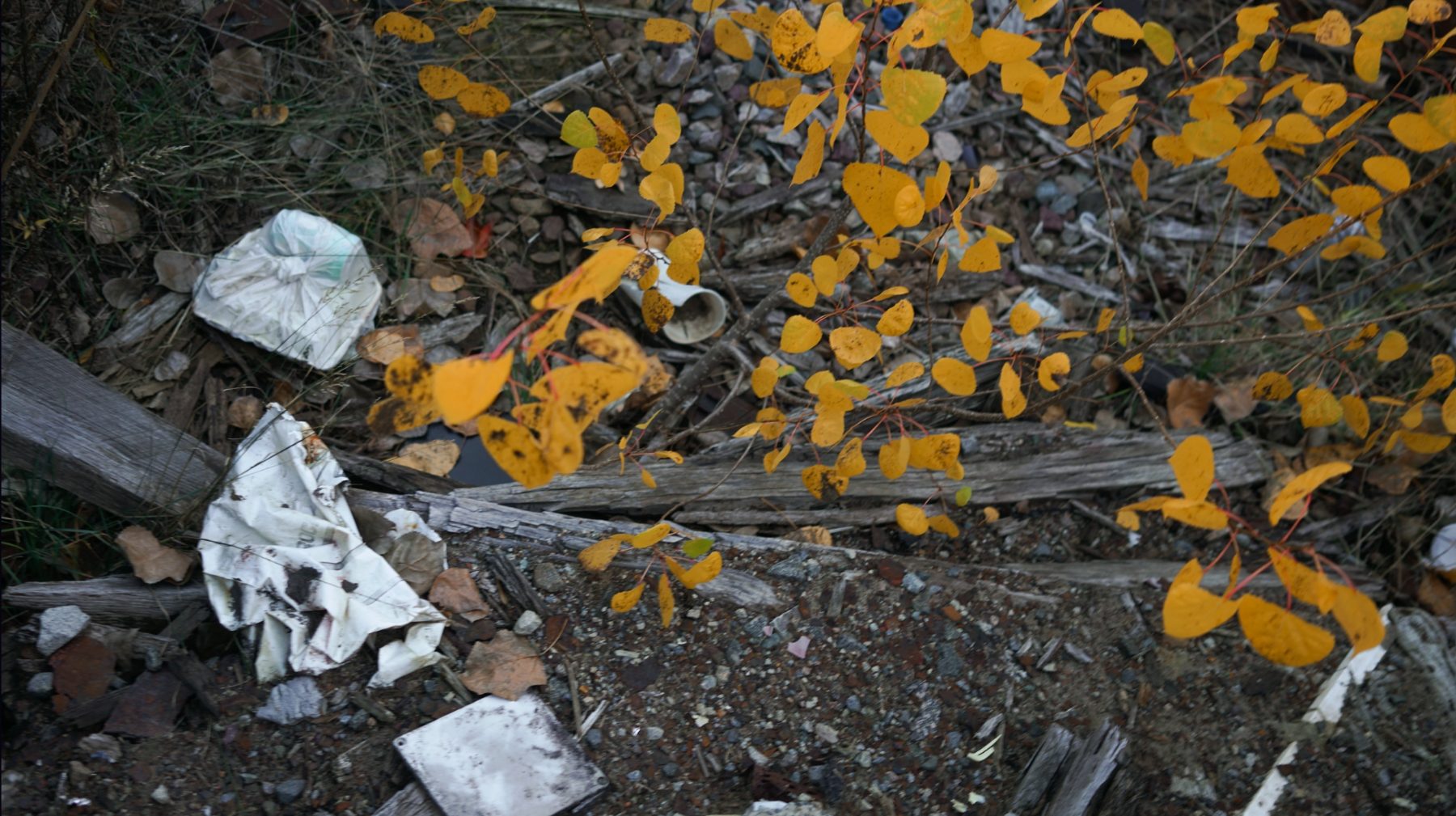
Yellow autumn leaves over weathered ties and torn paper trash near the rails01 — Trackside ground
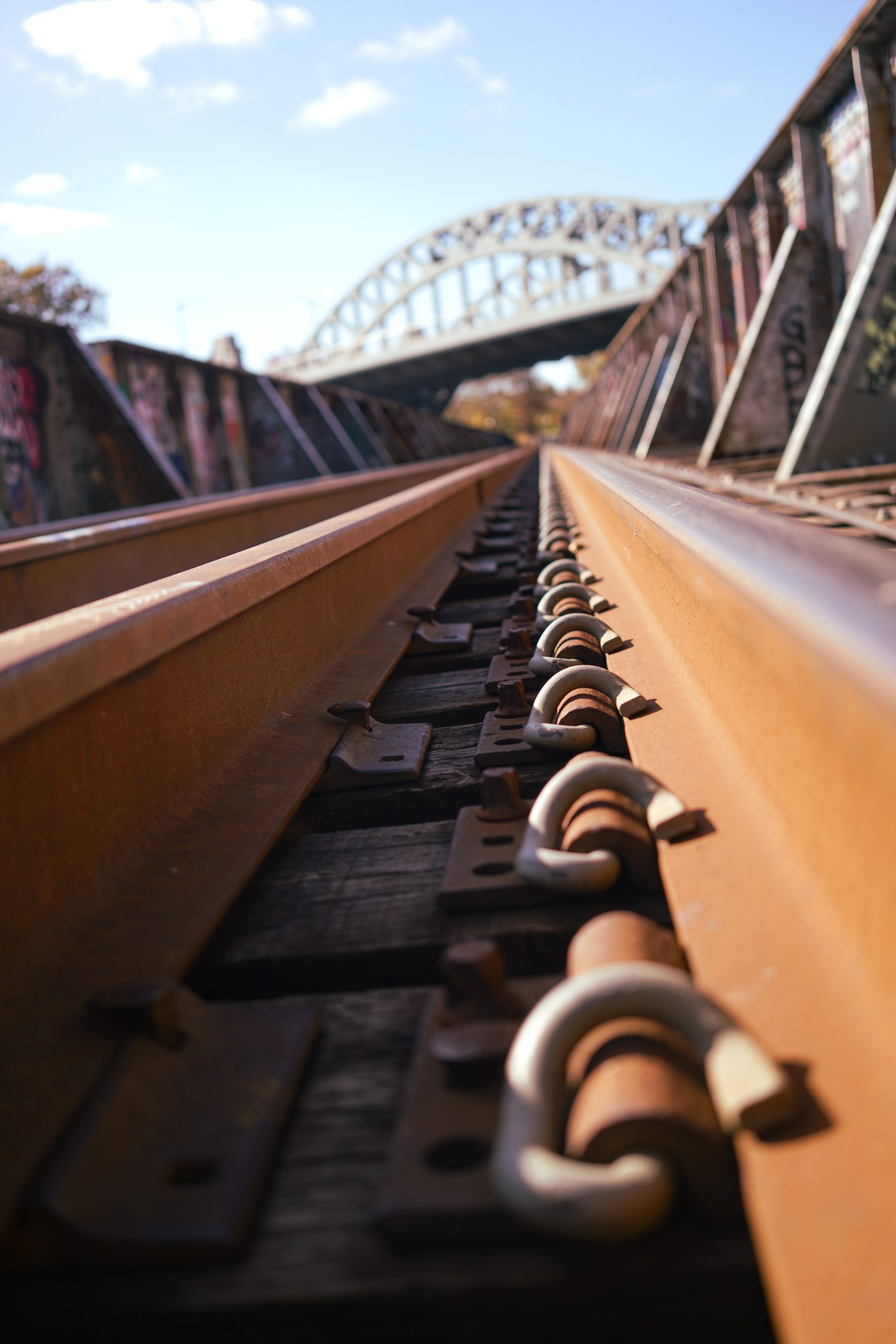
Worm's-eye view down twin rails toward distant arched bridge01 — Truss over water
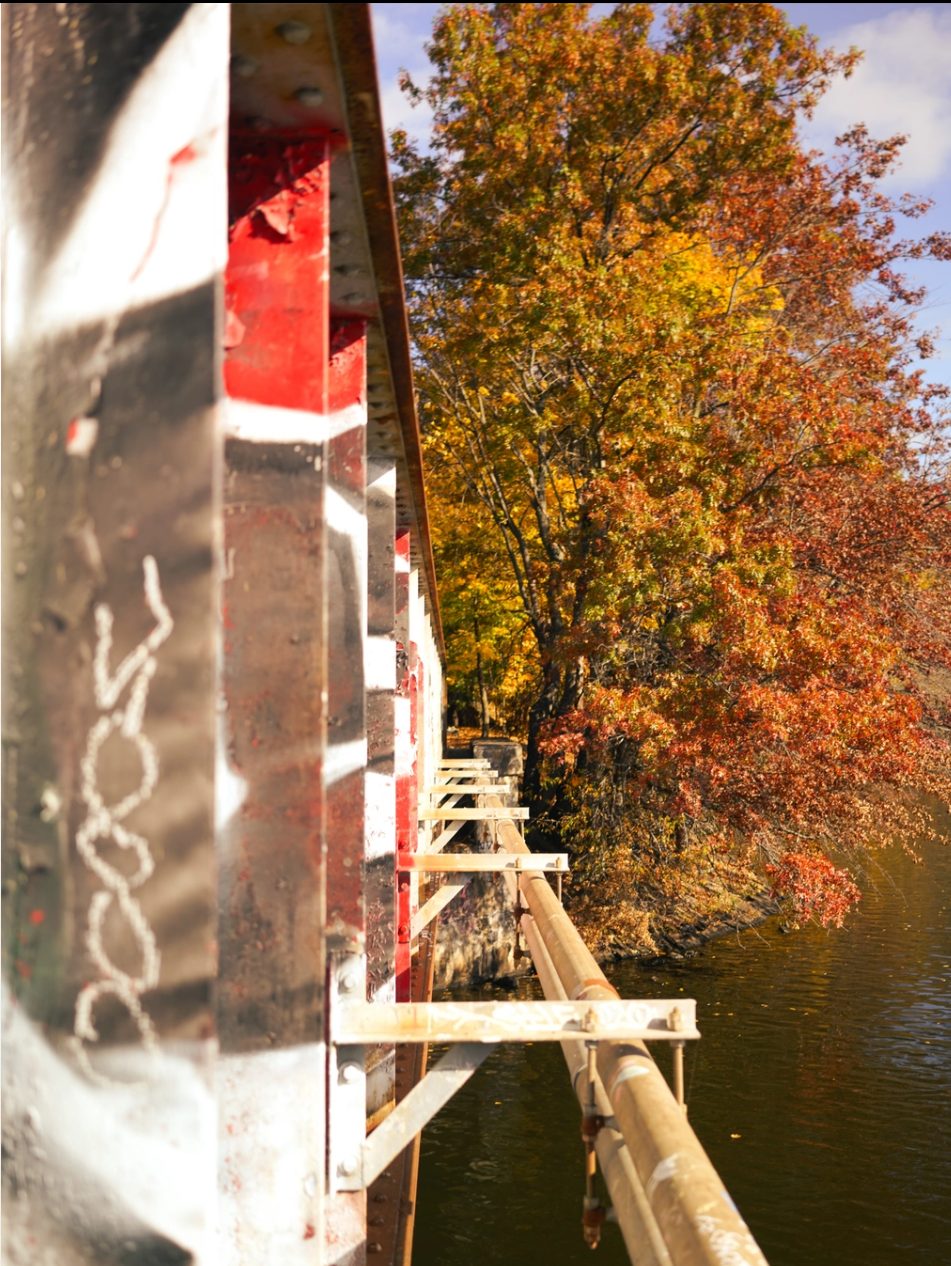
Vertical view along bridge structure with red detail and autumn trees over water01 — Life in the train car
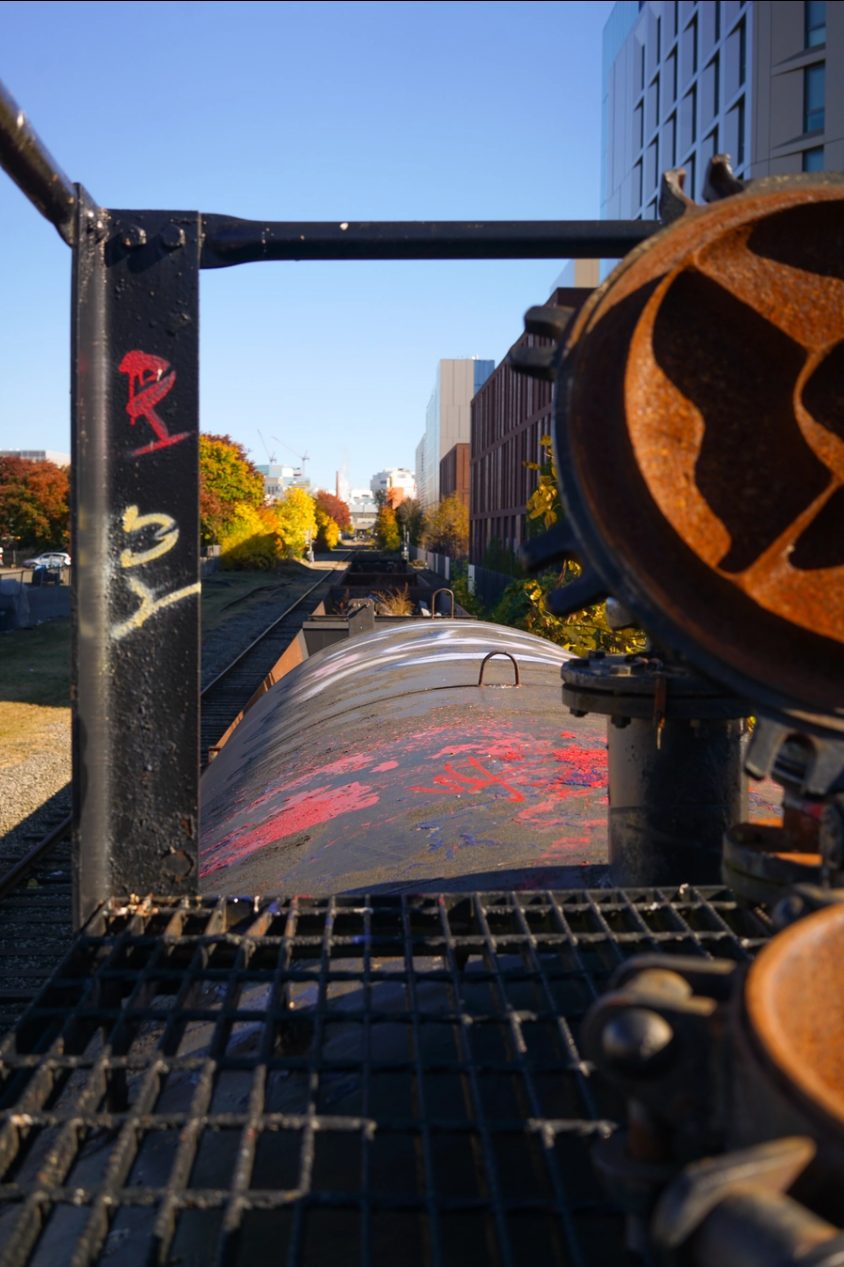
Framed view through black tank-car structure toward city buildings, rust and pink graffiti01 — Frame within frame
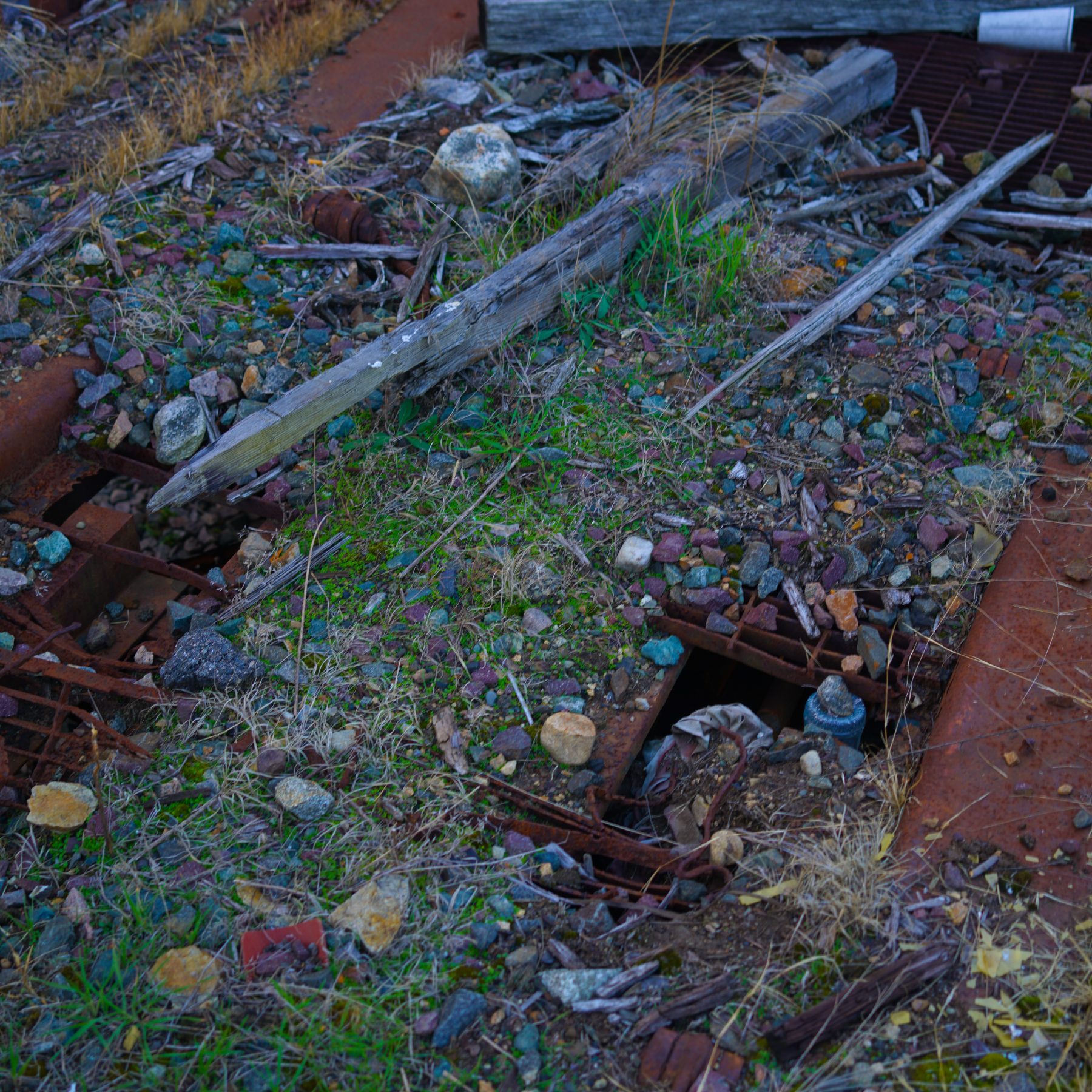
Looking down at trackside ground: rusted rails, broken wood ties, mossy ballast and scattered colorful stones01 — Ballast still life
Project02

PEVs, EUCs,
and Me

A Documentary on an Emerging Riding Community

I've been riding electric unicycles for years and wanted to tell the story of the community that grew up around them. This documentary covers the full arc — from the 1869 Hemmings monowheel through the first commercially available EUCs in 2008 to today's high-performance Chinese-manufactured wheels — and puts local riders at the center of it.

I shot with a Mirrorless camera, a 360 cam and my GoPro, conducted original interviews, and handled all editing, audio, and voiceover myself. The process pushed me to think about what makes a documentary compelling, not just accurate: how to let subjects speak for themselves while still building a coherent story.

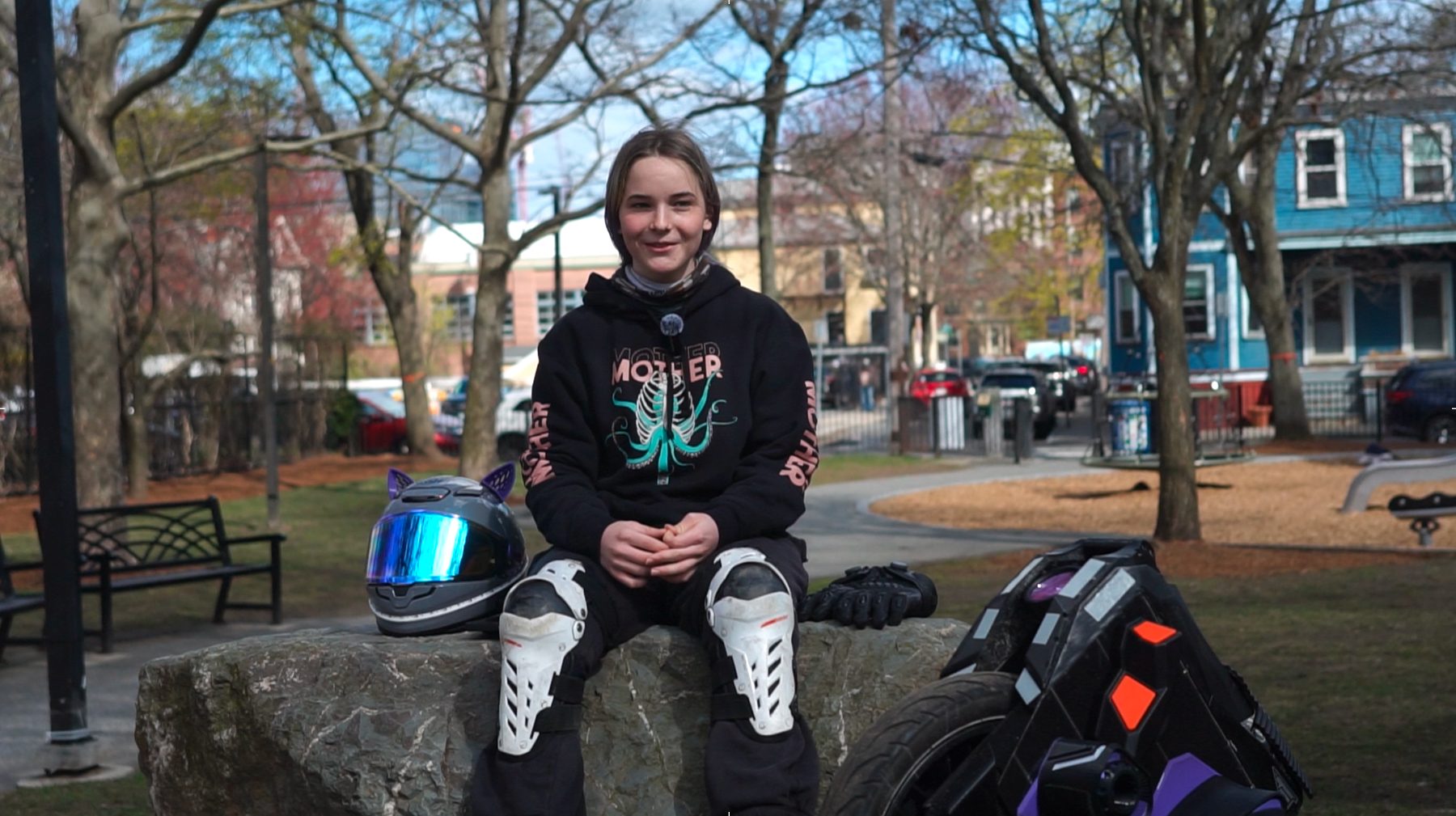
Documentary still — interview subject seated outdoors with helmet and gear02 — Interview still
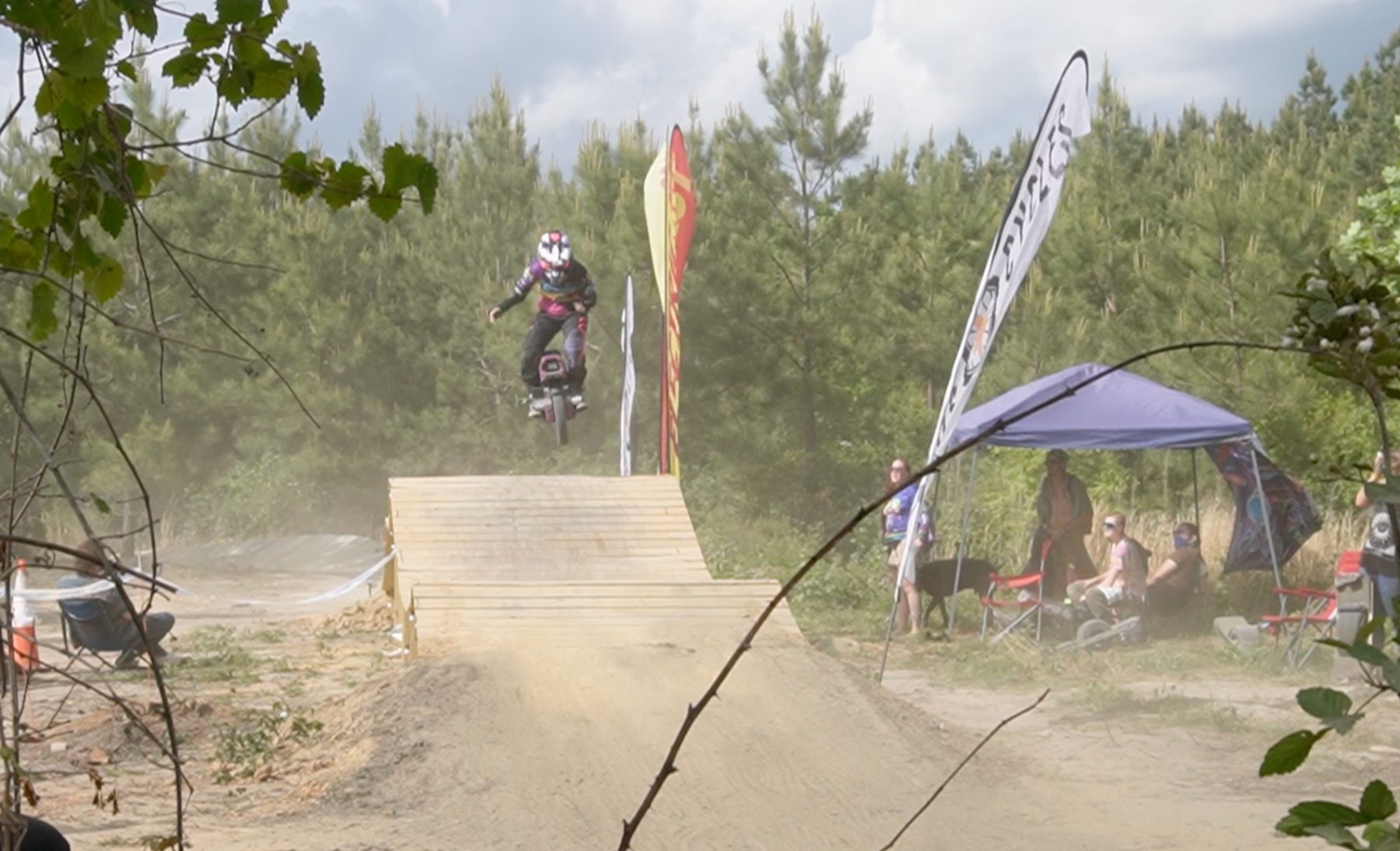
Rider mid-jump on EUC at outdoor event02 — Event coverage
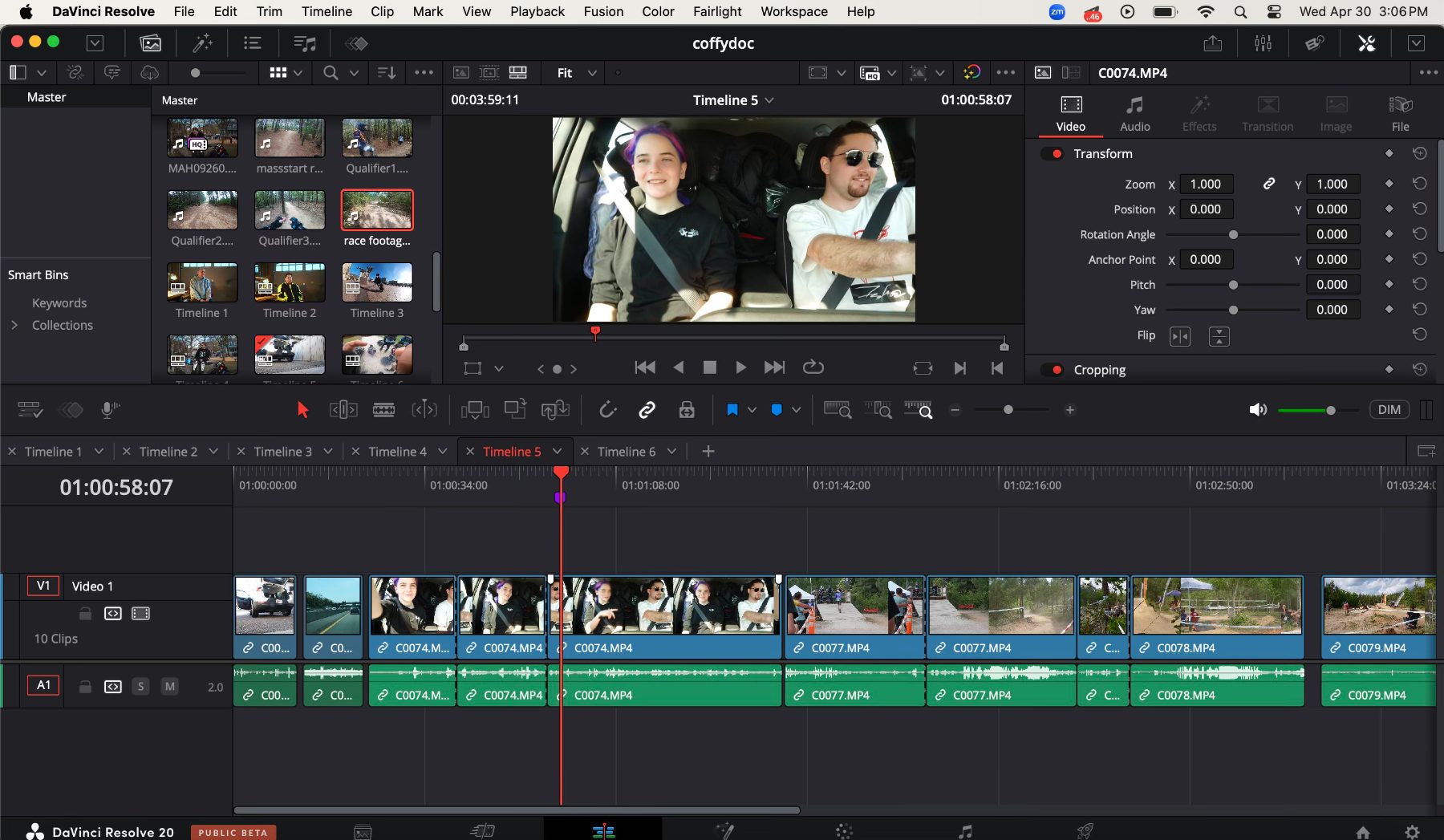
DaVinci Resolve edit timeline with interview footage of two subjects in a car02 — DaVinci Resolve · interview edit
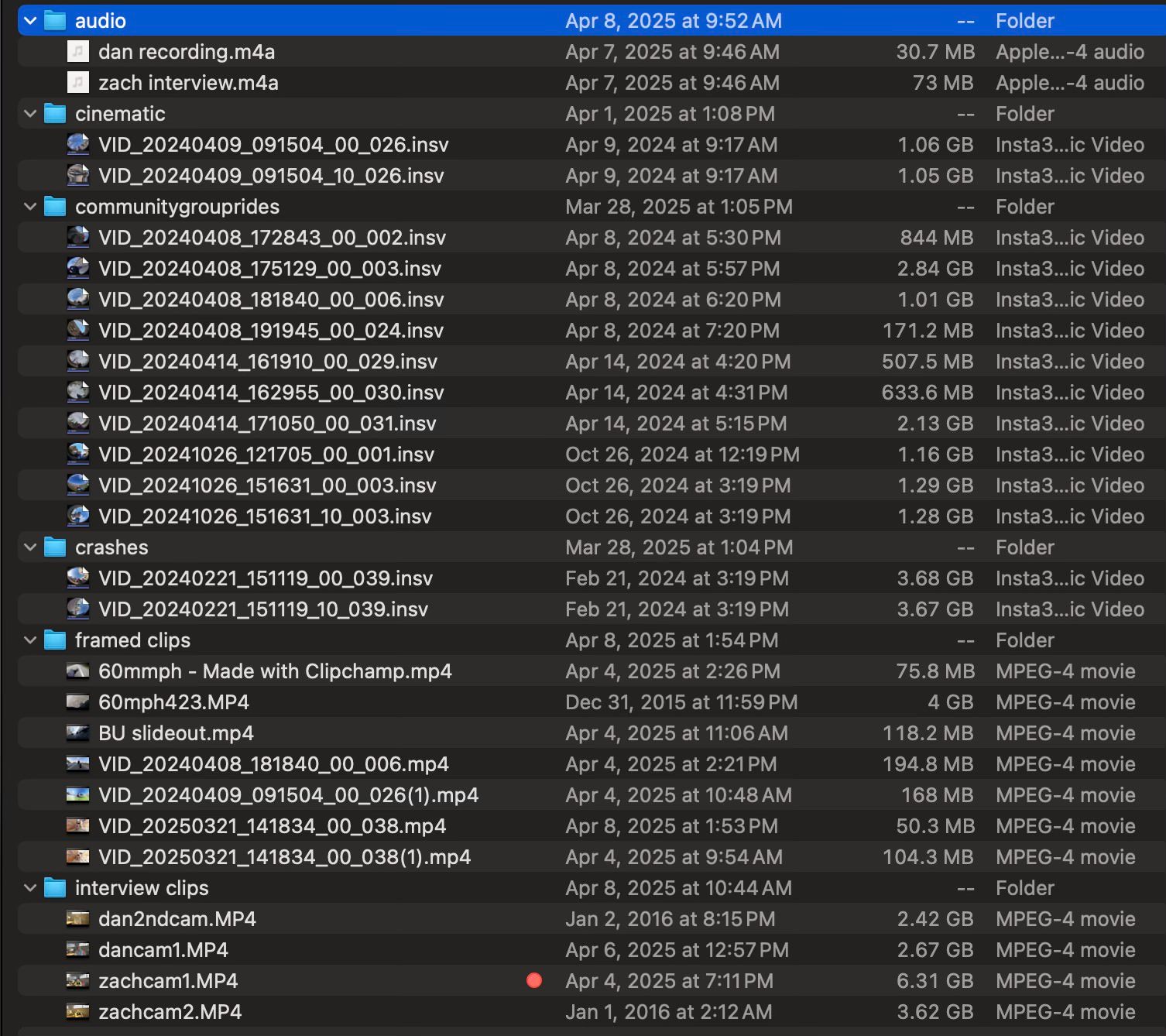
Finder window listing organized footage folders — audio, cinematic, community group rides, crashes, framed clips, interview clips02 — Footage organization
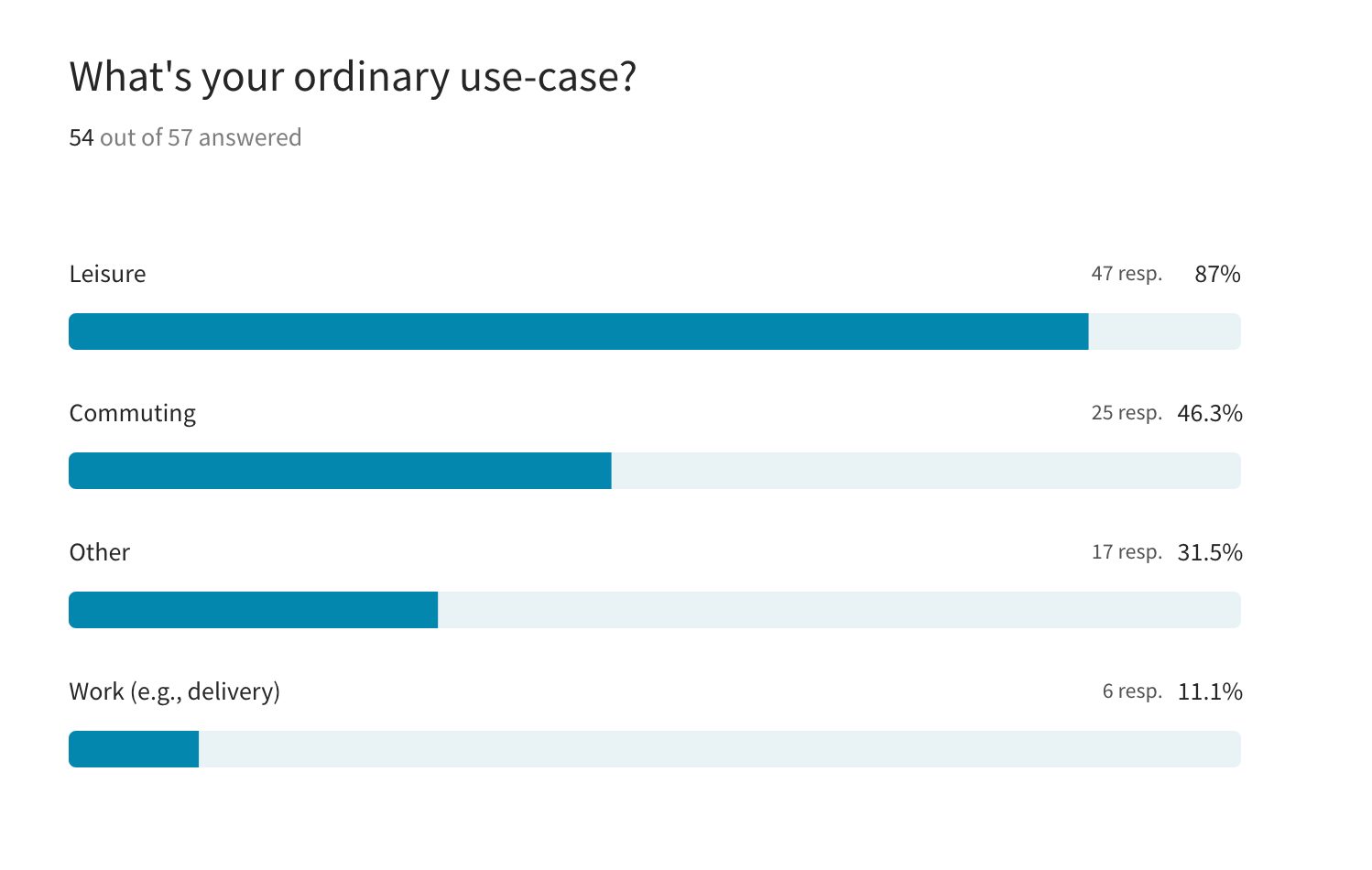
Survey results bar chart from documentary research02 — Community survey data
Project03

ADA Compliant
Dress 2

A Wearable Argument for Accessible Design

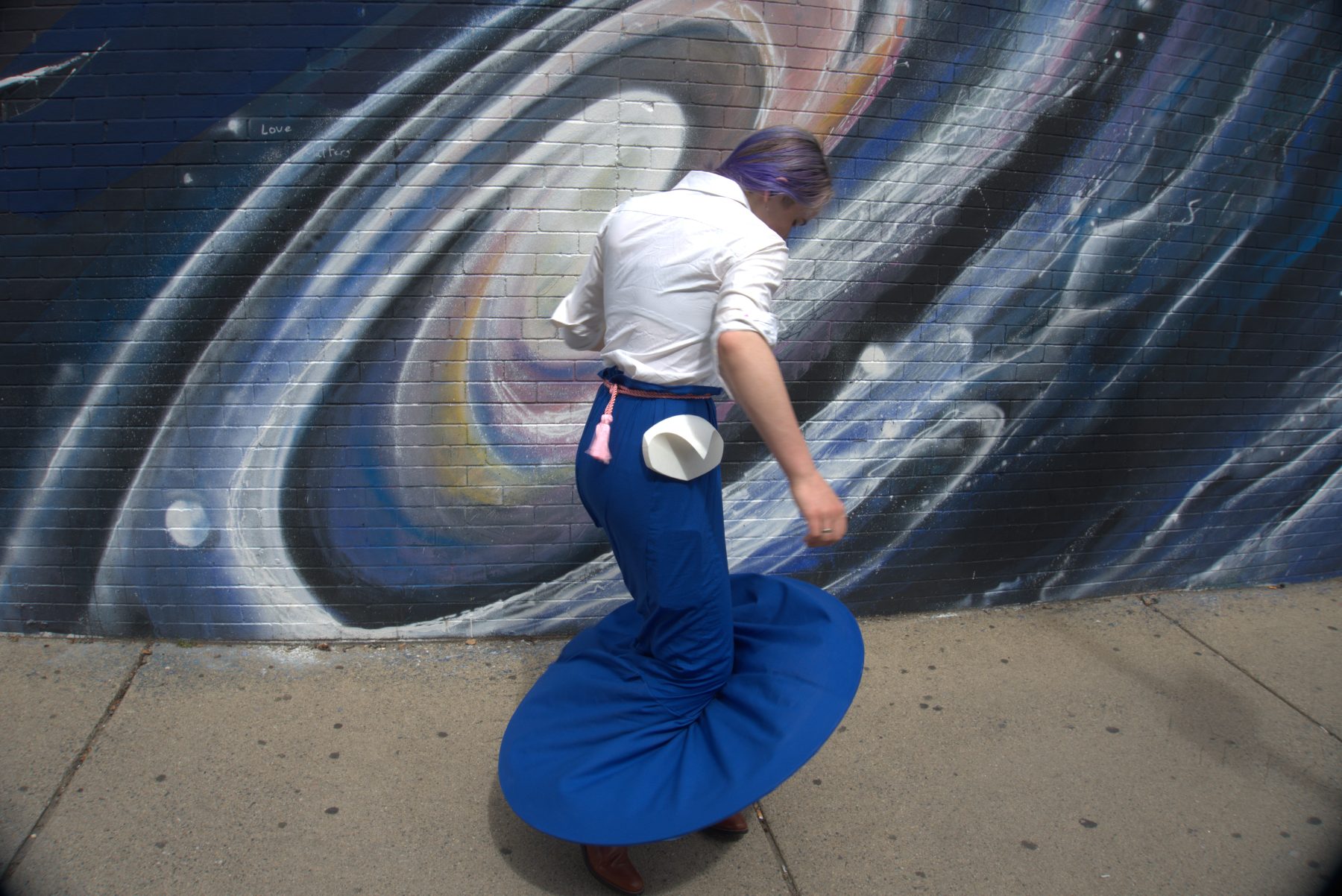
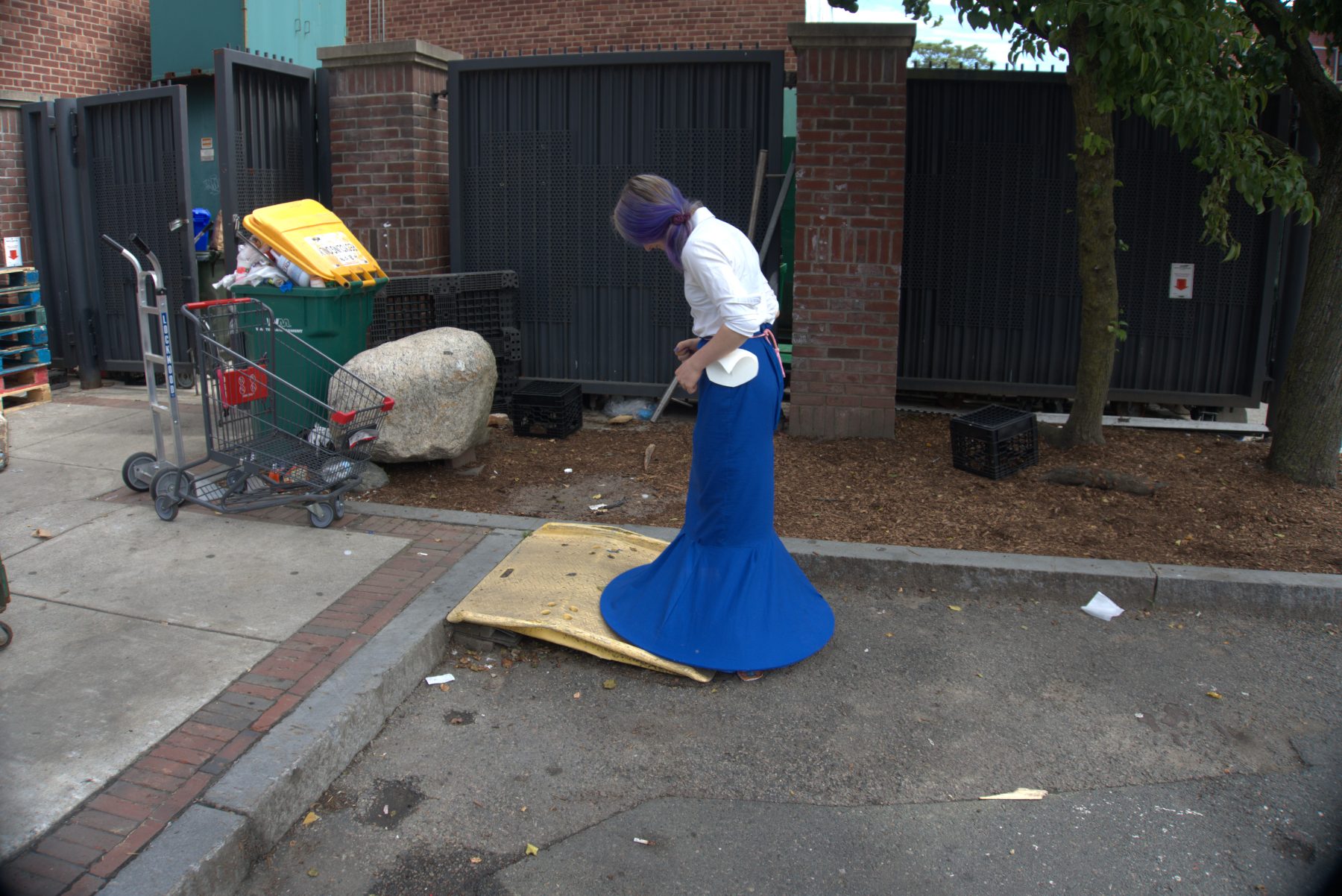
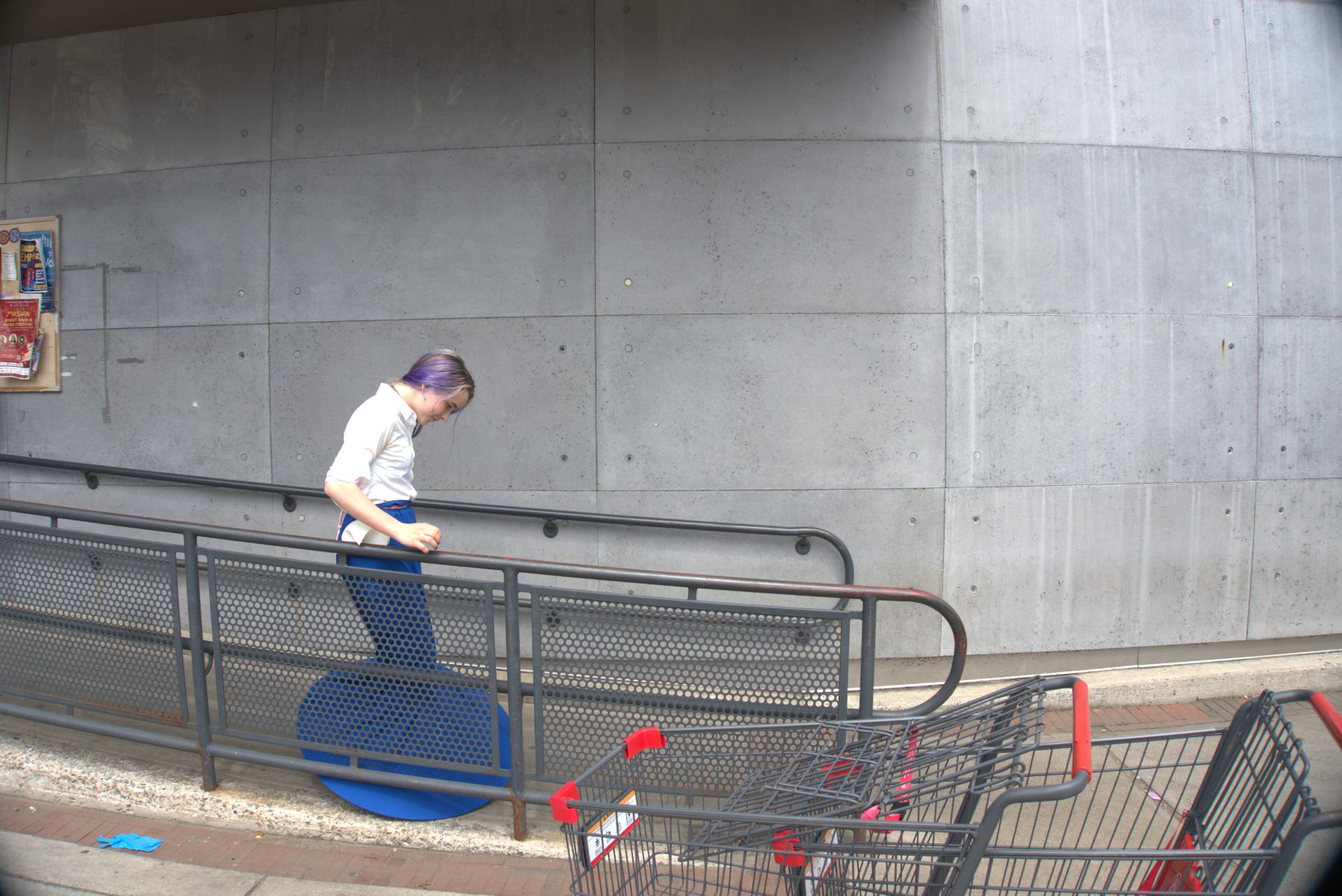
ADA Compliant Dress is a statement piece designed to make able-bodied people physically experience what it's like to navigate a world that wasn't built for them. The dress prevents normal movement in any space that fails to meet ADA standards — wrong doorway width, non-compliant handrails — forcing the wearer to create a scene simply by existing in the environment.

Noelle and I developed the pattern from scratch, combining a structured hip piece with straight and circle skirt panels. The conflict the dress creates is intentional: it's meant to make bystanders ask why the space is the problem, not the person.

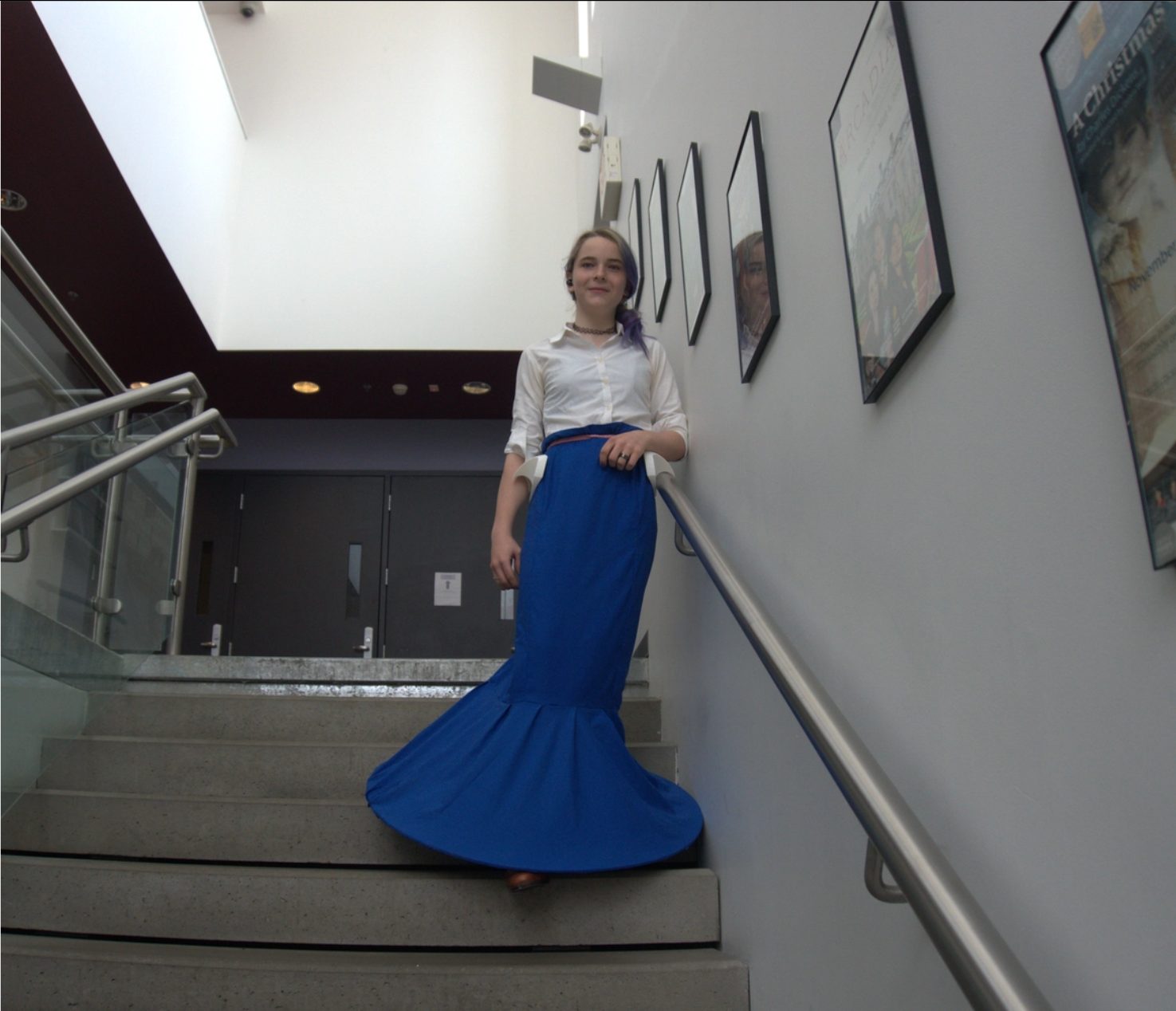
Wearer in blue ADA dress on stairwell, dress flaring at the base03 — Full silhouette · stairwell
Wearer spinning in dress against galaxy mural03 — Movement · the flare
Wearer struggling on a non-compliant ramp threshold with dumpsters03 — The conflict moment
Wearer caught at narrow railing with shopping carts blocking path03 — Caught at a narrow rail
Project04

VR Glove

Hand-Tracking Input for Virtual Reality

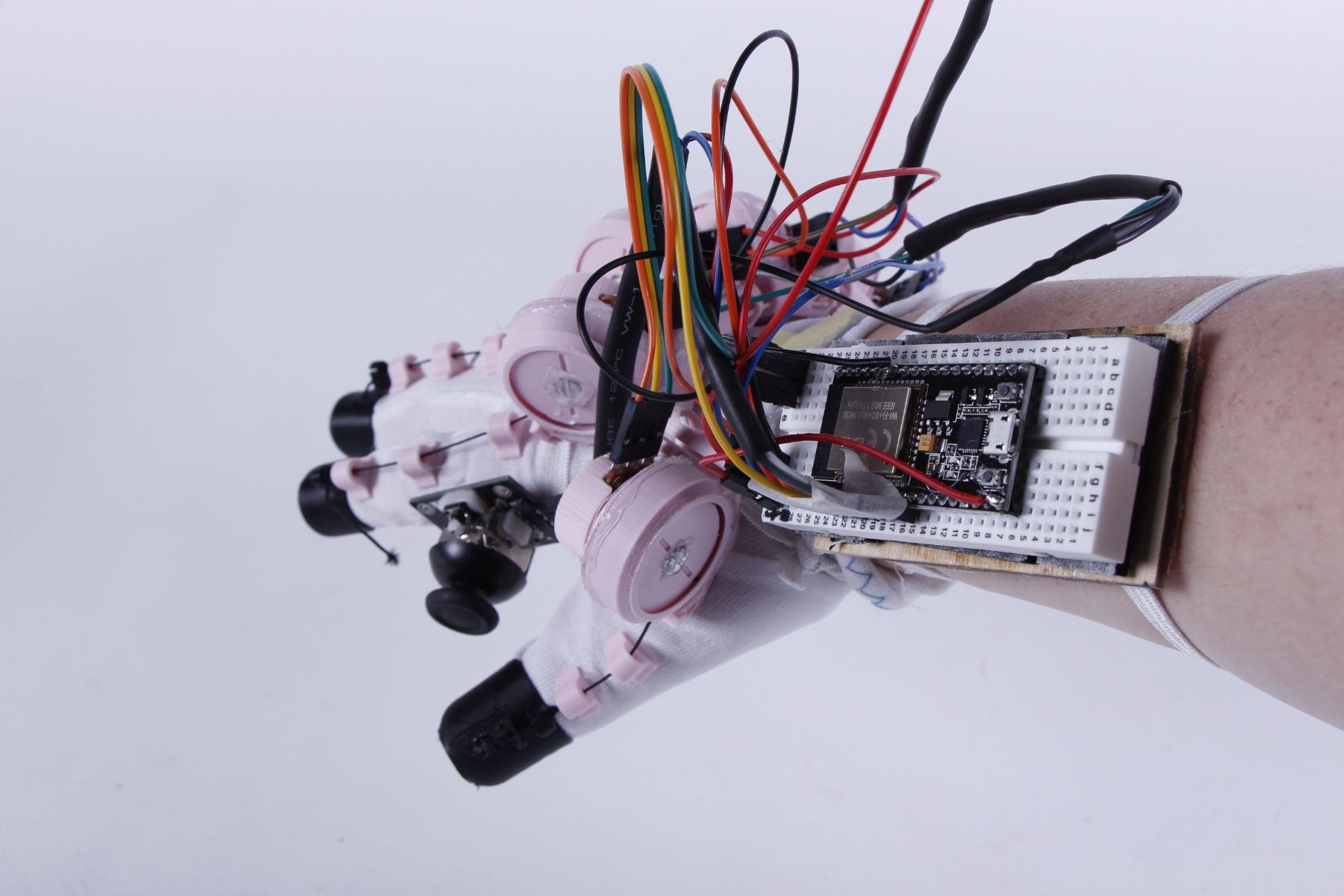
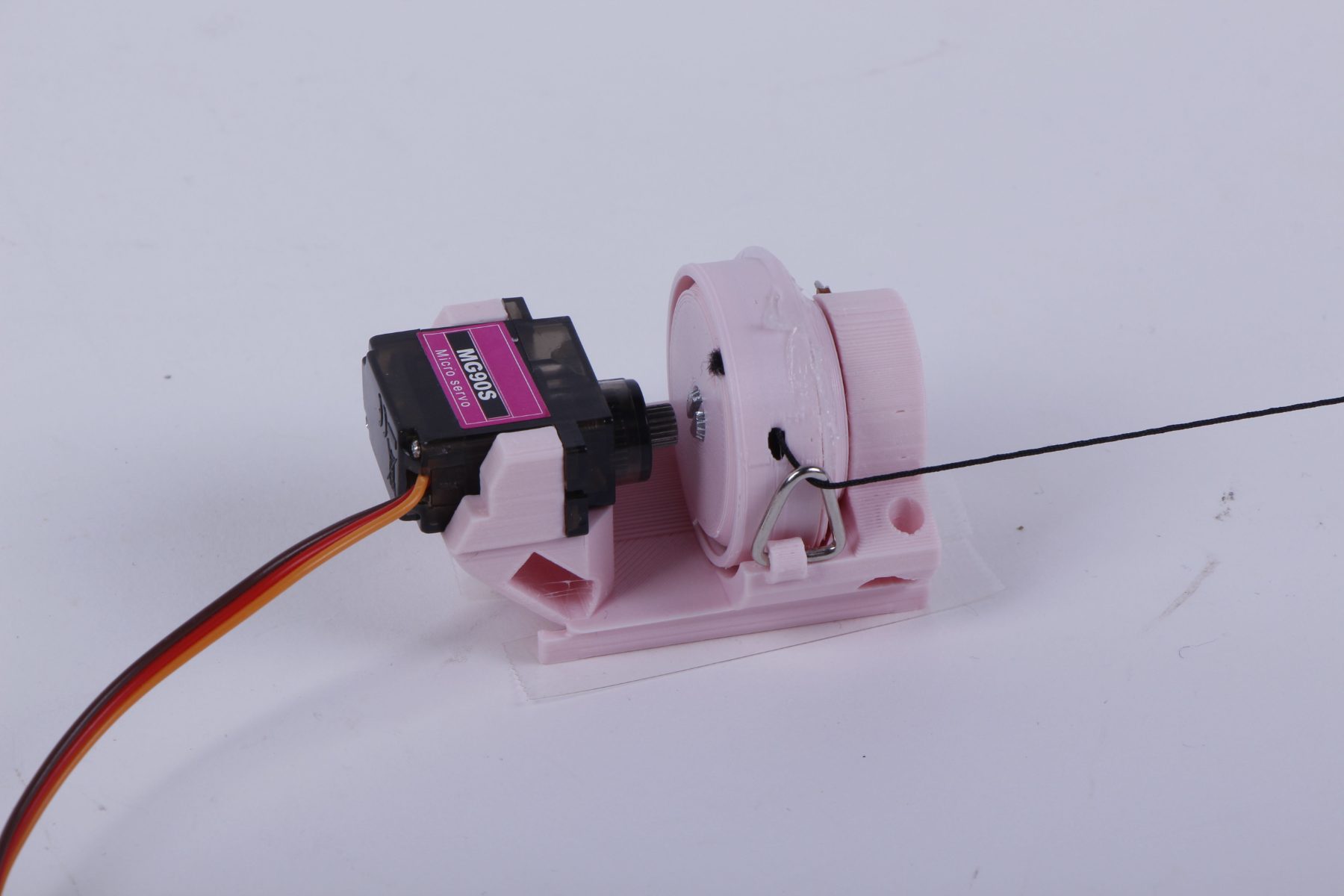
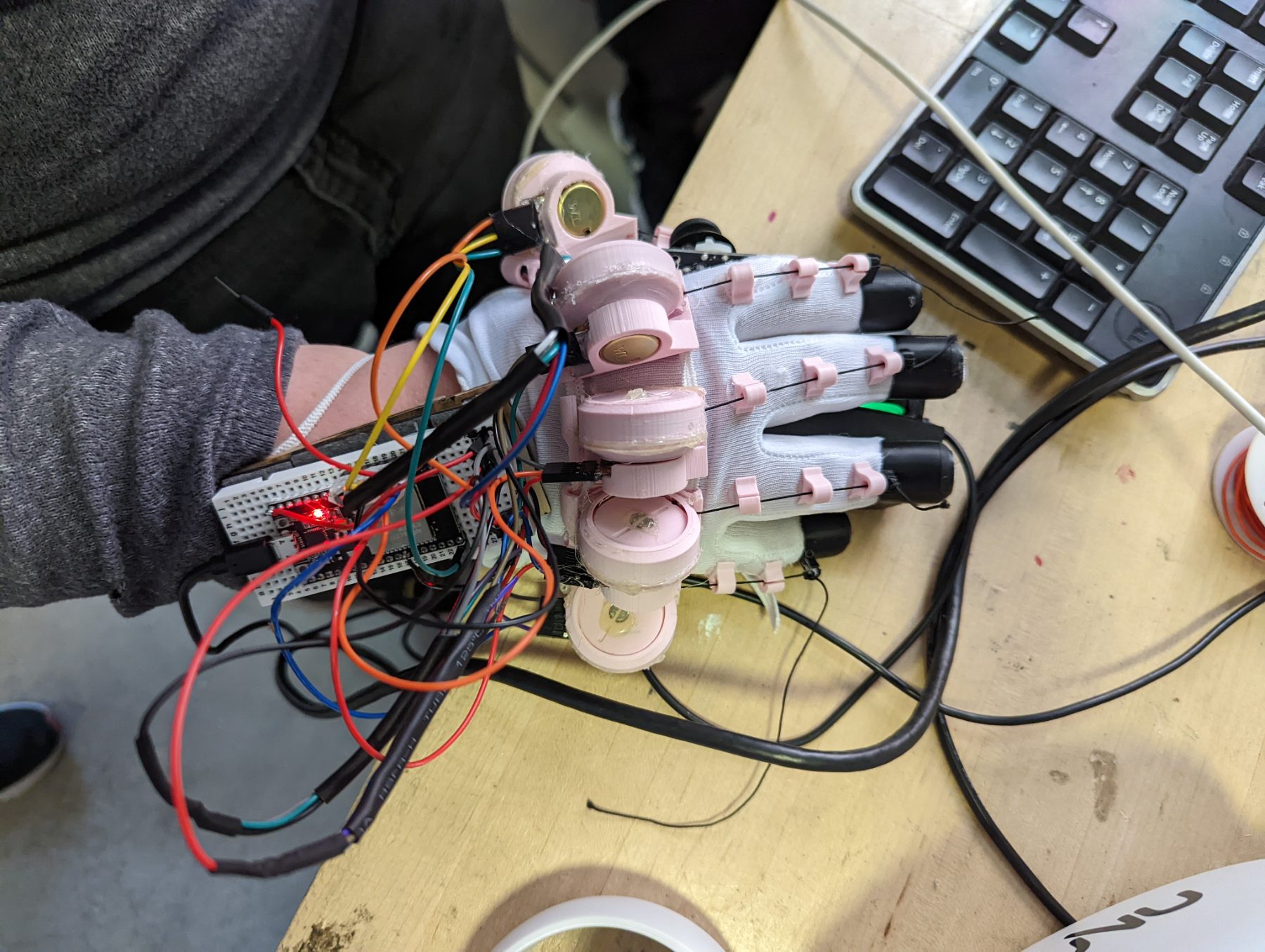
I wanted to replace the standard VR controller with something more intuitive — a glove that tracks individual finger movements and lets you interact with virtual environments using your actual hand. Starting from an existing open-source build, I adapted the design to use spring-loaded potentiometers for flex sensing, retractable badge reels for positional tracking, and an ESP32 for wireless communication with a Meta Quest 2.

Each finger got a custom cap and guide node to keep sensors aligned during motion. The glove was functional and gave me a solid foundation to build on — haptic feedback was next on the list.

VR glove on hand showing pink 3D-printed sensor housings, ESP32 on breadboard, finger caps04 — Glove on hand
Detail of pink 3D-printed sensor housing with MG90S micro servo and retraction line04 — Force feedback assembly
Glove from above with breadboard, ESP32, finger sensors and wiring04 — Wiring · ESP32 layout
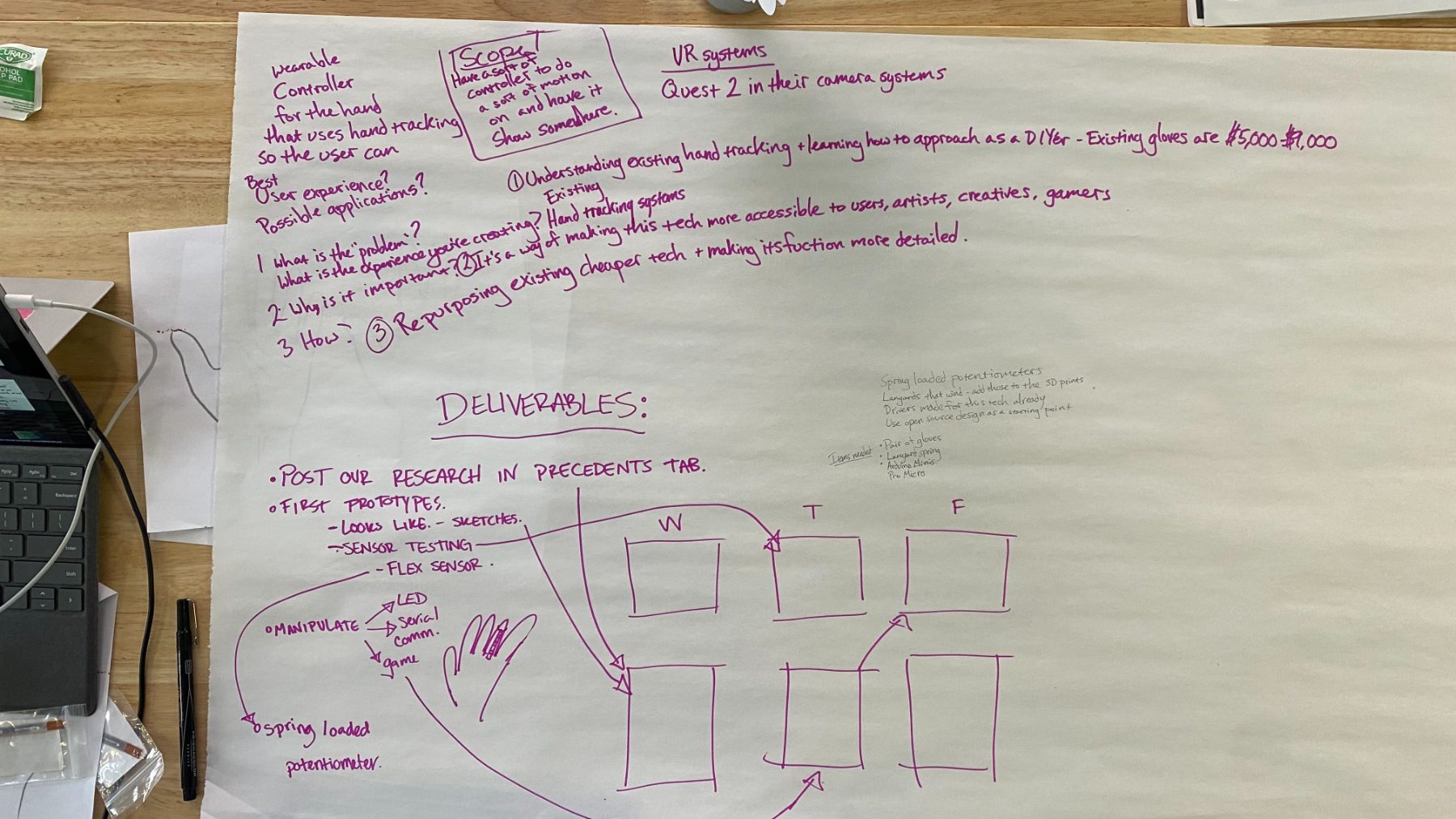
Hand-drawn project notes — scope, deliverables, prototype sketches04 — Scope · deliverables sketch
Project05

Bio-Plastic
PCB

Rethinking Circuit Boards from the Ground Up

Standard circuit boards depend on rare earth metals that are energy-intensive to mine and nearly impossible to recycle cleanly. Our team designed a substitute that uses conductive paint in place of etched metal traces — making the board biodegradable at the consumer scale.

For industrial use, we developed a reclamation process: dissolving the board in water and recovering the metals through existing water treatment techniques. The project was a systems-level exercise in thinking past the object — asking not just what the board is made of, but what happens to it at the end of its life.

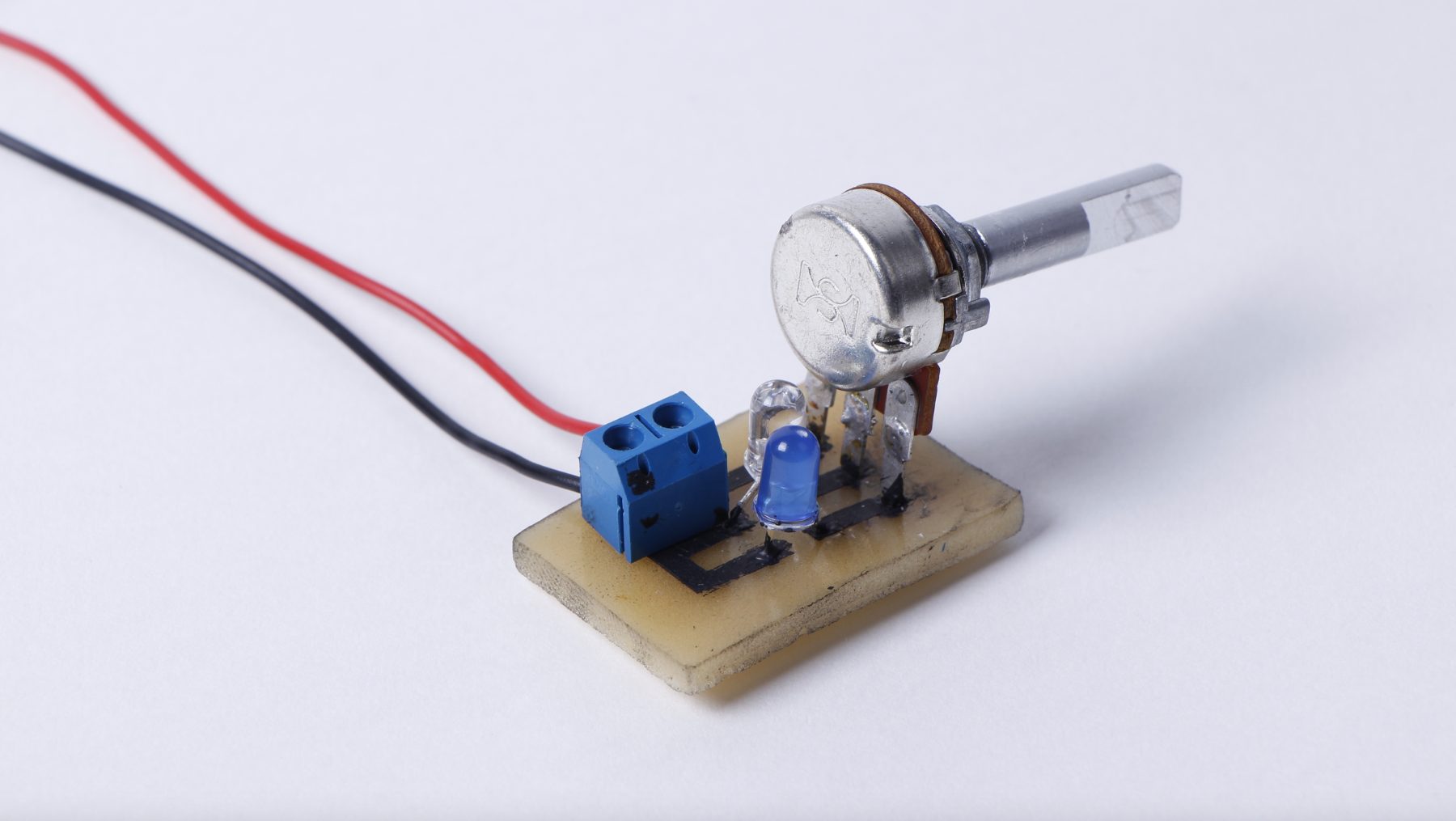
Working circuit on bio-plastic substrate — blue LED, potentiometer, terminal block on translucent amber base05 — Working circuit on bio-plastic board
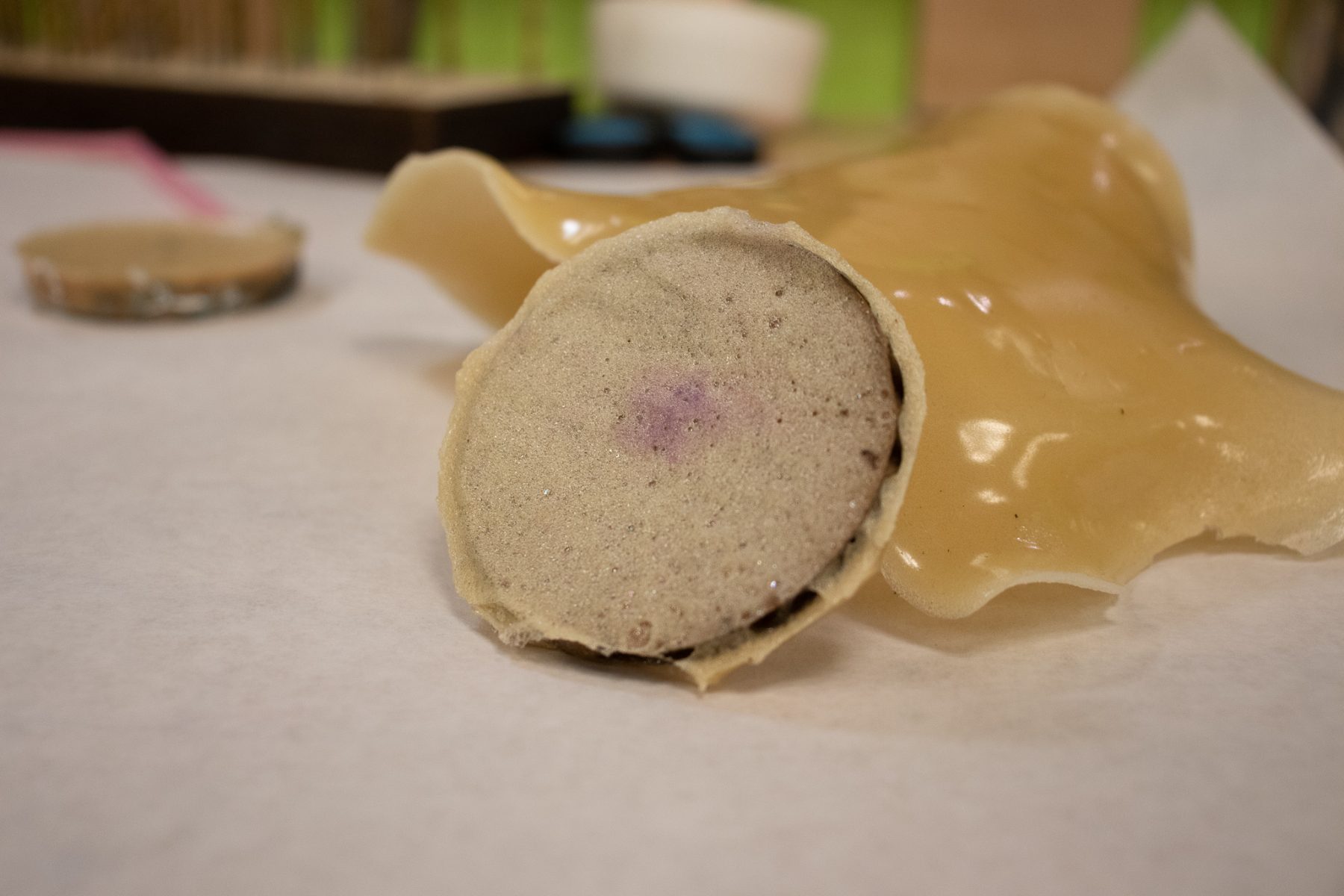
Bio-plastic disc with purple iodine indicator stain on a sheet of cured bio-plastic05 — Indicator stain
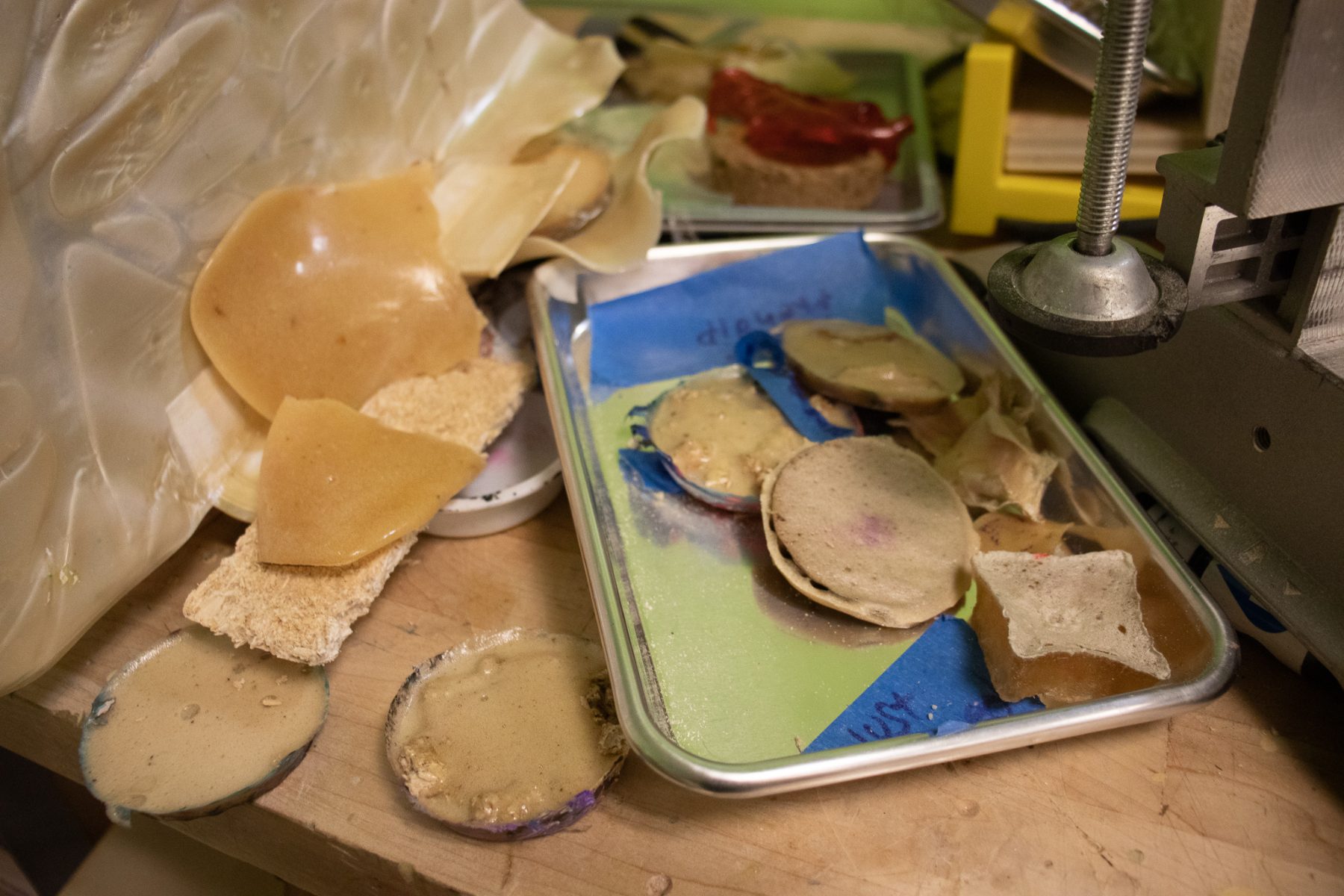
Workbench with stacks of bio-plastic discs and sheets, drill press, painted tray05 — Composit testing
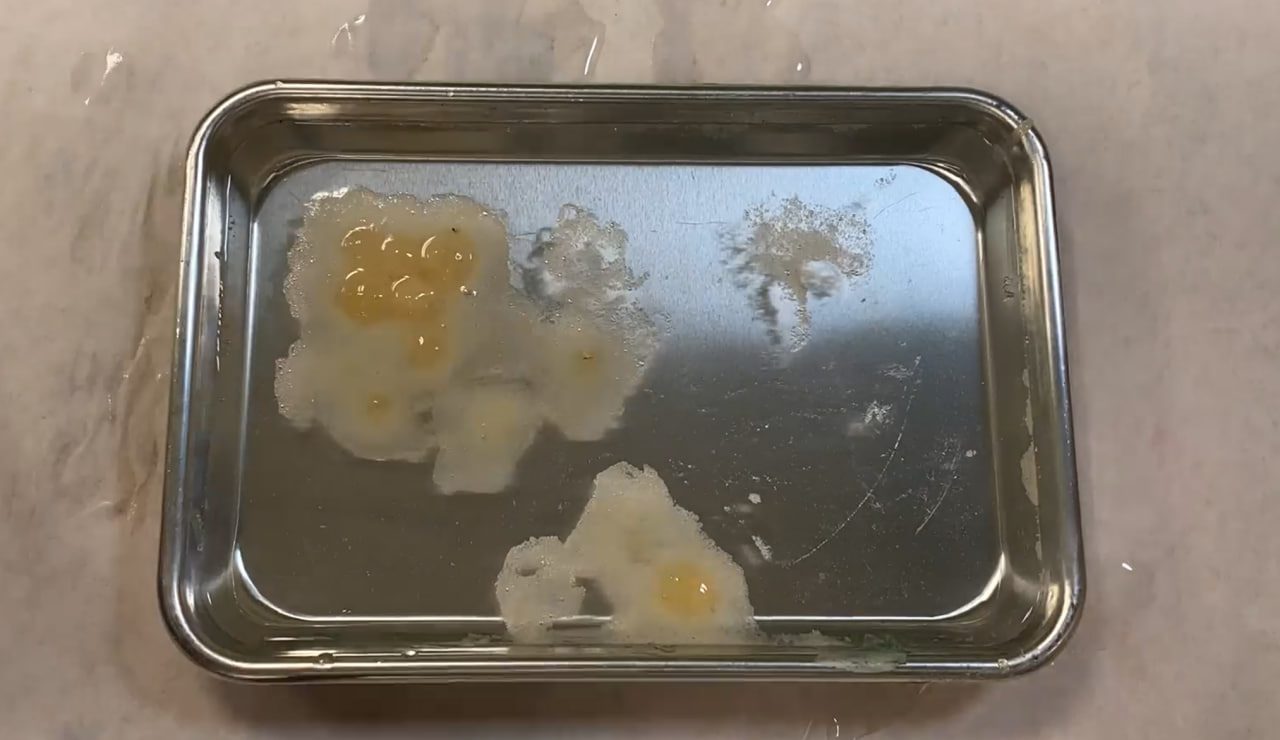
Stainless tray with bio-plastic samples scorched and bubbled by a soldering iron05 — Dissolving
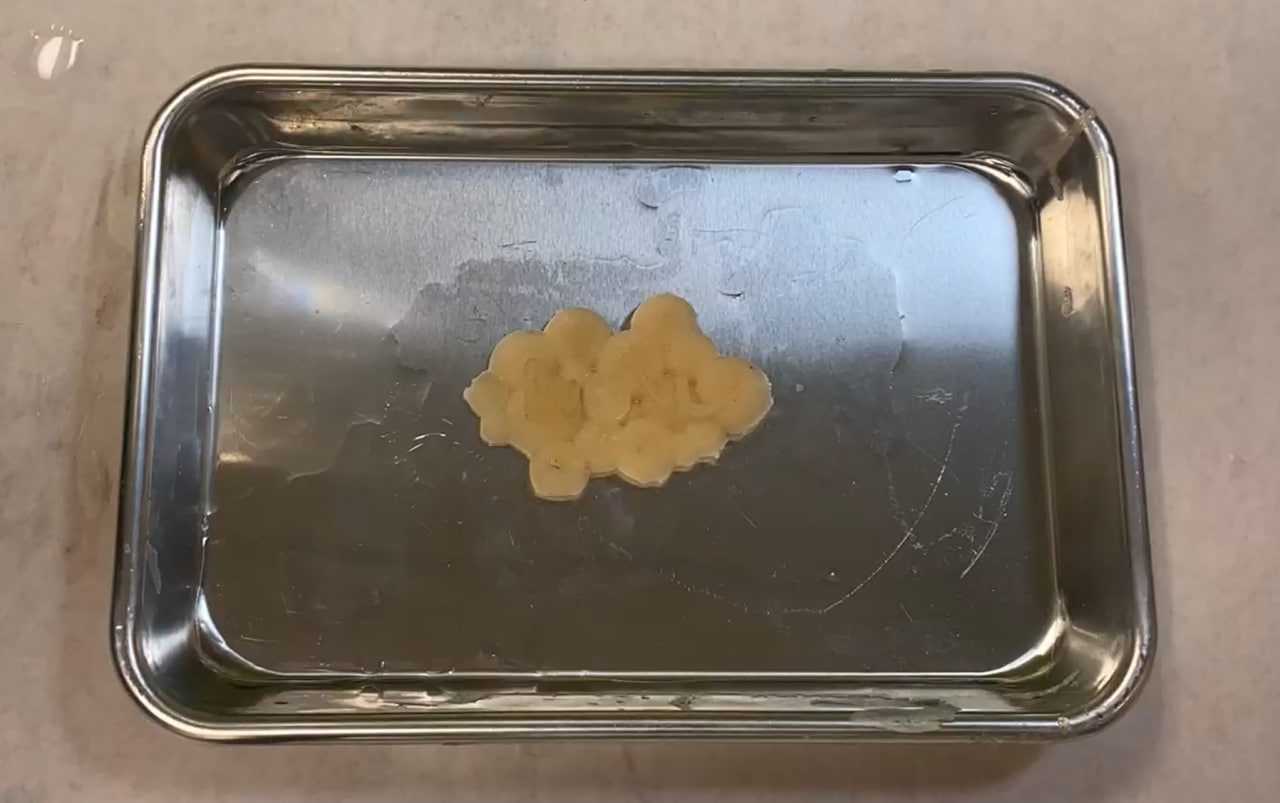
Single melted bio-plastic sample in a stainless tray after heat exposure05 — Water sollubility testing
Project06

Joylogger

A Device That Makes Invisible Emotions Visible

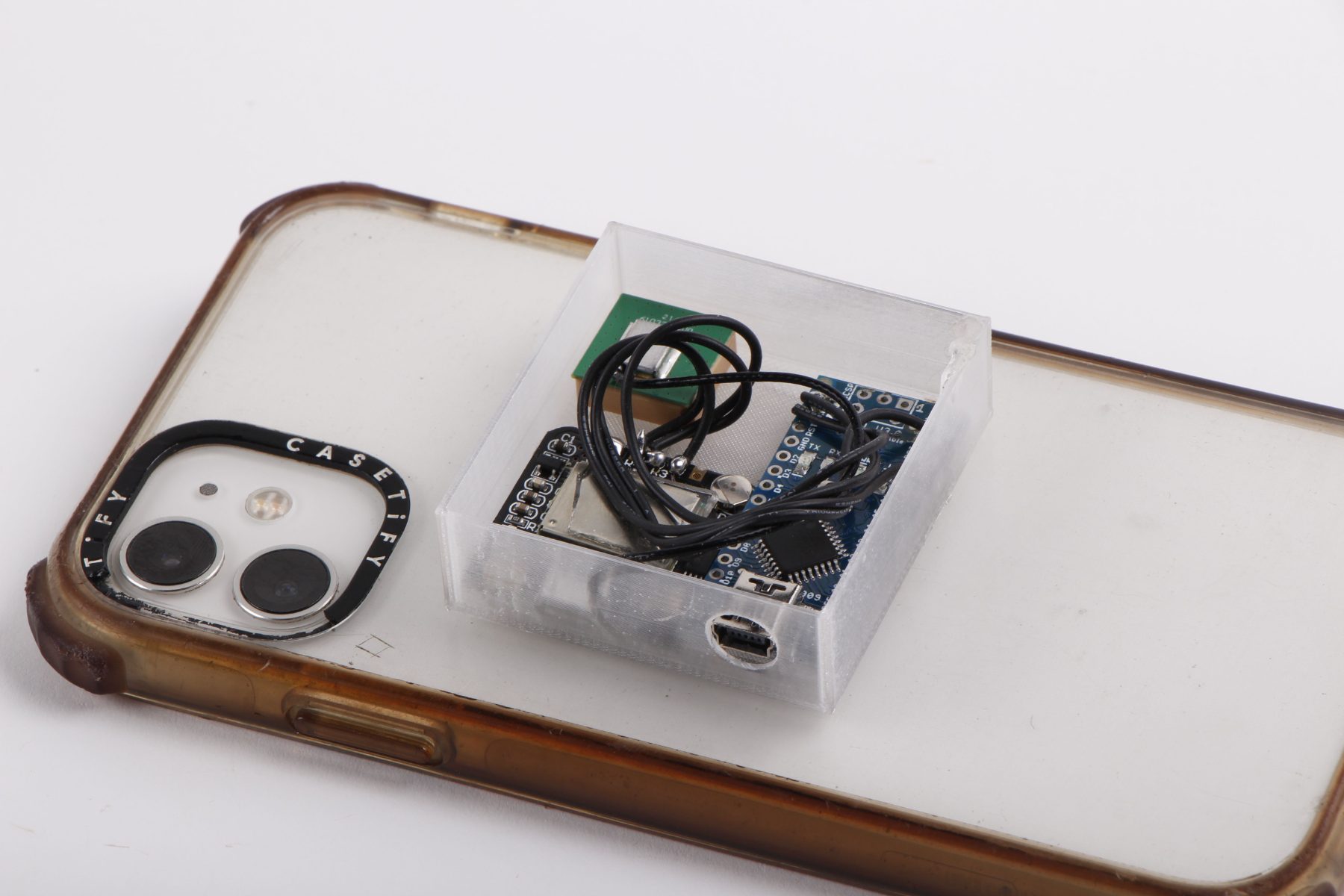
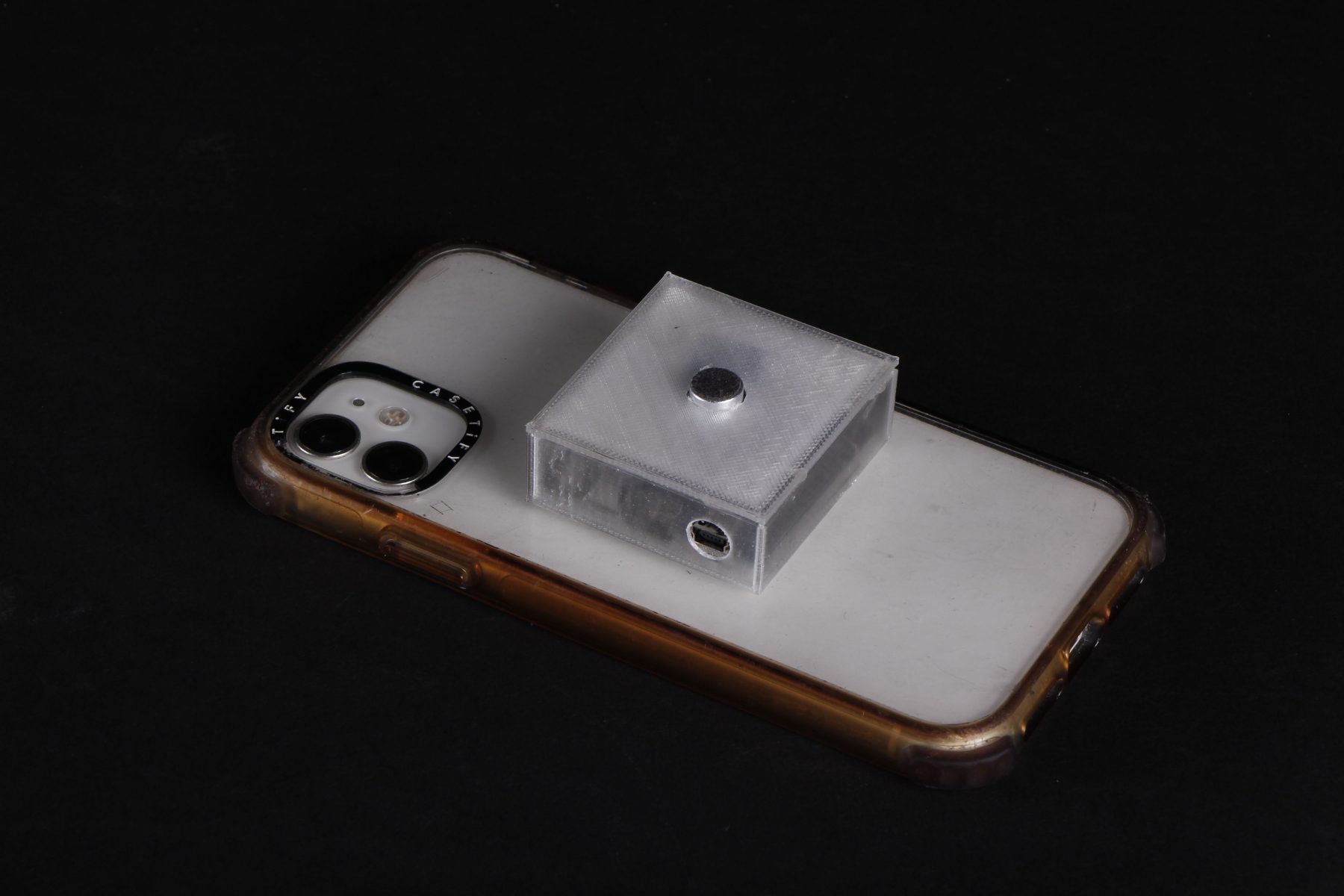
This project came from a client who had a hard time noticing or communicating when they felt joyful — the feeling would pass before they could hold onto it. I designed a small wearable that lets you mark a moment of joy as it happens: press it, and it logs the time and GPS location.

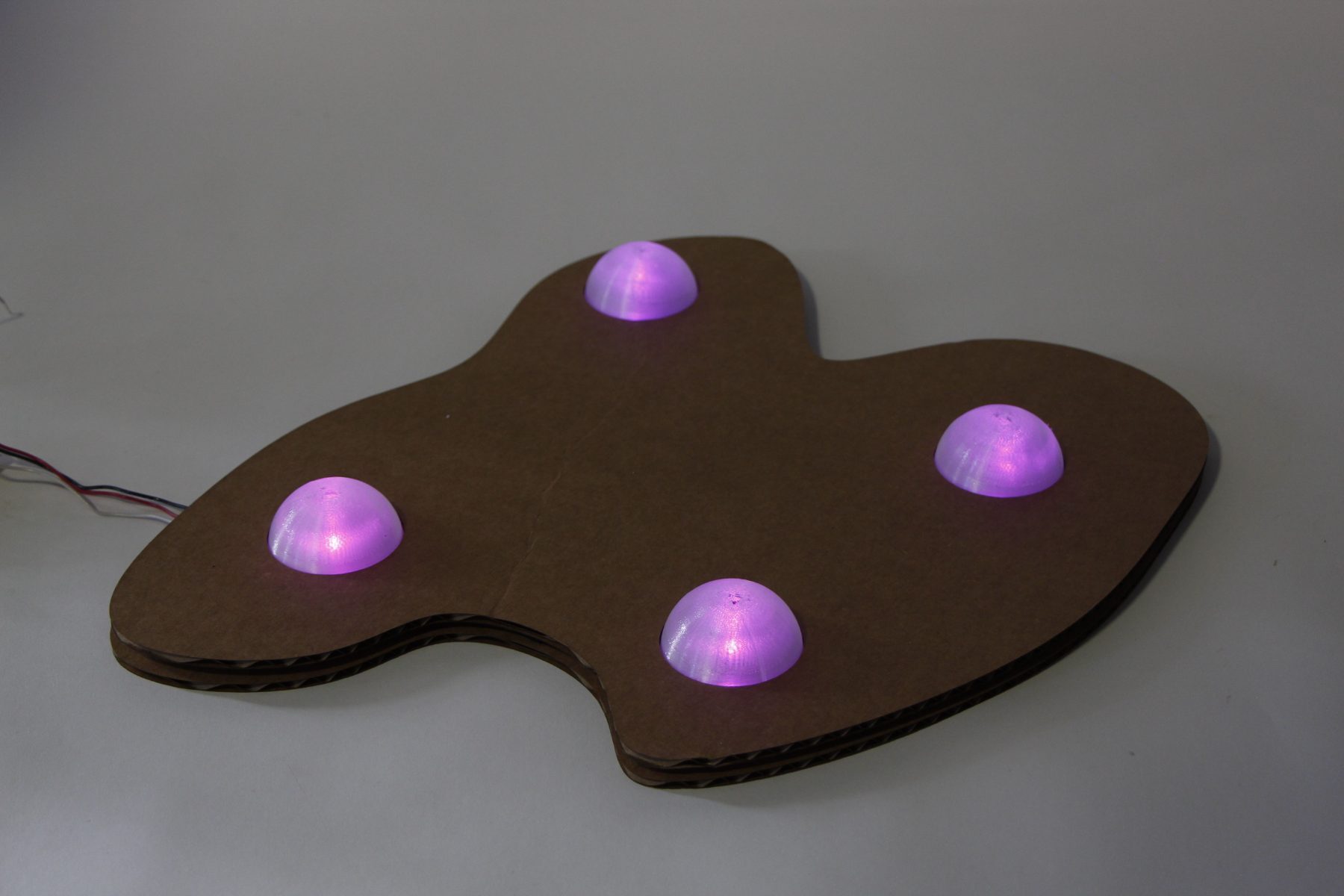
At the end of the day it generates a physical light map — LEDs placed at each location, glowing at different intensities based on how often you activated the device there. The result is a personal artifact that makes an invisible emotional pattern into something you can actually look at.

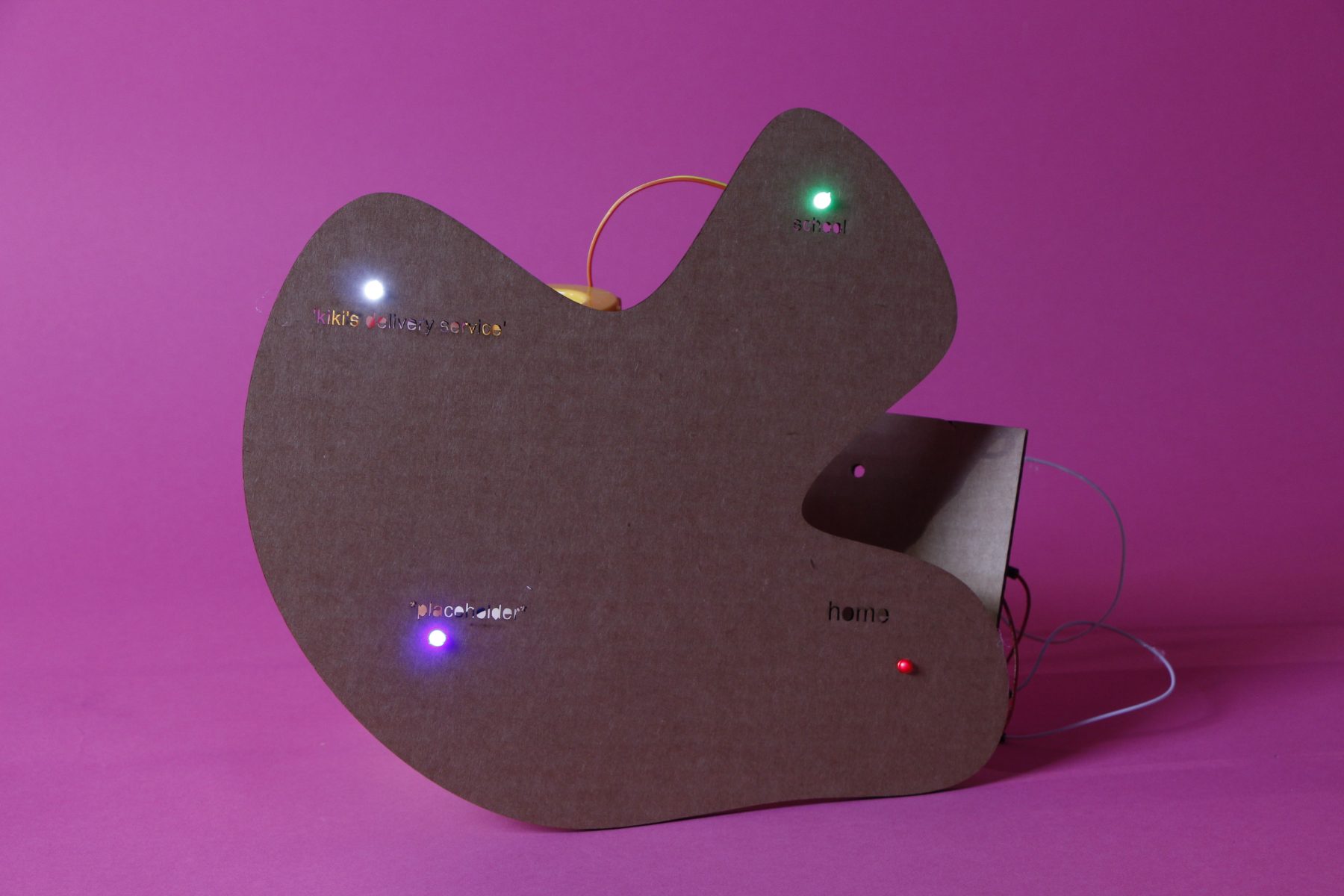
Joylogger LED map with multicolored points lit, labeled with locations06 — Personal map · LEDs lit
Internals of the wearable showing GPS module and Arduino06 — Internals · GPS + Arduino
Light map glowing pink-purple06 — Day's data, lit
Light map with warm-white LEDs06 — Same map, different mood
Project07

Begode Master
Modifications

Custom 3D-Printed Parts for a Performance EUC

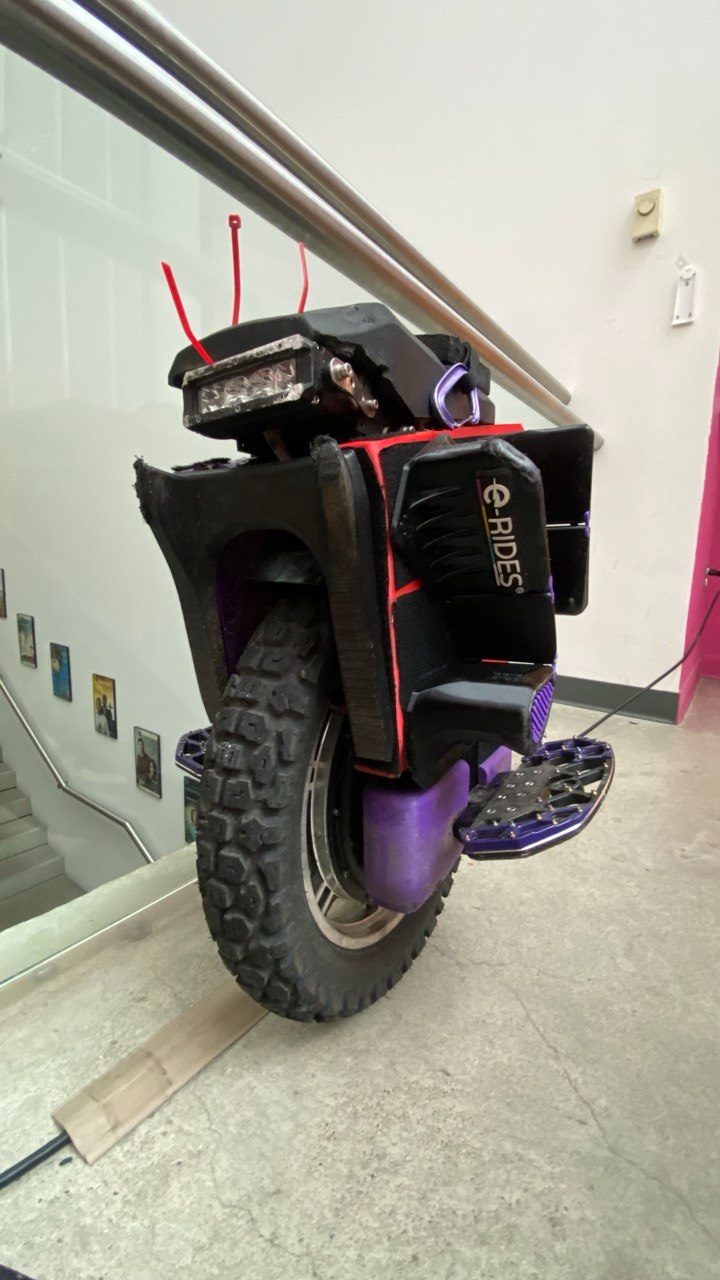
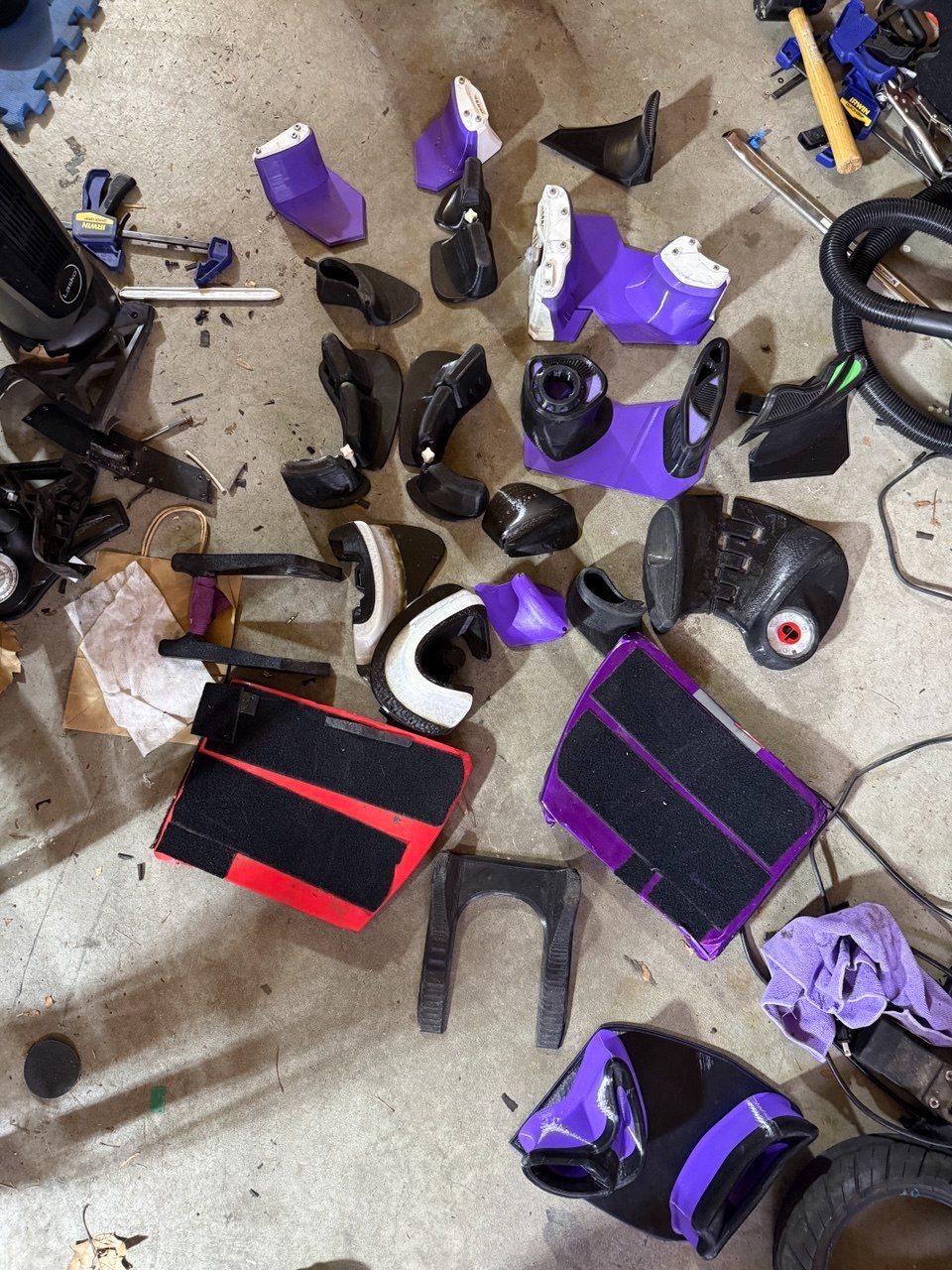
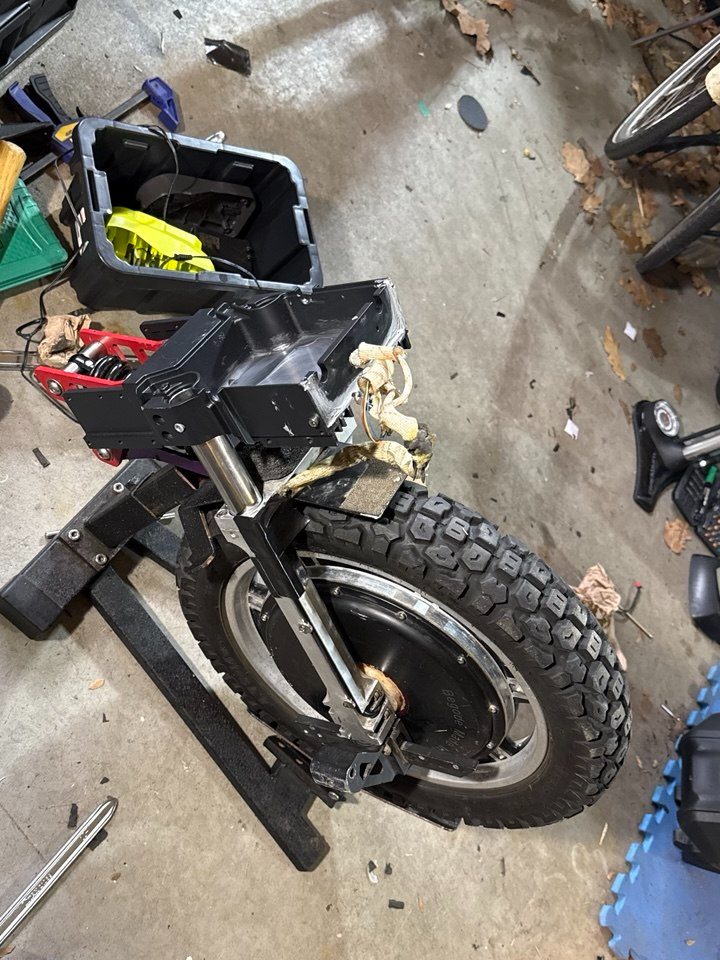
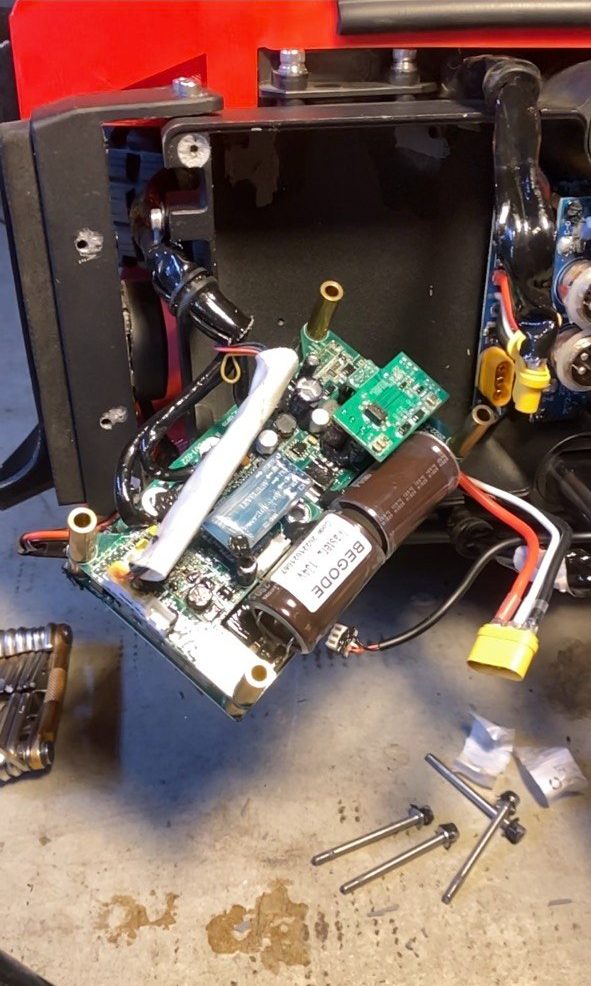
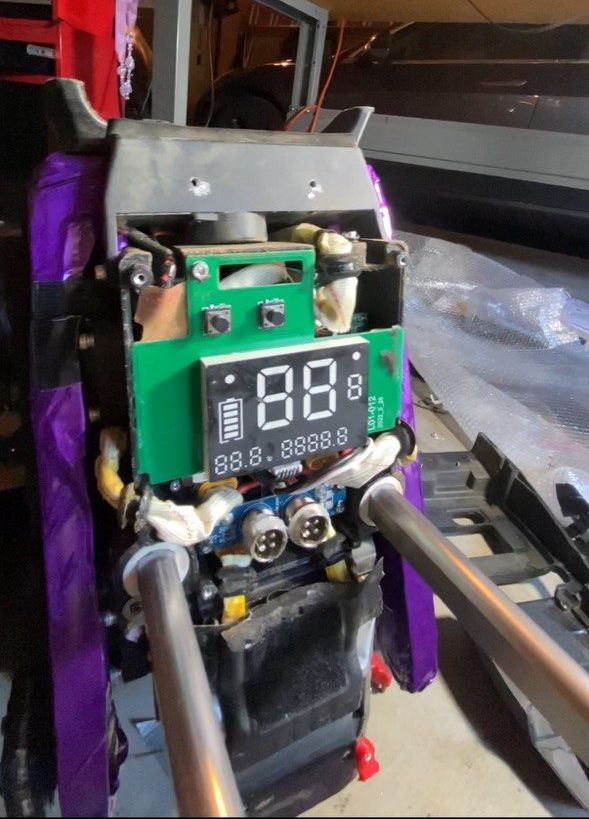
I bought a Begode Master — one of the more demanding electric unicycles on the market — and disassembled it to understand it at the component level. From there I designed and printed a full set of protective and performance accessories: bumpers, side fairings, and an extensive range of power pad variants, each tested at different infill percentages and wall counts to find the right balance of flex, grip, and durability.

I iterated on designs based on direct riding feedback and eventually sold parts to other riders in the local community. This is where I first became a technical resource for other people on the same platform.

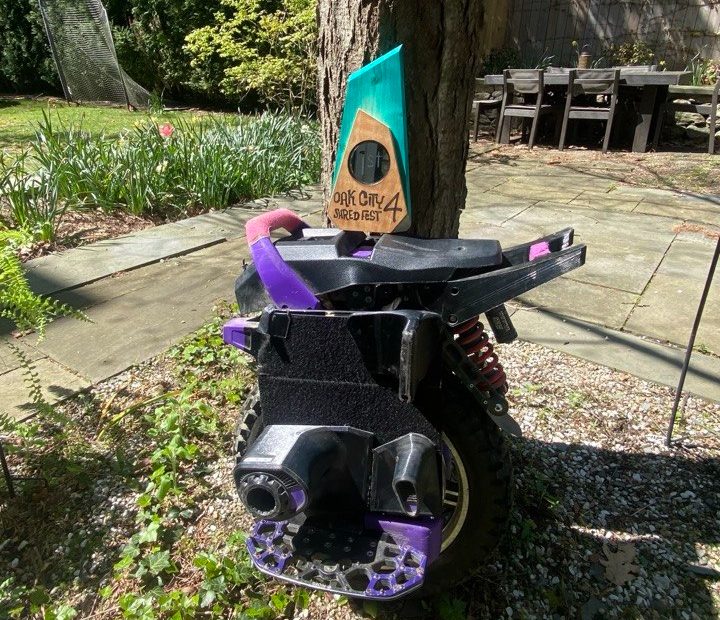
Begode Master with purple modifications, on stand outdoors07 — Master with custom mods
Begode Master against stairwell rail07 — In the stairwell
Flat lay of printed pad variants in purple, black and red07 — Pad variant flat lay
Wheel pulled mid-disassembly with toolbox07 — Pulled apart, again
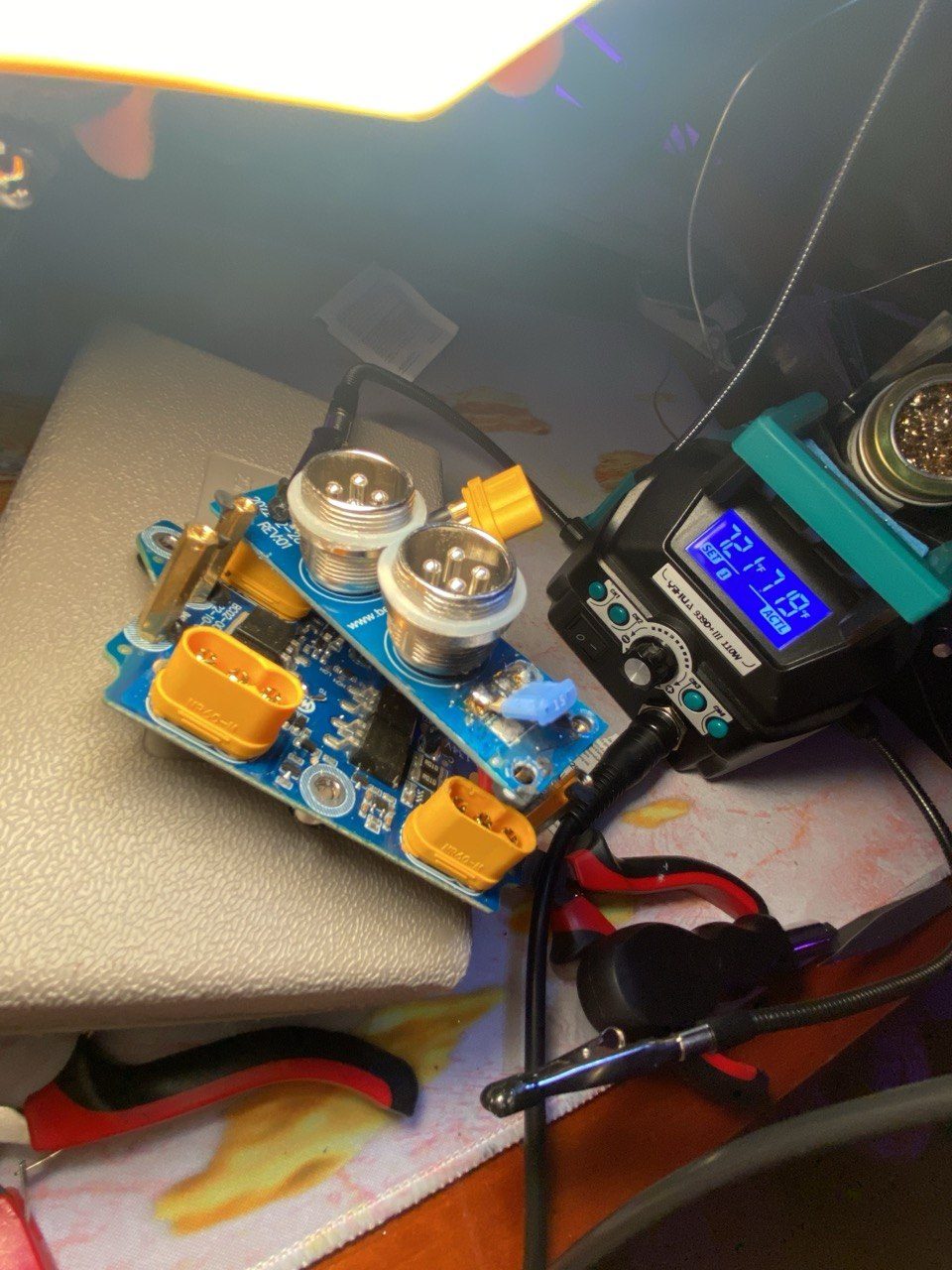
Custom Begode control board with soldering iron07 — Controller board work
Begode internals exposed during repair07 — Disassembly
Begode display board exposed07 — Display assembly
Project08

Leaperkim Lynx Work + Mods

Deep Mechanical Work and Additions on a High-Performance Electric Unicycle

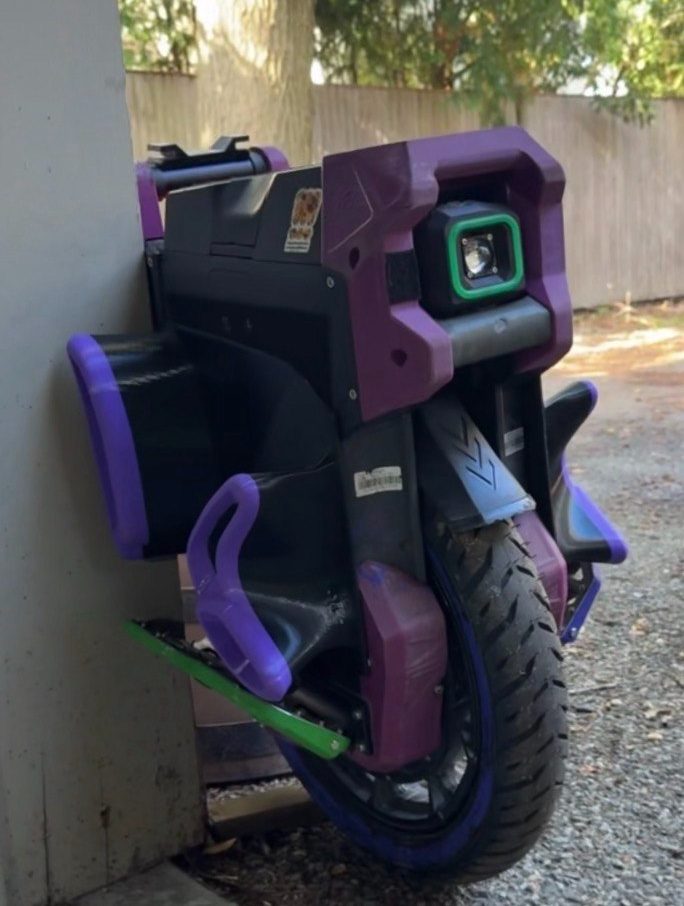
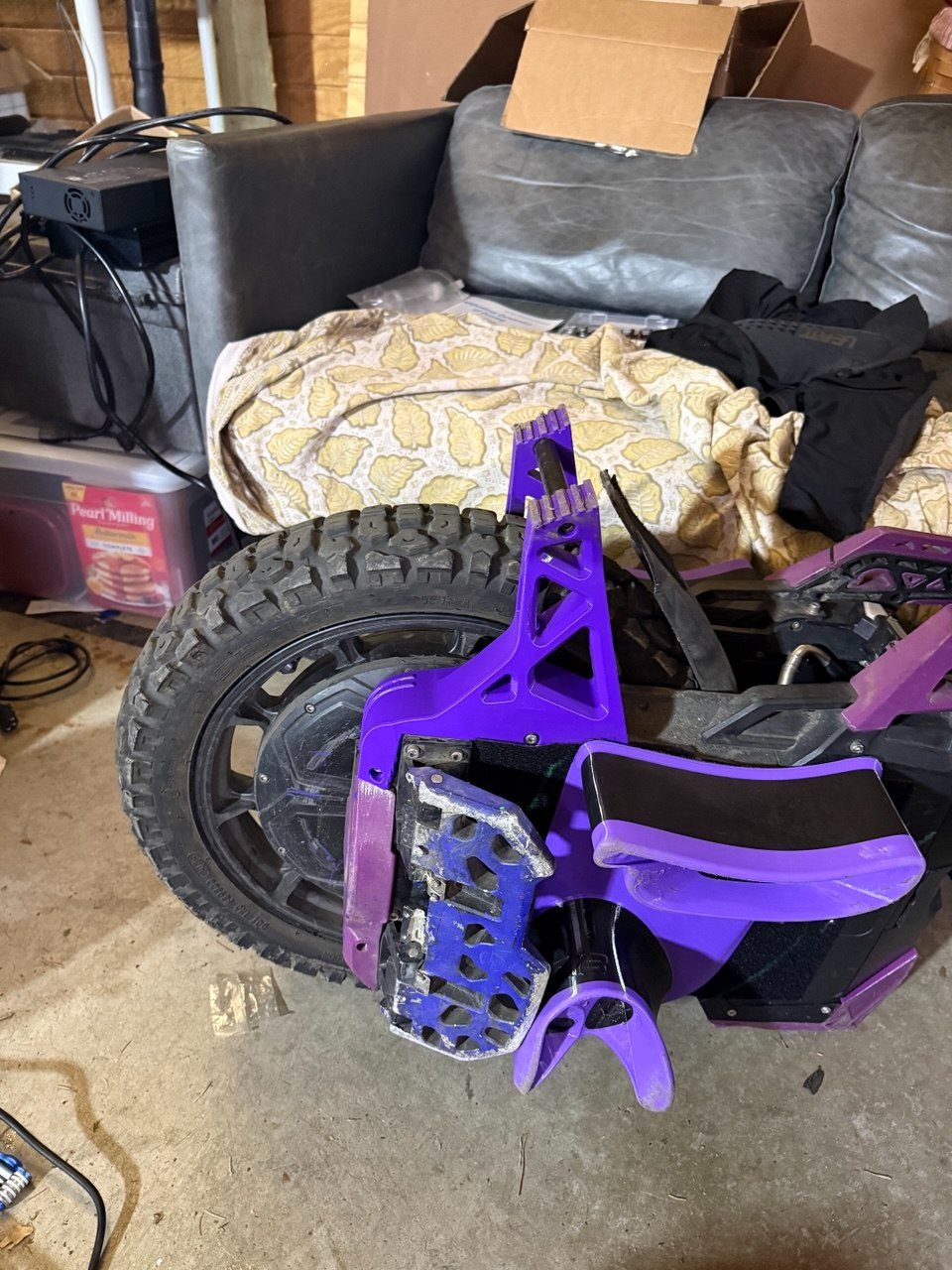
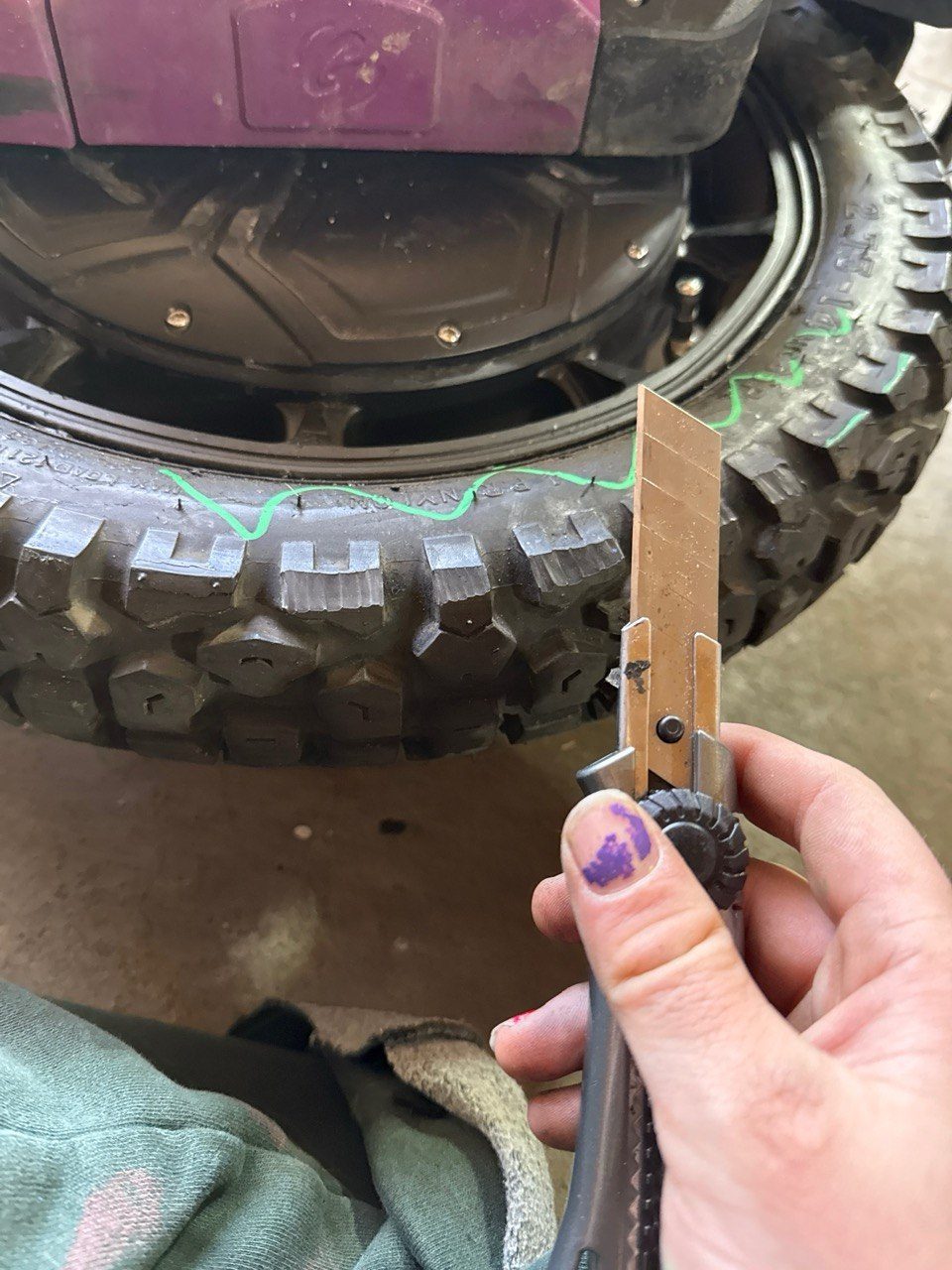
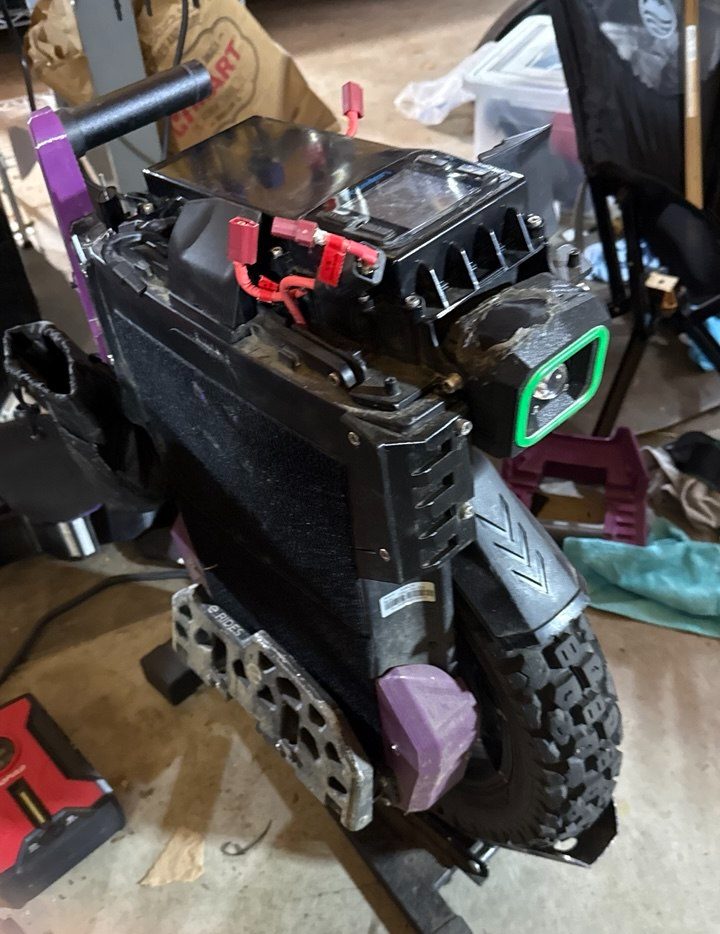
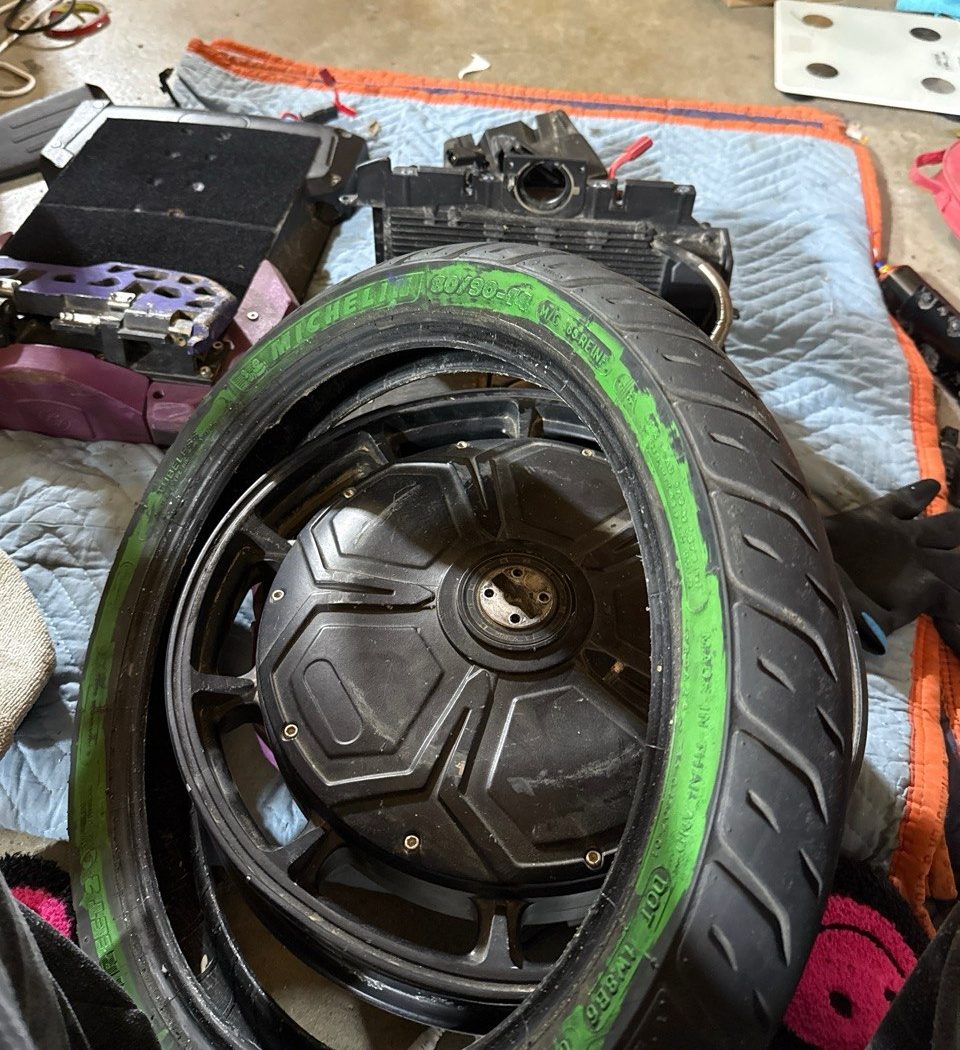
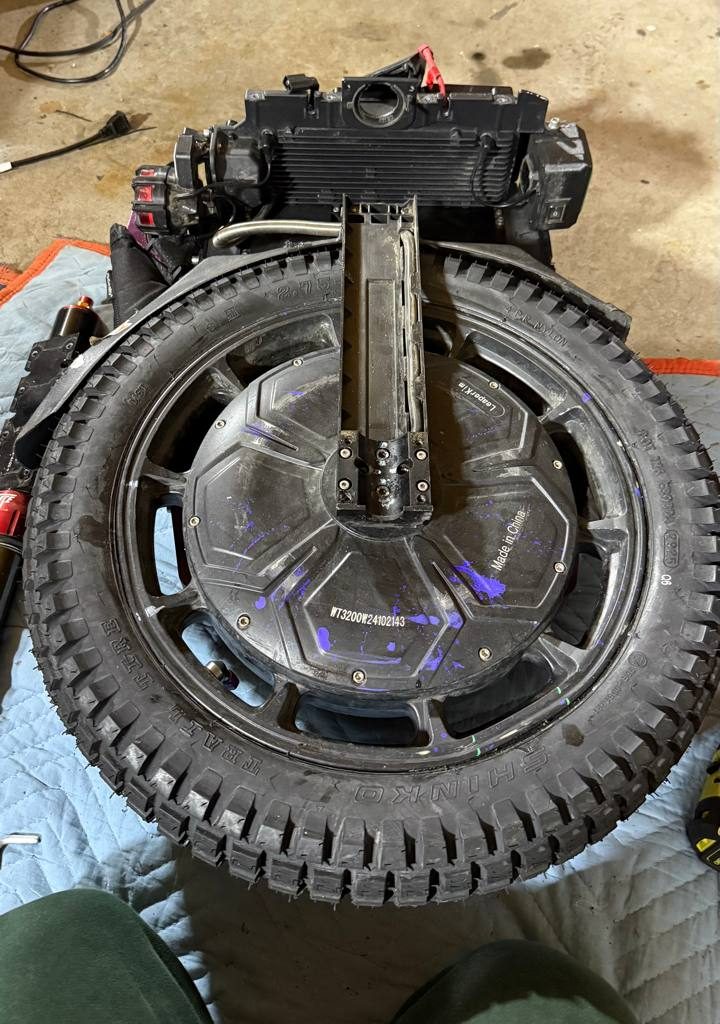
Since acquiring a Leaperkim Lynx in early 2025, I've disassembled it roughly thirty times. Some rebuilds were repairs; others were deliberate modifications — swapping components with custom or salvaged parts from other wheels, reworking the suspension, and refining the exterior.

In parallel I became the go-to mechanic for the local riding community: tire changes, electrical diagnosis, troubleshooting wheels that had been damaged or were behaving unpredictably. This is ongoing work, not a finished project — but it represents the clearest example I have of sustained technical practice, hands-on problem-solving, and the kind of knowledge you can only build by taking the same machine apart over and over.

Lynx with purple side panels and green camera08 — Side fairings + lighting
Lynx with purple custom parts in garage08 — Lynx with custom mods
Lynx wheel disassembled with green-painted tire08 — Wheel pulled · tire swap
Lynx mid-rebuild on the bench08 — Mid-rebuild on the bench
Hub motor inspection08 — Hub motor
Cutting a tire with a utility blade08 — Tire surgery
Project09

The Creator
Factory

Digital Illustration, Watercolor, and a Real Gallery Exhibition

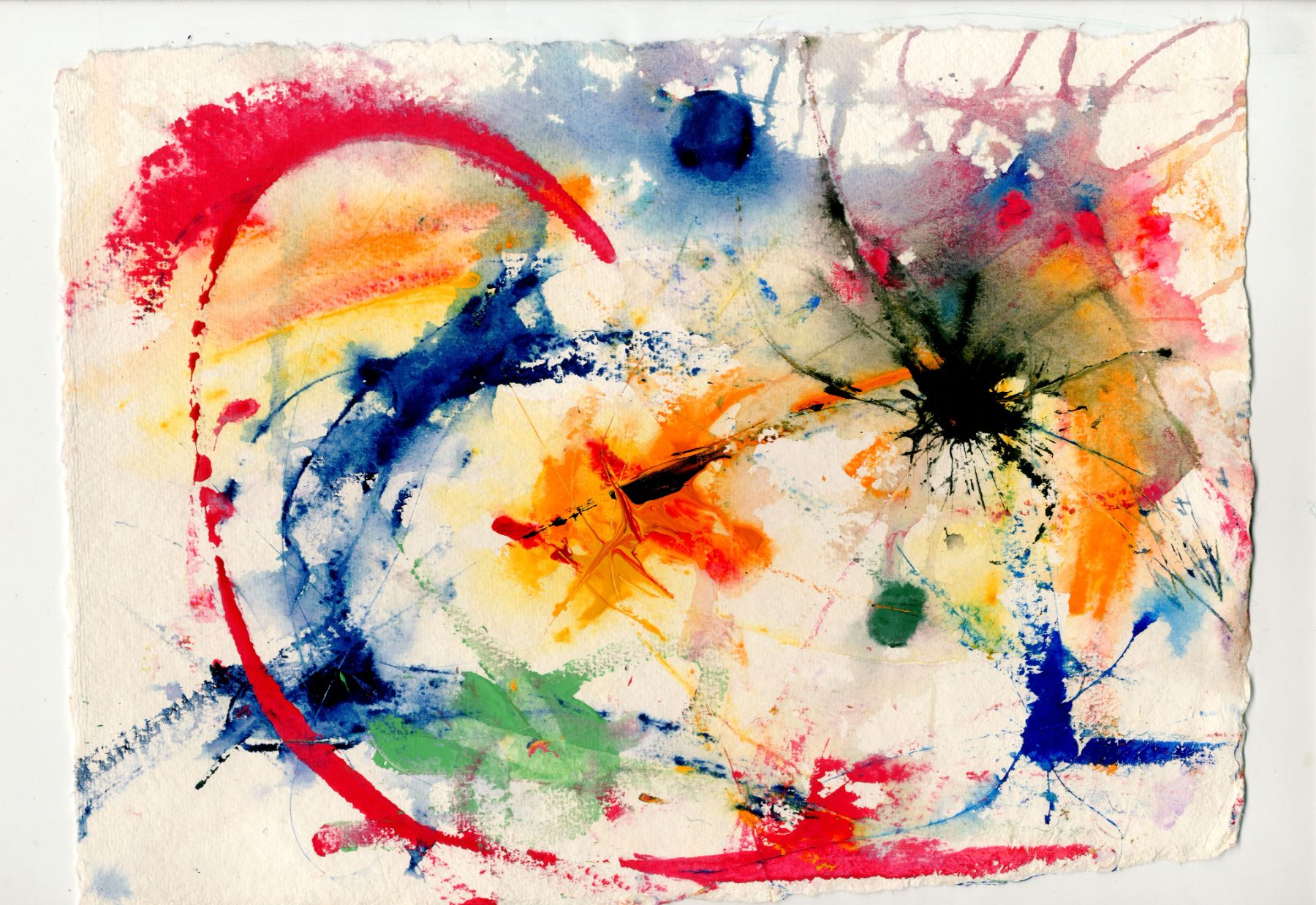
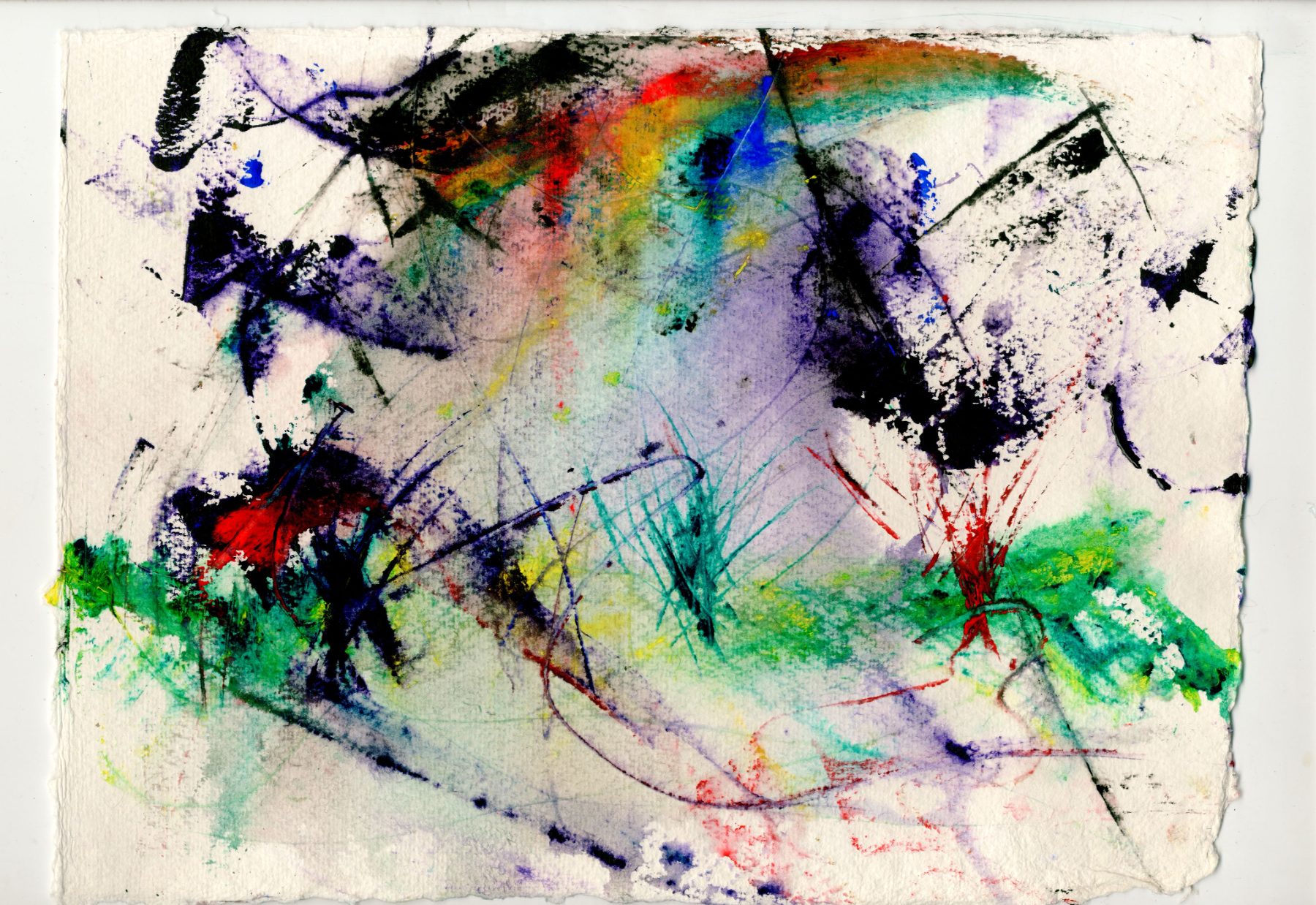
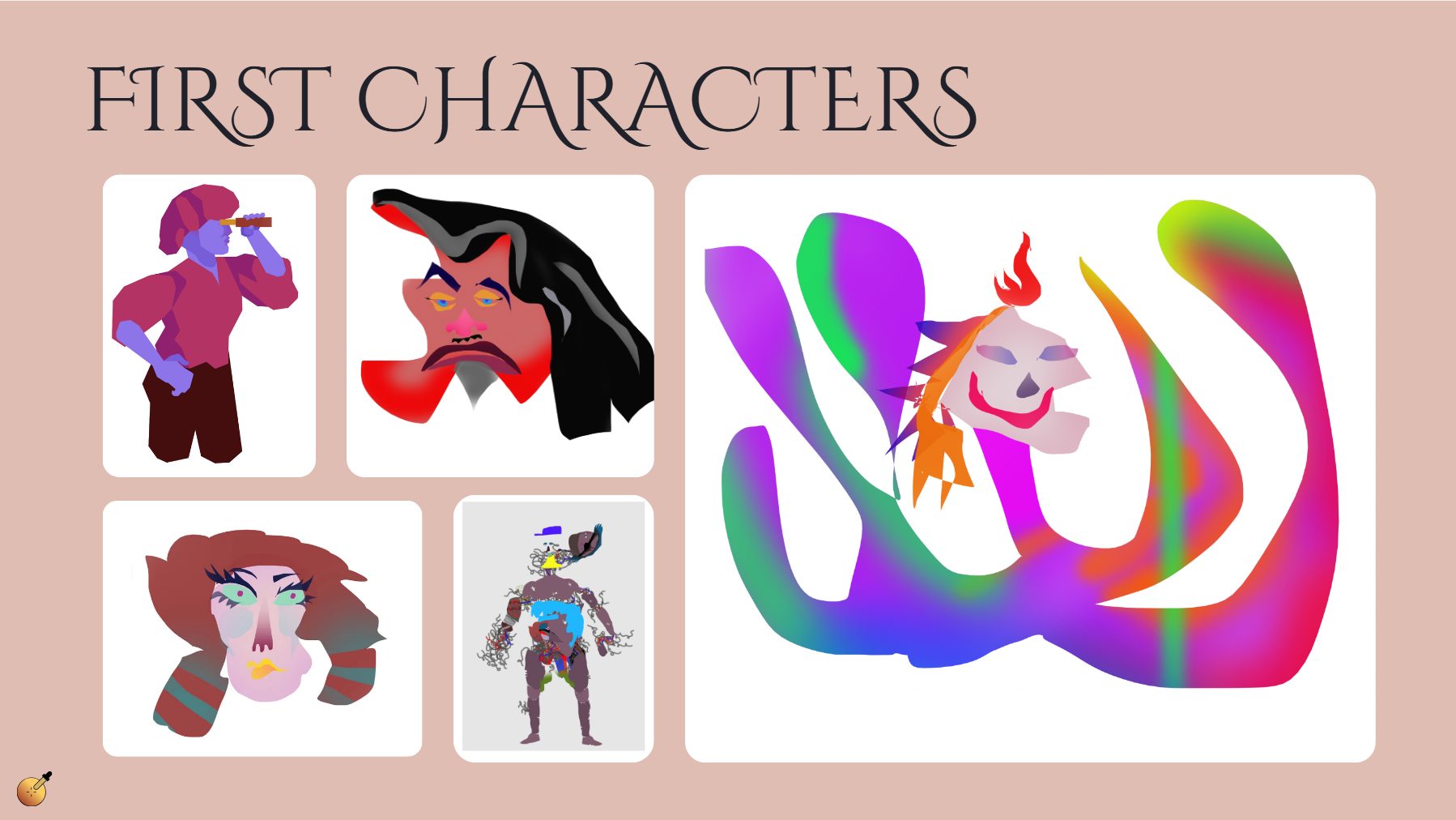
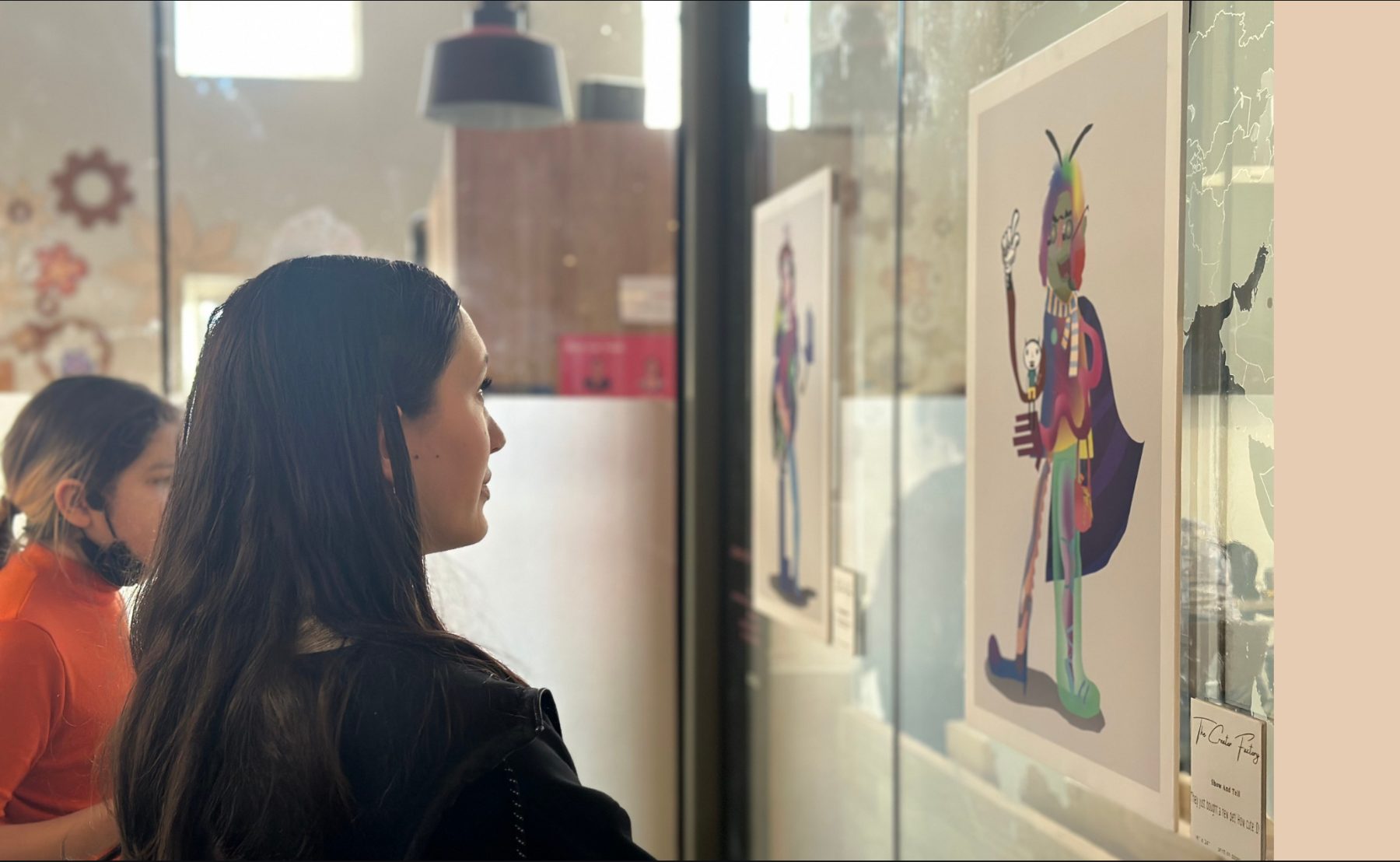
The Creator Factory was a studio built around philosophy, digital art, and the question of how to make prolifically across mediums. We covered digital character illustration in Photoshop, explored how AI fits into a creative process, studied traditional watercolor technique, and put on a real public gallery exhibition of our finished work.

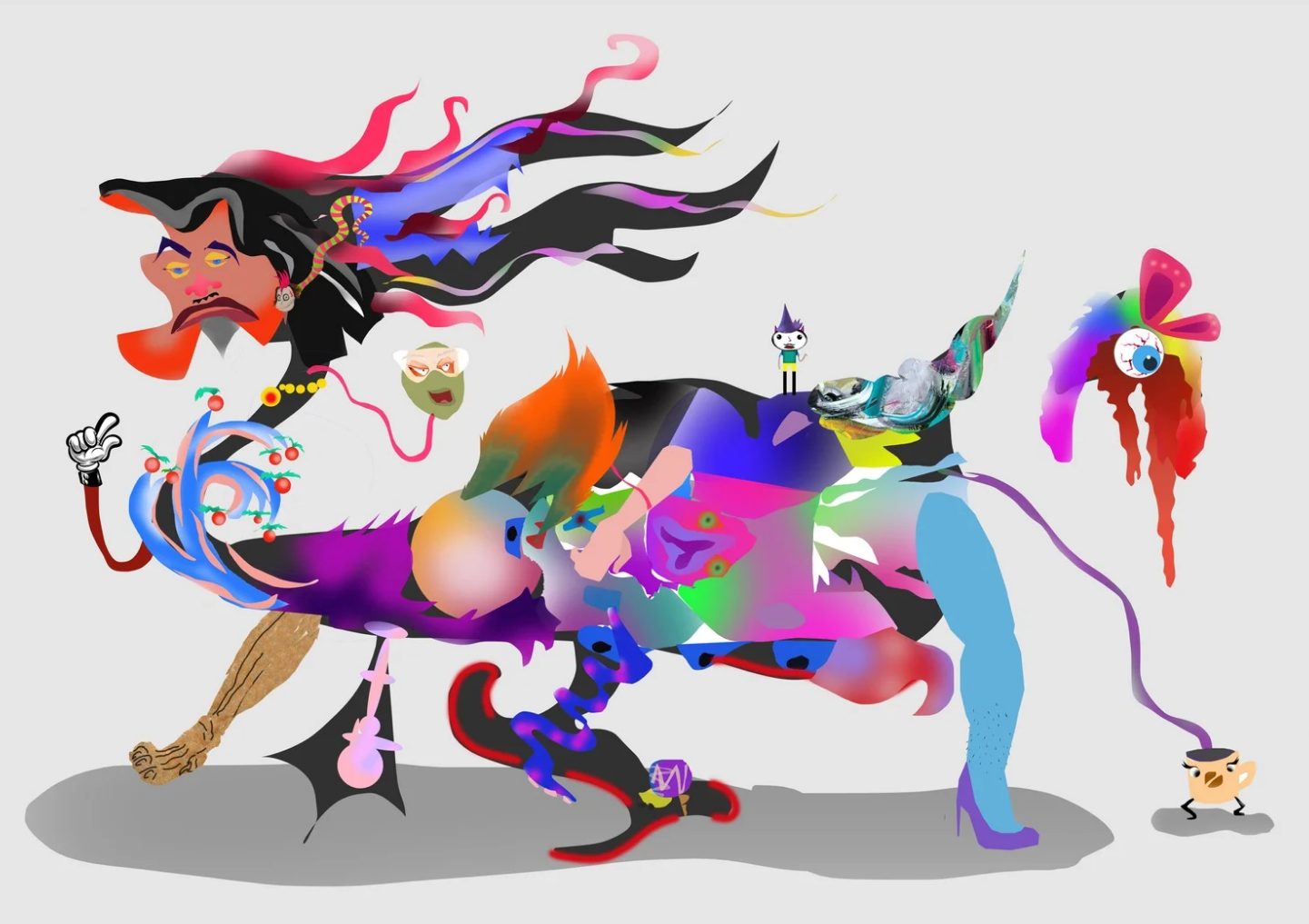
My final piece was a watercolor painting made with Munther Elsayed — a loosely representational work using wet-on-wet technique. We also each built a digital character illustration that was printed and hung in the show. Guest speakers included artist Raghava KK and his studio director, who pushed us to think about what it means to make a lot of things and make them mean something.

Watercolor — circular red and blue gestures with orange and yellow splatter09 — Watercolor study
Mixed-media watercolor with rainbow burst, scratched line work, and ink splatter on cream paper09 — Watercolor with Munther
Visitor looking at printed character illustrations framed and hung on a gallery wall09 — Gallery opening
Digital illustration — collaged composite character built from many vivid color shapes, exaggerated faces, and cartoon limbs09 — Digital character composition
Studio slide titled First Characters showing five early digital character studies on a peach background09 — First characters · studio slide
Project10

Polar Play

A Magnetic Exhibit for The Discovery Museum

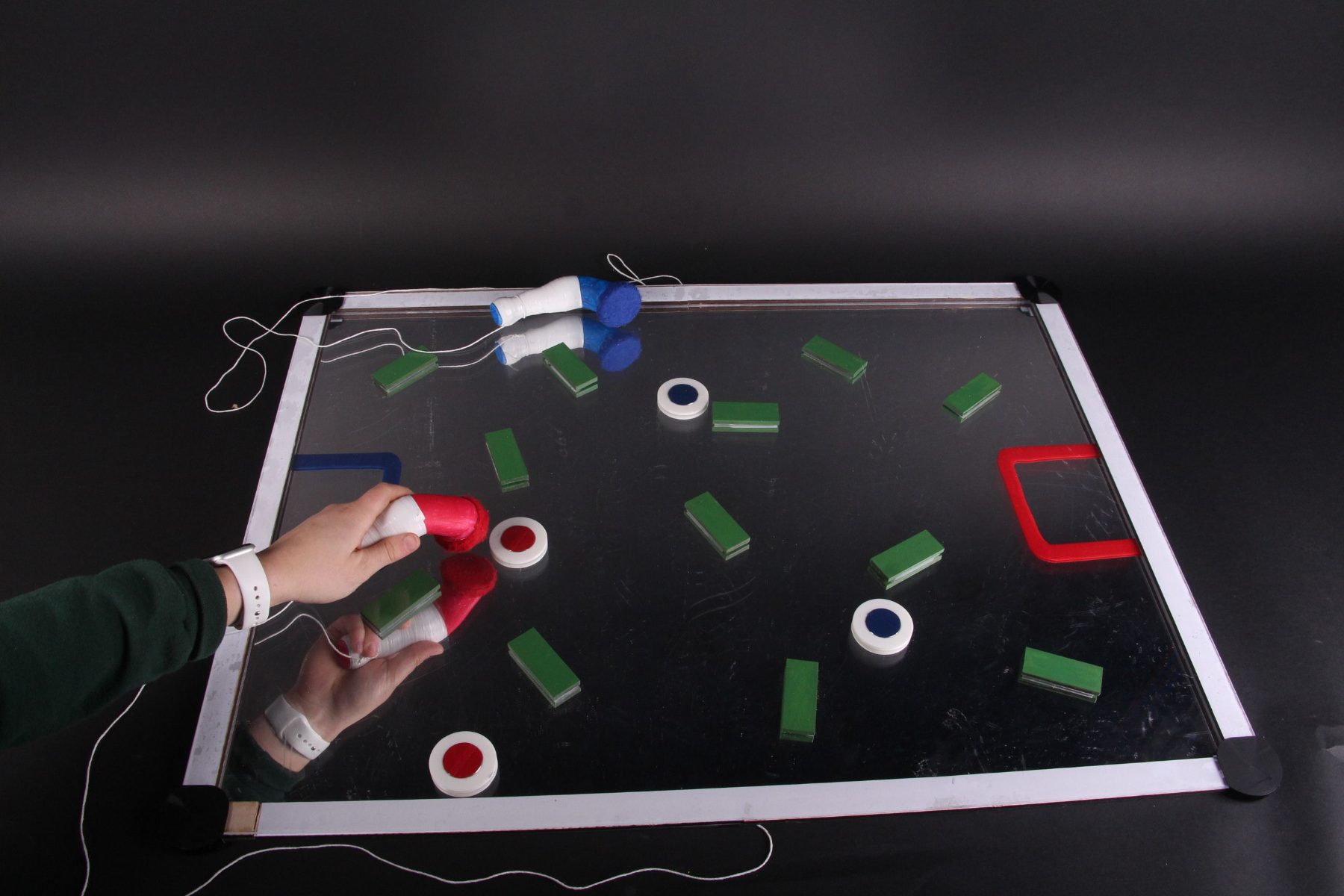
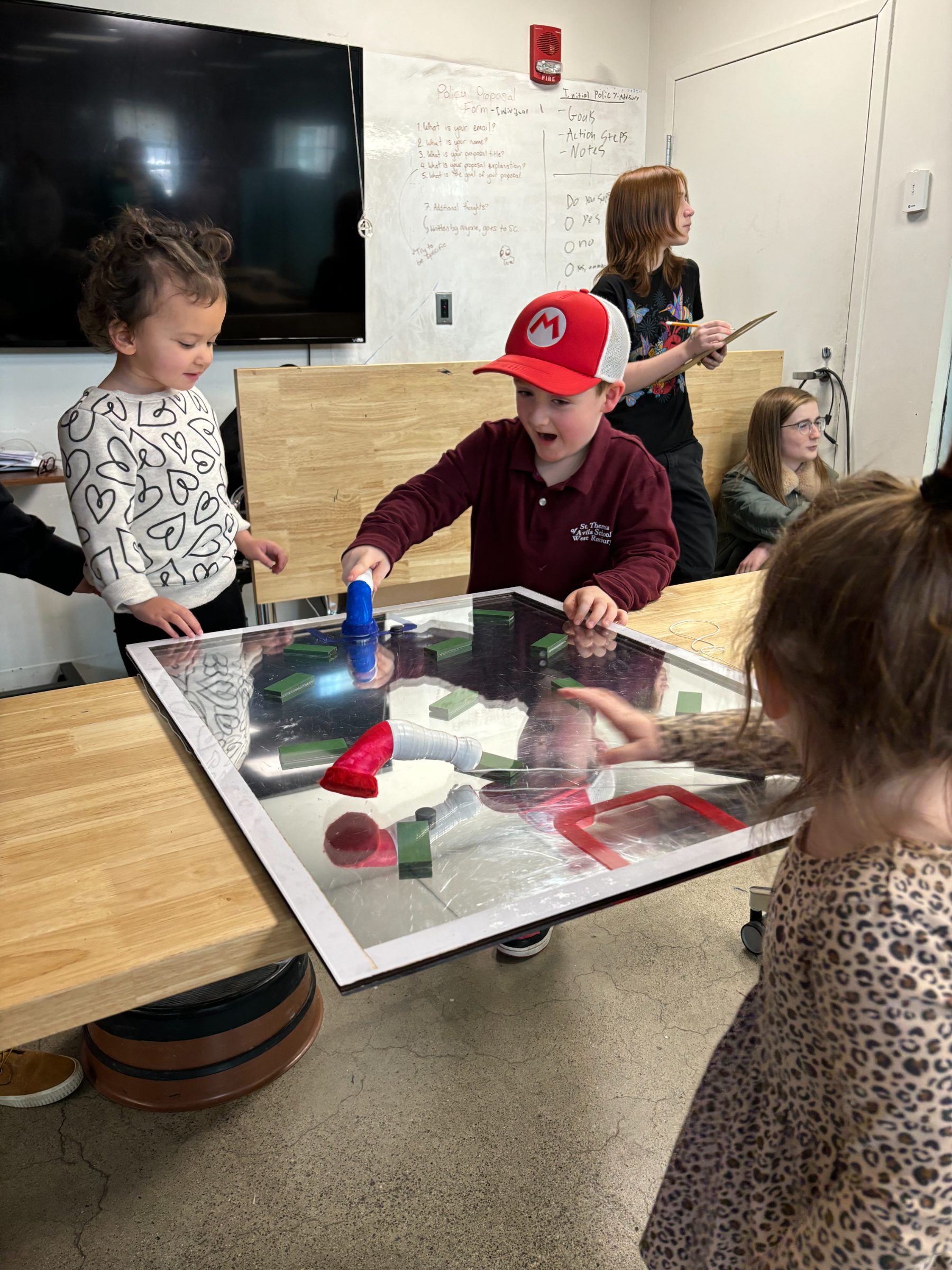
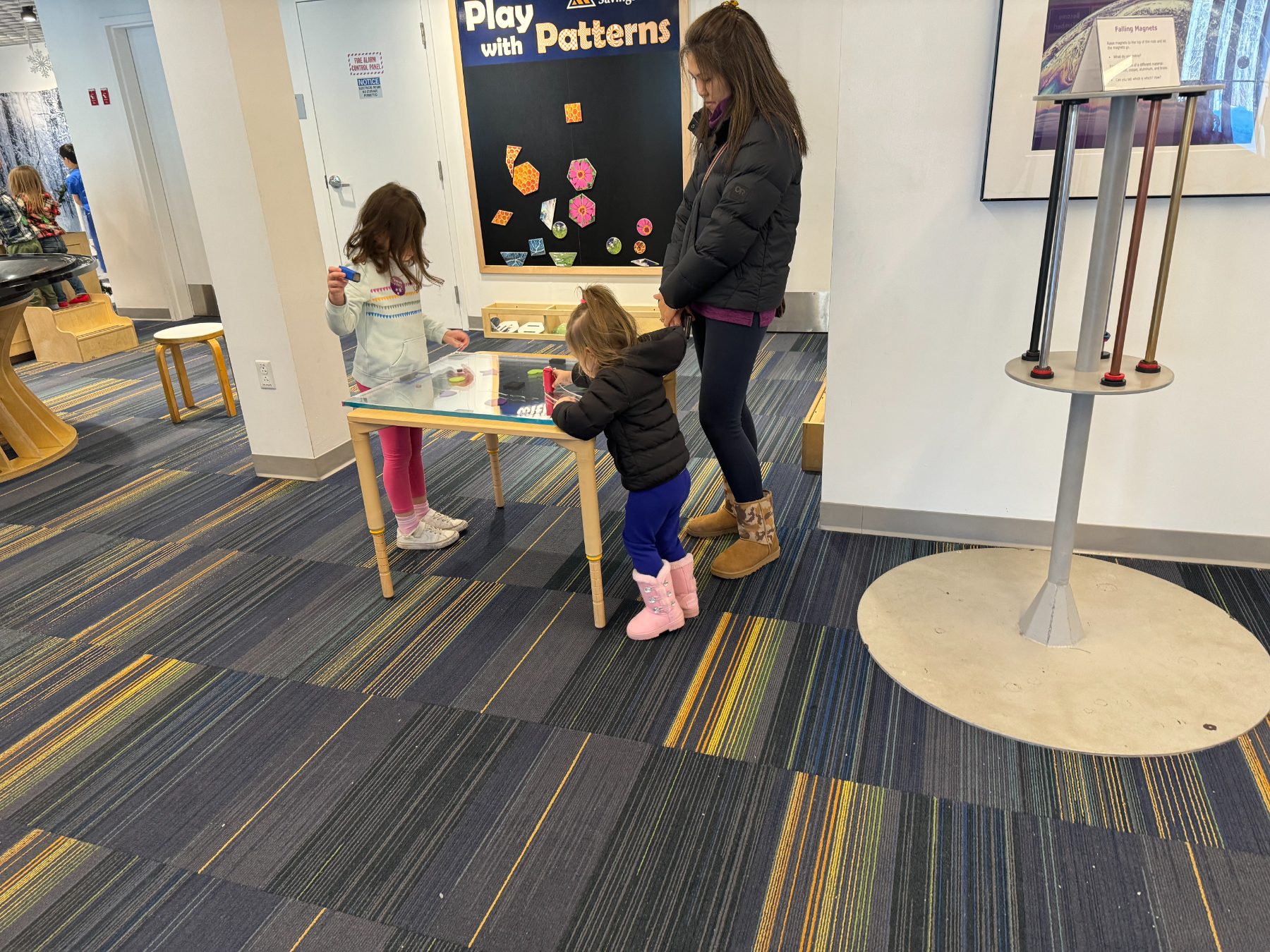
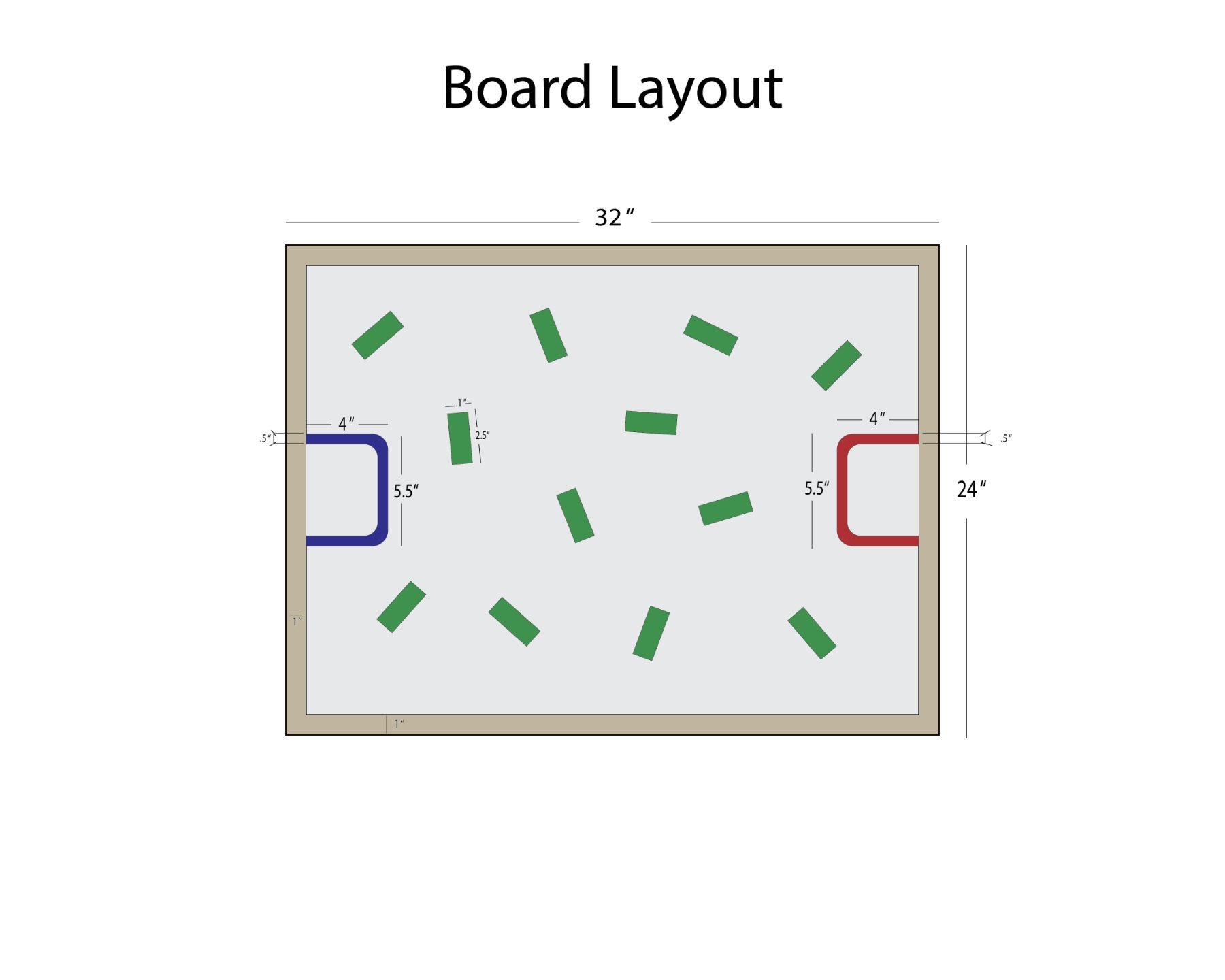
Designed and built an interactive exhibit for The Discovery Museum in Acton, MA that teaches kids about magnet polarity through competitive play. The mechanic is a color-coded game where two players use magnetic handles to race their magnets across an acrylic board, with obstacles that slow you down.

I worked with Kaia Narbunshart and Sadie Wylie through multiple rounds of user testing — first at the museum, then at NuVu — iterating on handle design, polarity labels, corner safety, and visual clarity based on real observations of kids playing. The final version locked in the competitive format, reduced hazards, and included a maintenance door.

Top-down view of magnet game with red and blue handles in play10 — Two-player play test
Children playing the magnet exhibit at school10 — Kids playing
Exhibit installed at The Discovery Museum with kids using it10 — Discovery Museum install
Board layout drawing with dimensions10 — Board layout · Rhino
Project11

Adaptable Tables

Multi-Terrain Work Surfaces for Land's Sake Farm

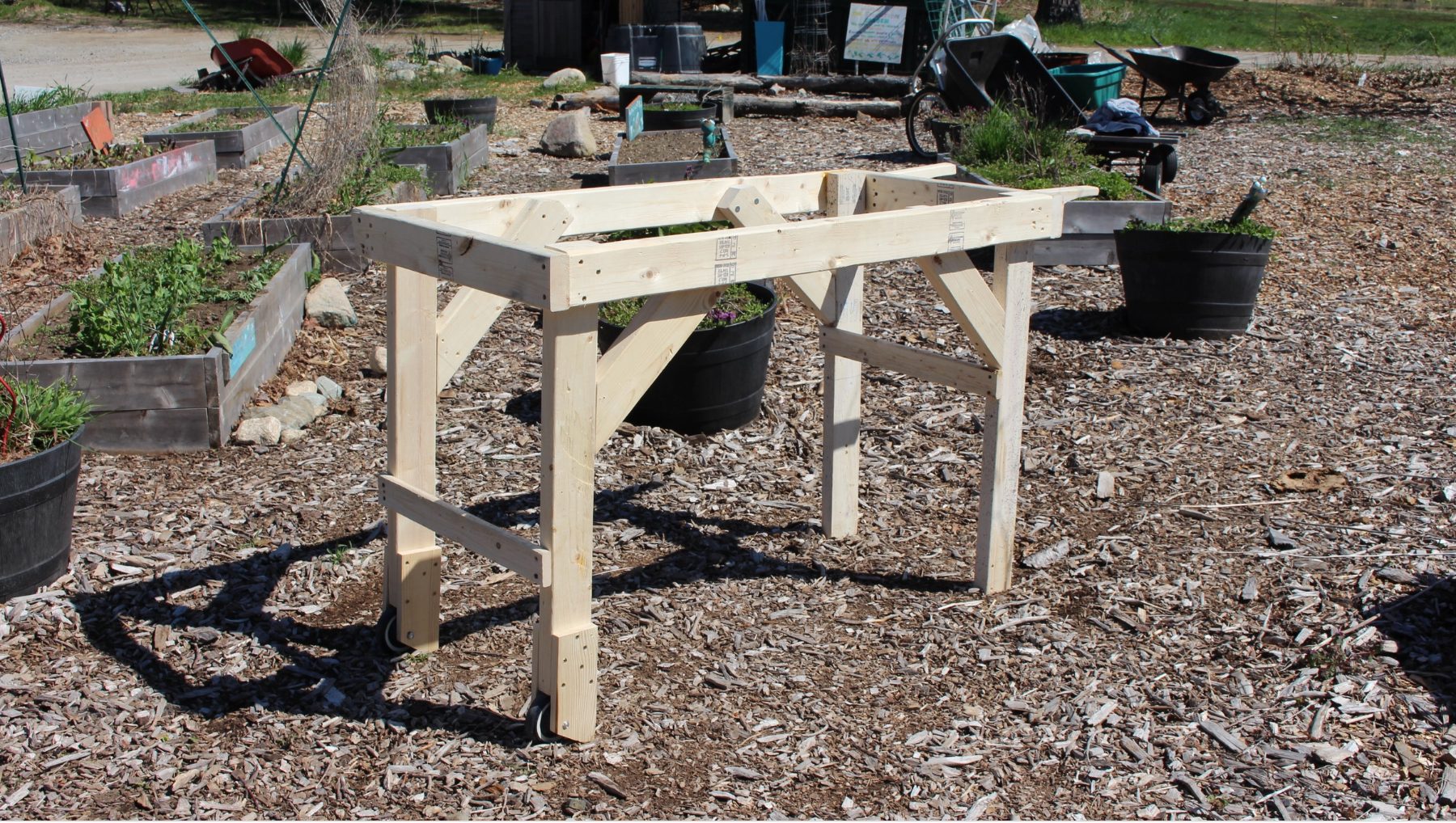
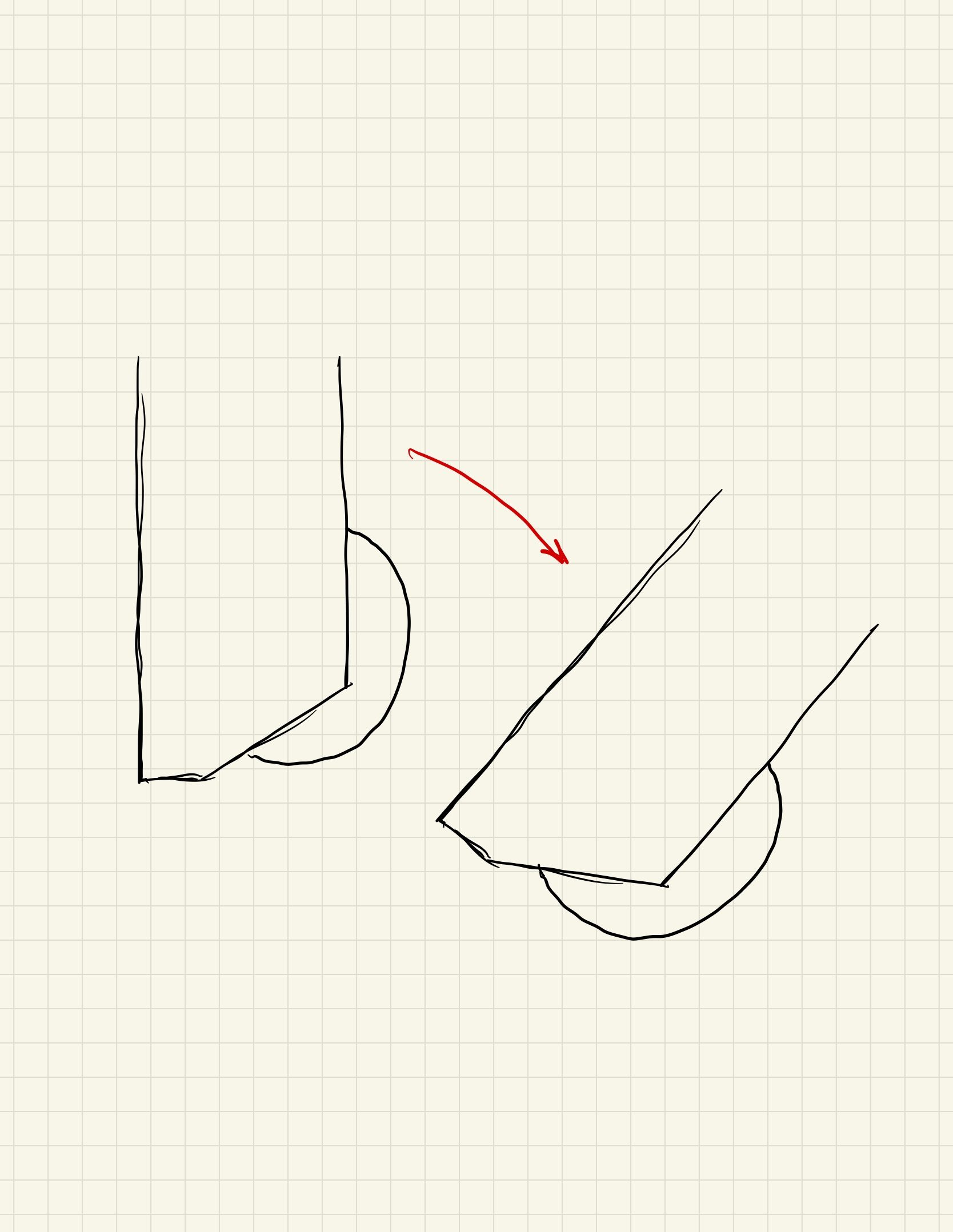
Land's Sake Farm in Wellesley, MA was constantly rearranging their education space for classes, birthday parties, and craft sessions, but had no tables that could survive rough terrain or store compactly. With Gabe Murray and Kaia Narbunshart, I designed a wheelbarrow-style table with large wheels for rough and smooth terrain, retractable handles, and a wheel-locking mechanism for stability once positioned.

We visited the farm, built lo-fi prototypes, and iterated based on direct feedback from staff and site visits. The final version lowered the table height from 34 to 30 inches for better accessibility and redesigned the handles so the table stores flat without creating hazards.

Final table in stored configuration11 — Final build · stored configuration
Coffy at Land's Sake Farm with the adaptable table on rough terrain11 — On site at Land's Sake Farm
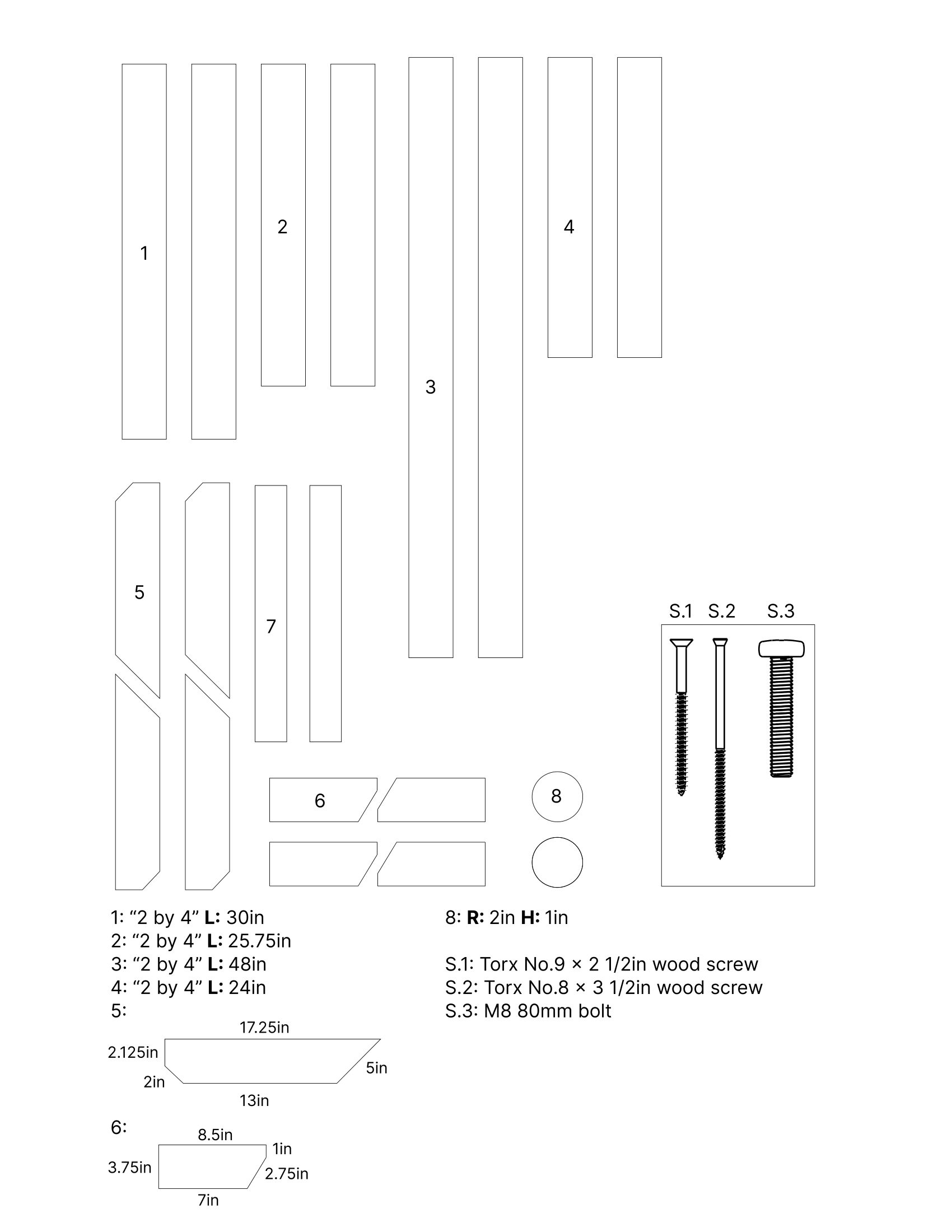
Technical drawing of table parts and hardware11 — Cut list · hardware schedule
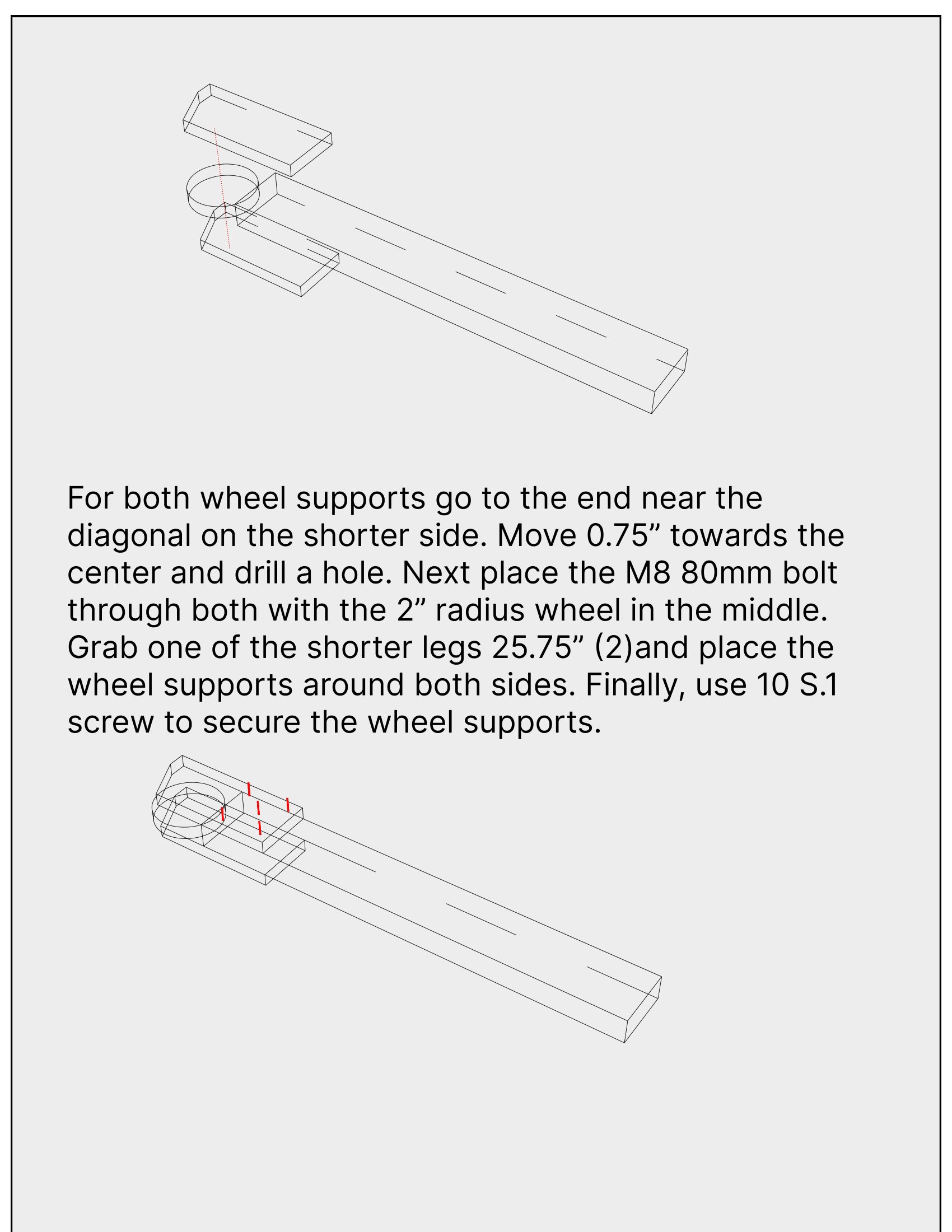
Technical drawing of wheel support assembly11 — Wheel support assembly
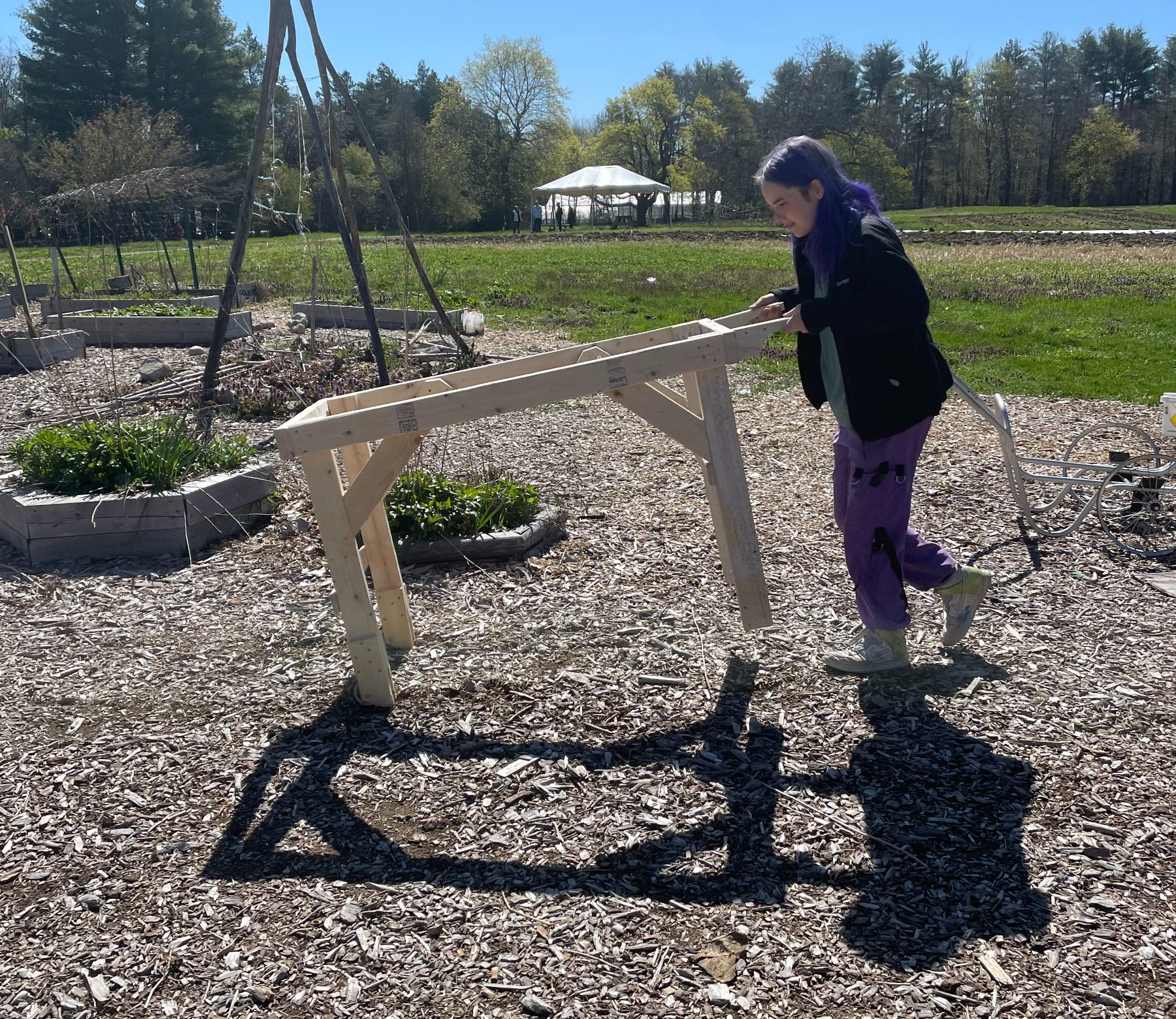
Coffy walking the finished sawhorse table out into the garden — sun, mulched ground, raised beds in background11 — Carrying the build into the field
Project12

NüSVu

A Civic Communication Platform for NuVu Students

NuVu's rules and policy updates were scattered across emails and the platform — students usually found out about changes after the fact and had no channel for input. With Jasmine Horowitz and Noelle Aminoff, I built NüSVu: a centralized website where students can read about policy changes, vote in polls before decisions are finalized, and discuss updates in a public forum.

My focus was keeping the overhead low for coaches and student council — easy to post, no extra burden. We interviewed coaches, student council members, and students to design the right structure, and built in a section to spotlight student art and projects alongside the news feed.

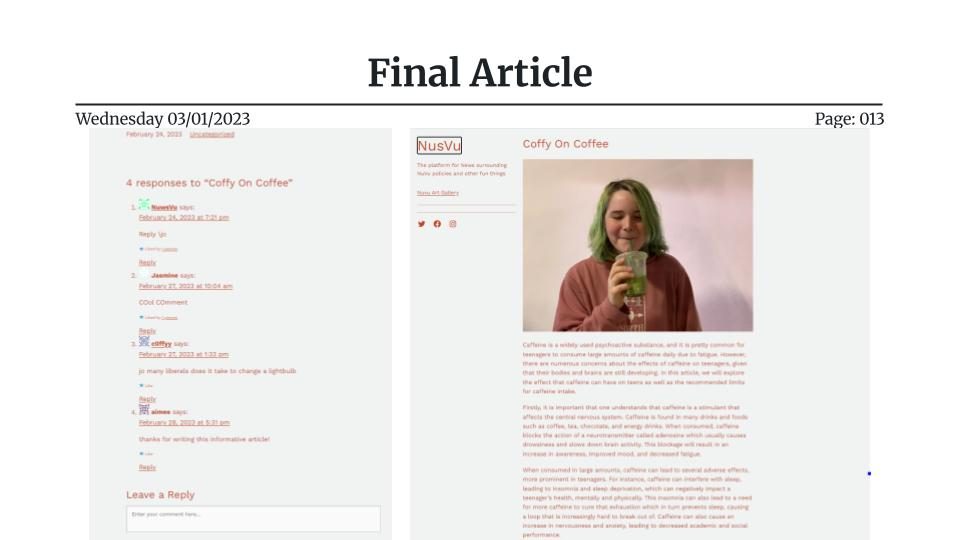
NusVu live site — Coffy On Coffee article with sidebar branding and social links12 — Final article view, live site
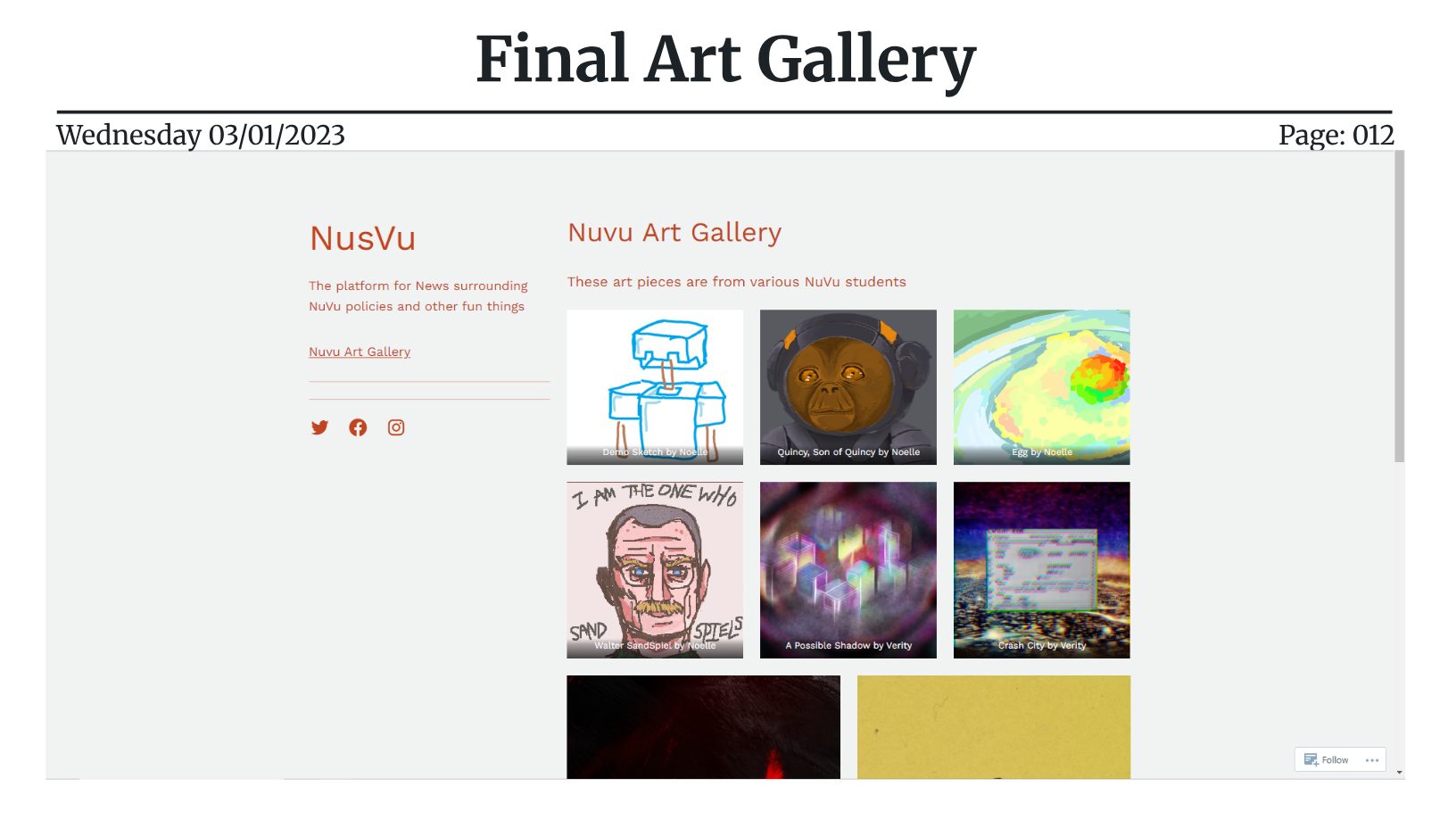
Final art gallery page with grid of student artwork12 — Final art gallery
Article page with comments and reply thread12 — Comments + replies
Project13

South
Hampton St

Micromobility Infrastructure Proposals for South Boston

As part of a studio on inclusive micromobility, our team focused on Southampton Street and Andrew Square in South Boston — an area with limited safe options for bikers and pedestrians. I researched MassDOT bike lane design standards, analyzed Blue Bikes data, and sketched redesigned crosswalks for busy intersections.
Working with Ari Sinert, Charlie Peterson, and Noelle Aminoff, we also reached out to planners behind PLAN: Newmarket, processed government crash data to identify the most dangerous infrastructure gaps, and mapped proposed interventions including bike lanes, bike boxes, and improved pedestrian crossings. The outcome was a suite of design proposals aimed at reducing car dependency and improving street safety in a historically underserved South Boston corridor.

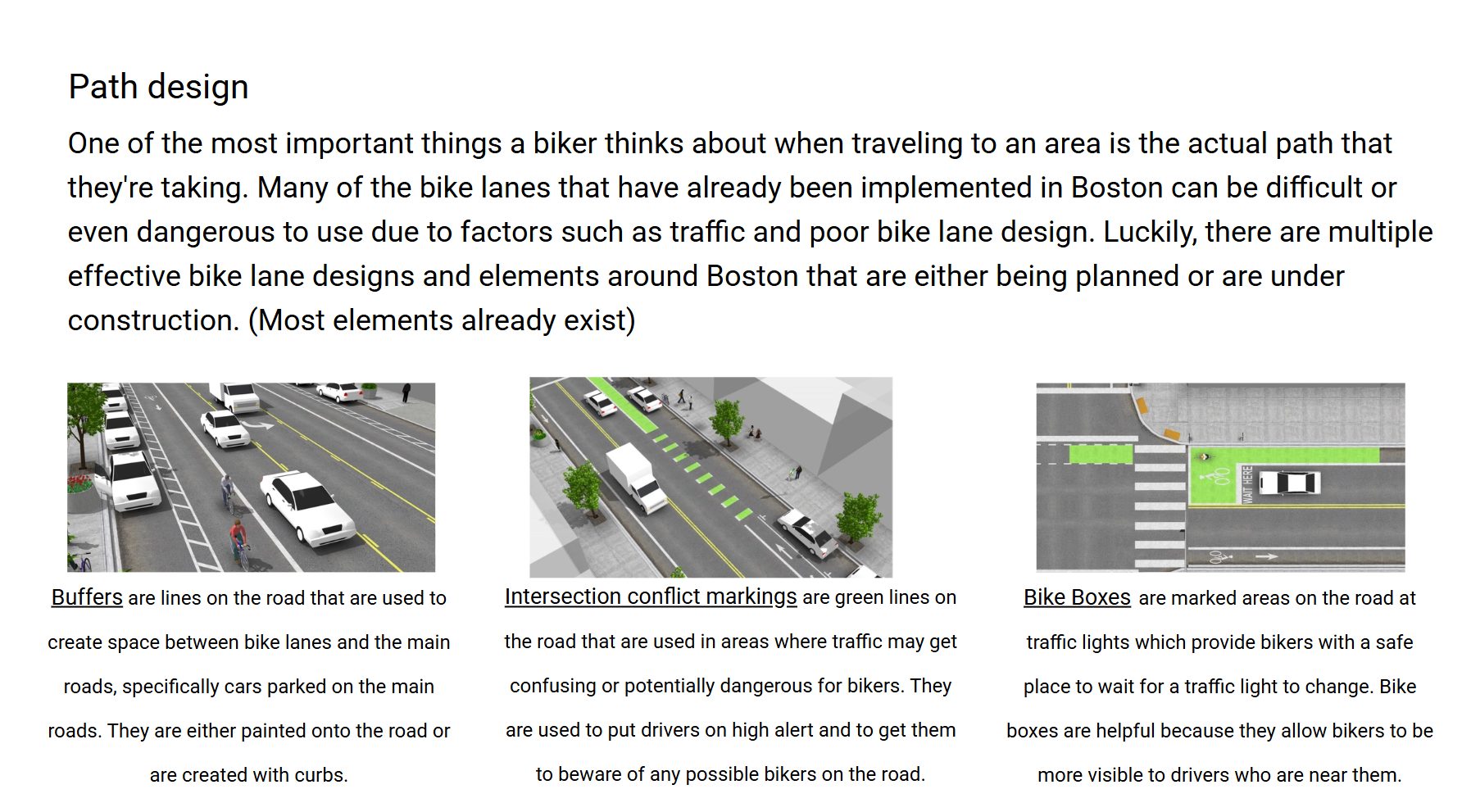
Path design page showing buffers, intersection markings, and bike boxes13 — Path design vocabulary
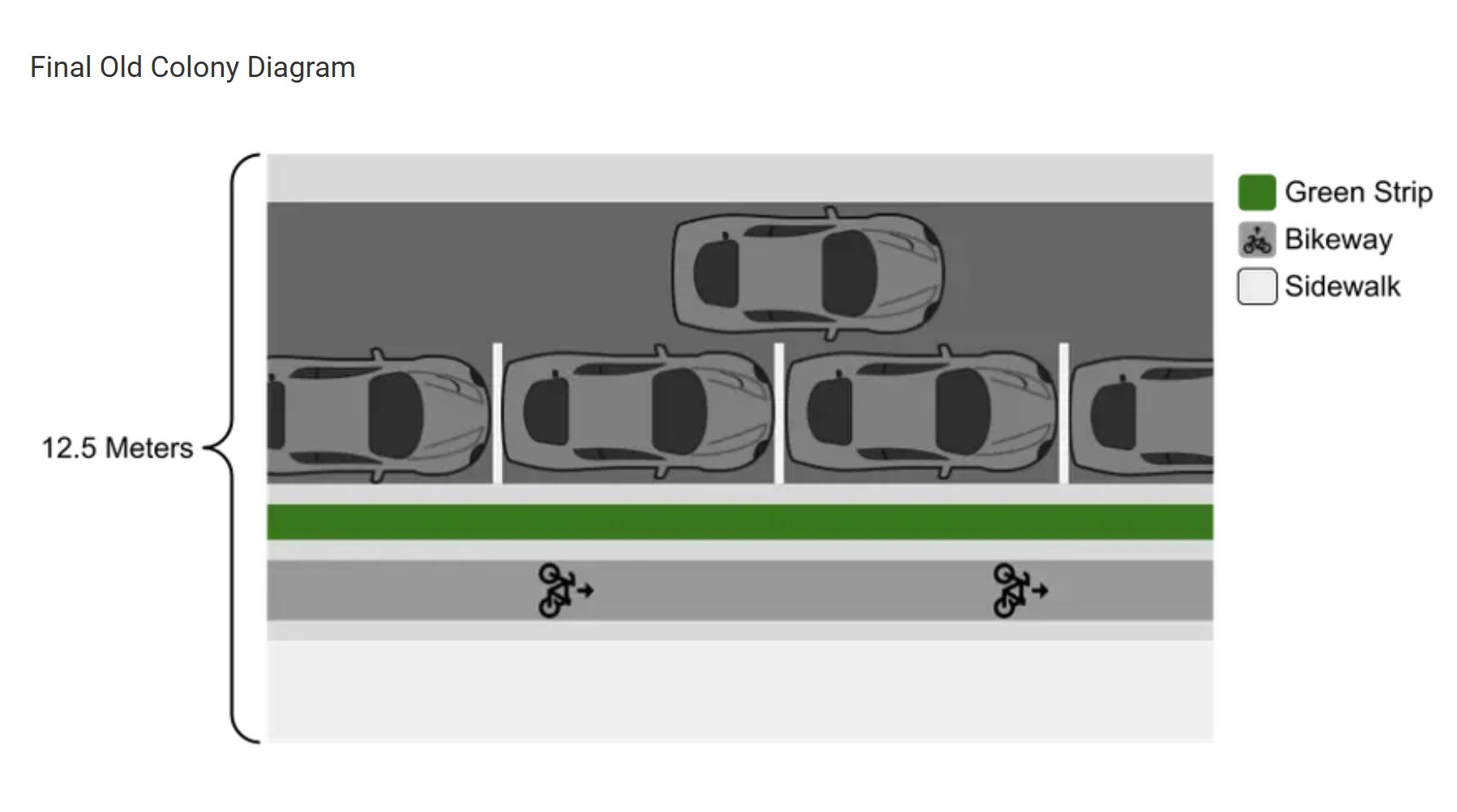
Final Old Colony cross-section with green strip, bikeway, and sidewalk13 — Old Colony cross-section
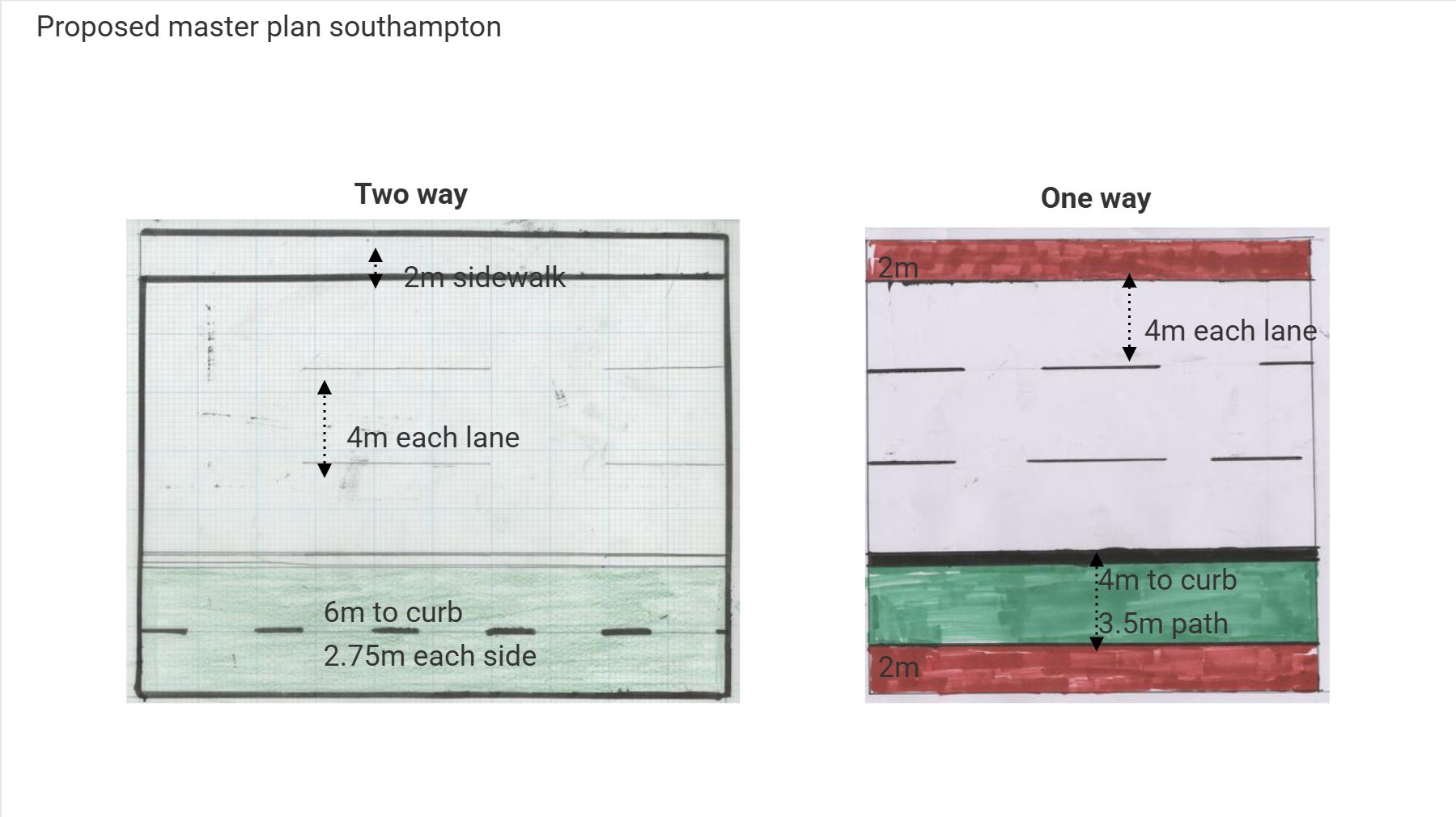
Two-way and one-way proposed master plan diagrams13 — Southampton master plan
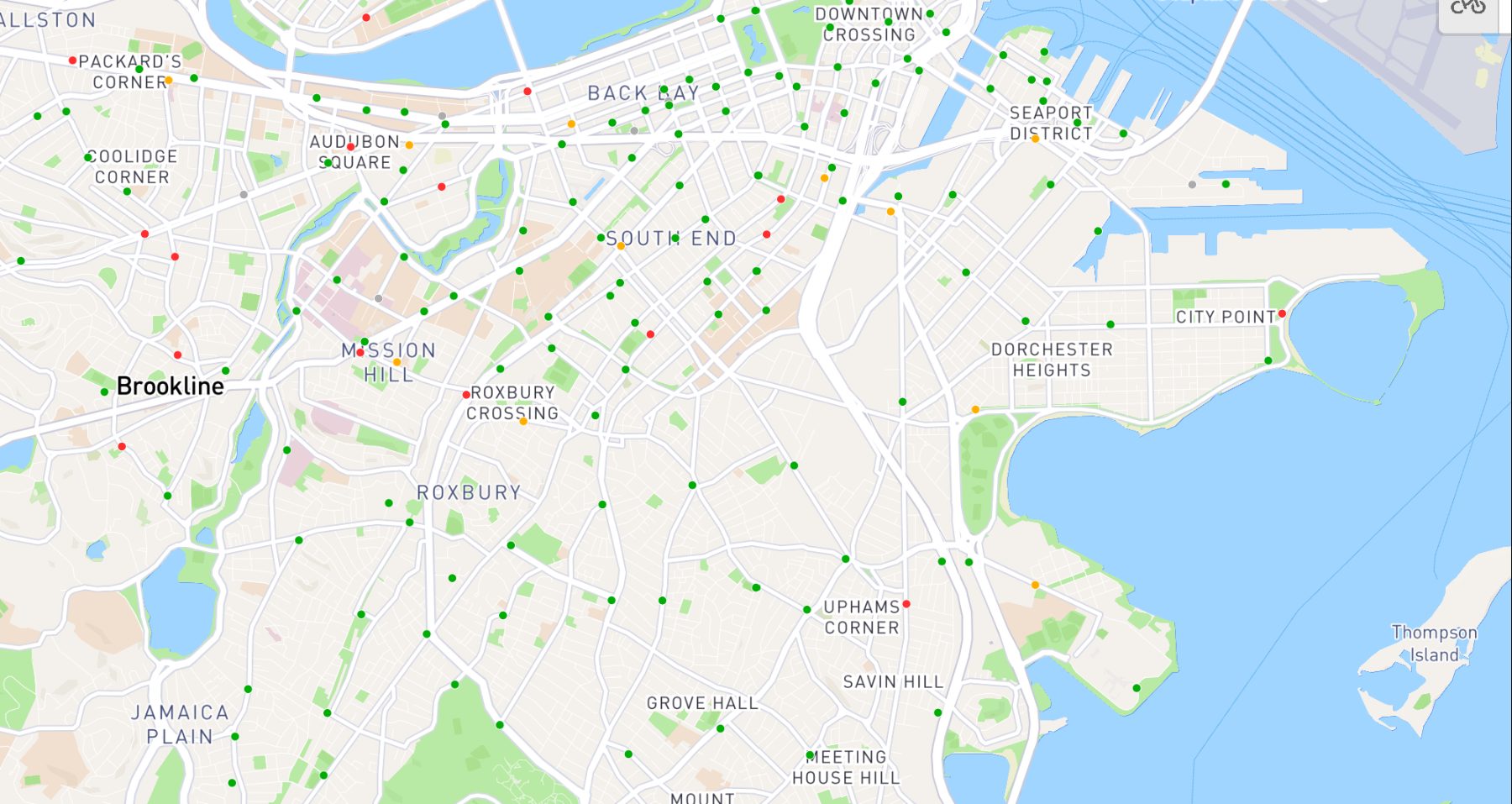
Map of Boston with Blue Bike station status across neighborhoods13 — Blue Bikes coverage map

Thanks
for looking
through.

Email
coffy@lessig.org
Based
Brookline, Massachusetts
Status
Open to internships, jobs, and college conversations
School
NuVu Cambridge — graduated 2025
Coffy Lavender Neuefeind Lessig · 2026 Folio Set in Helvetica Neue + Source Serif 4